Thinking Process
PHASE 1: VISUAL DECONSTRUCTION
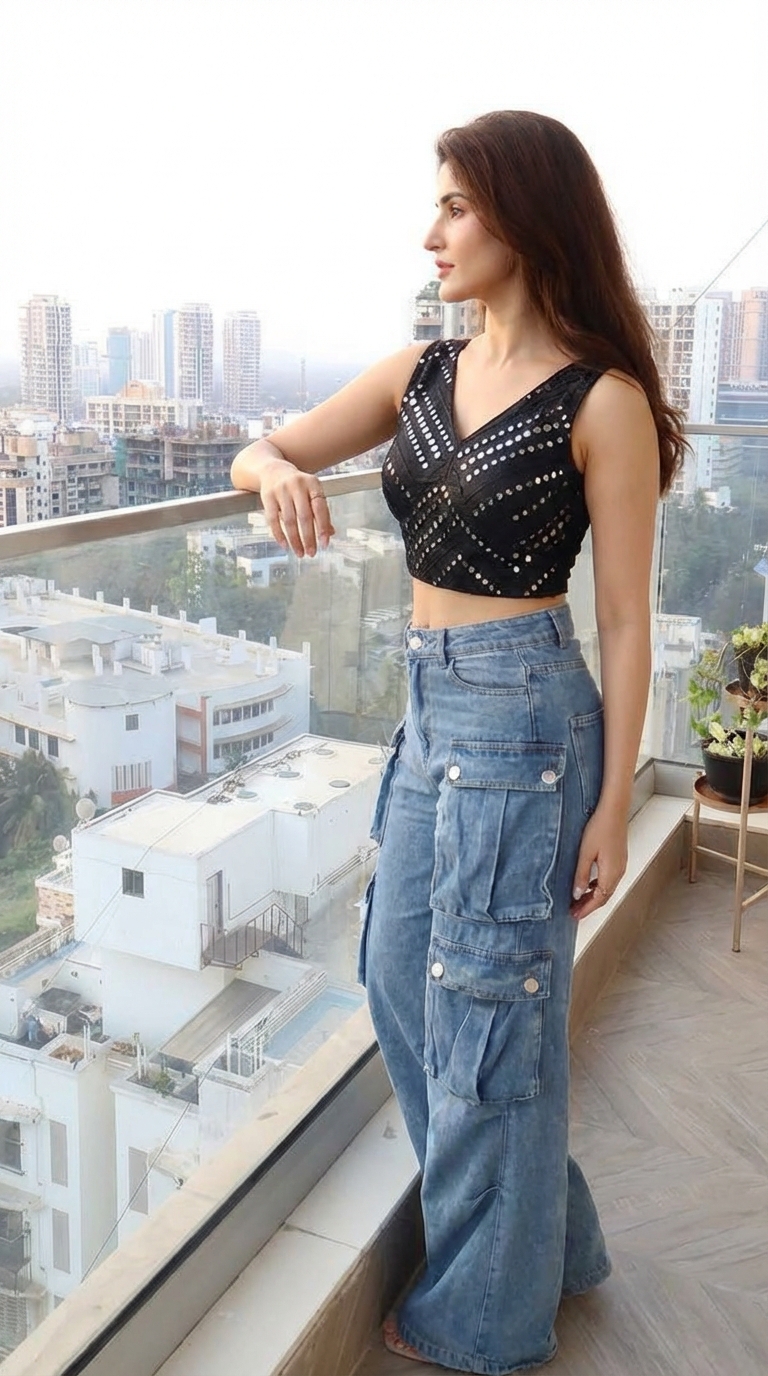
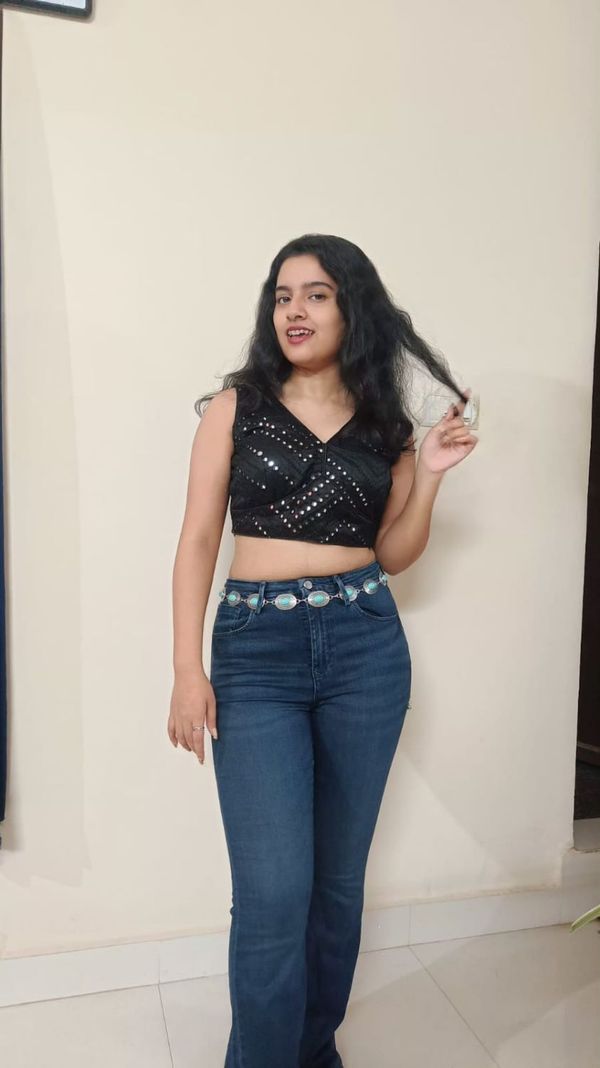
- **Fabric Physics:** The source garment appears to be a structured cotton or synthetic blend base, rigid enough to support heavy embellishments. It is not flowy; it behaves like a semi-stiff shell. The base fabric is matte black, which absorbs light, while the surface is covered in "mirror work" (abhla bharat) or high-gloss sequins. These embellishments have high specularity and must trigger sharp, bright glints rather than soft diffuse reflections.
- **Key Features:** The V-neck cut and the specific geometric/zig-zag pattern of the mirror embellishments must be preserved. The hemline is a distinct crop (midriff baring). The sleeveless armhole structure must replace the target's current "fuzzy" strap texture. The mirrors are the defining feature and must maintain their distinct circular shape without blurring into lines during the warp.
PHASE 2: FIT & DRAPE SIMULATION
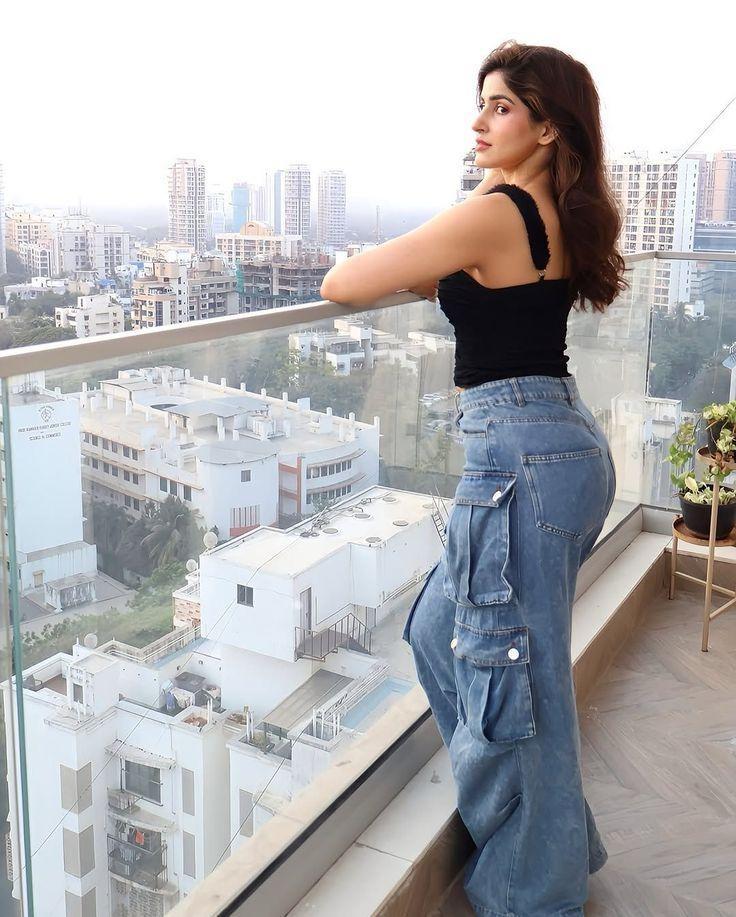
- **Body Mapping:** The transfer requires a complex geometric warp from a frontal source view to a near-profile (approx. 70-degree turn) target view. The garment must follow the curvature of the target's bust from the side. Due to the user leaning forward on the railing, gravity will cause the front hem of the crop top to hang closer to the body, while the back hem should lift slightly away from the spine, creating a small gap rather than skin-tight adhesion at the lower back.
- **Occlusion Handling:** The user's long, wavy hair cascades down her back and partially over her left shoulder area; this hair mask must be segmented and layered *strictly over* the new garment. The user's right arm is resting on the glass railing; the garment's armhole must accommodate the compressed shoulder geometry without cutting into the deltoid skin texture.
PHASE 3: ENVIRONMENT & LIGHTING
- **Light Match:** The target environment utilizes soft, diffuse daylight (outdoor city ambience) with a light source coming from the left/front (the open view). The source garment was shot in warm, indoor artificial light. The garment's black base needs to be color-corrected to remove yellow tungsten casts, shifting towards a neutral/cool daylight tone.
- **Color Calibration:** The mirrors on the shirt currently reflect a dark indoor room. For realistic integration, the specular highlights on the mirrors must be re-rendered to reflect the bright white/blue of the target's sky/cityscape background, increasing the contrast between the black fabric and the reflective elements.
PHASE 4: IDENTITY PROTECTION
- **Facial Lock:** The user's profile, including the nose bridge, jawline, ear, and cheekbone, must be frozen and masked out of any generation. The hair volume and texture must remain pixel-perfect.
- **Body Integrity:** Strict prohibition on altering the user's waistline or arm thickness. The visible skin on the midriff (waist area) and the specific fit of the high-waisted cargo jeans must remain untouched. The compression of the arm against the body/railing must not be "un-squished" by the simulation.