Thinking Process
PHASE 1: VISUAL DECONSTRUCTION
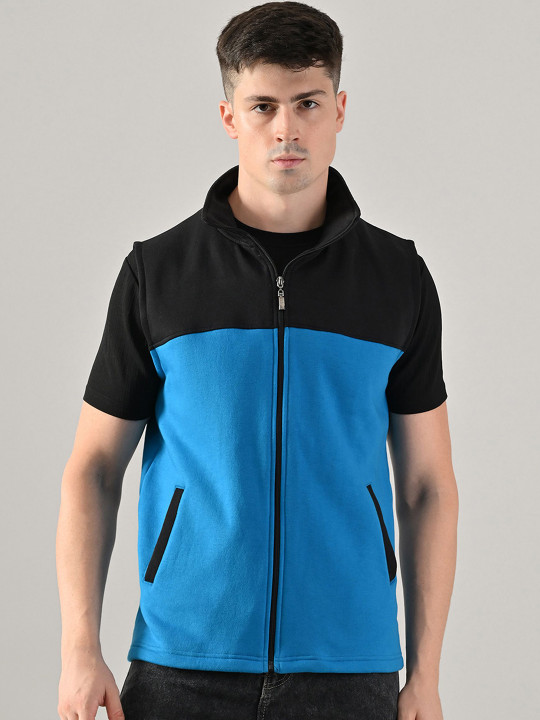
- **Fabric Physics:** The source garment is a composite material structure. The blue section exhibits the properties of polar fleece or heavy cotton knit (matte finish, soft light absorption, high friction coefficient). The black shoulder yoke appears to be a smoother synthetic blend or woven polyester. The simulation must replicate a "heavy weight" drape; this is not a flowy fabric—it has structural rigidity and will resist micro-wrinkling.
- **Key Features:** The distinct horizontal color blocking (Black upper / Blue lower) is the primary anchor. Essential details to preserve include the silver central zipper pull, the vertical orientation of the zip teeth, the angled black welt pockets on the blue section, and the structured stand-up collar. The layering of the vest over the black t-shirt sleeves seen in the source image must be treated as a single compound geometry for transfer.
PHASE 2: FIT & DRAPE SIMULATION
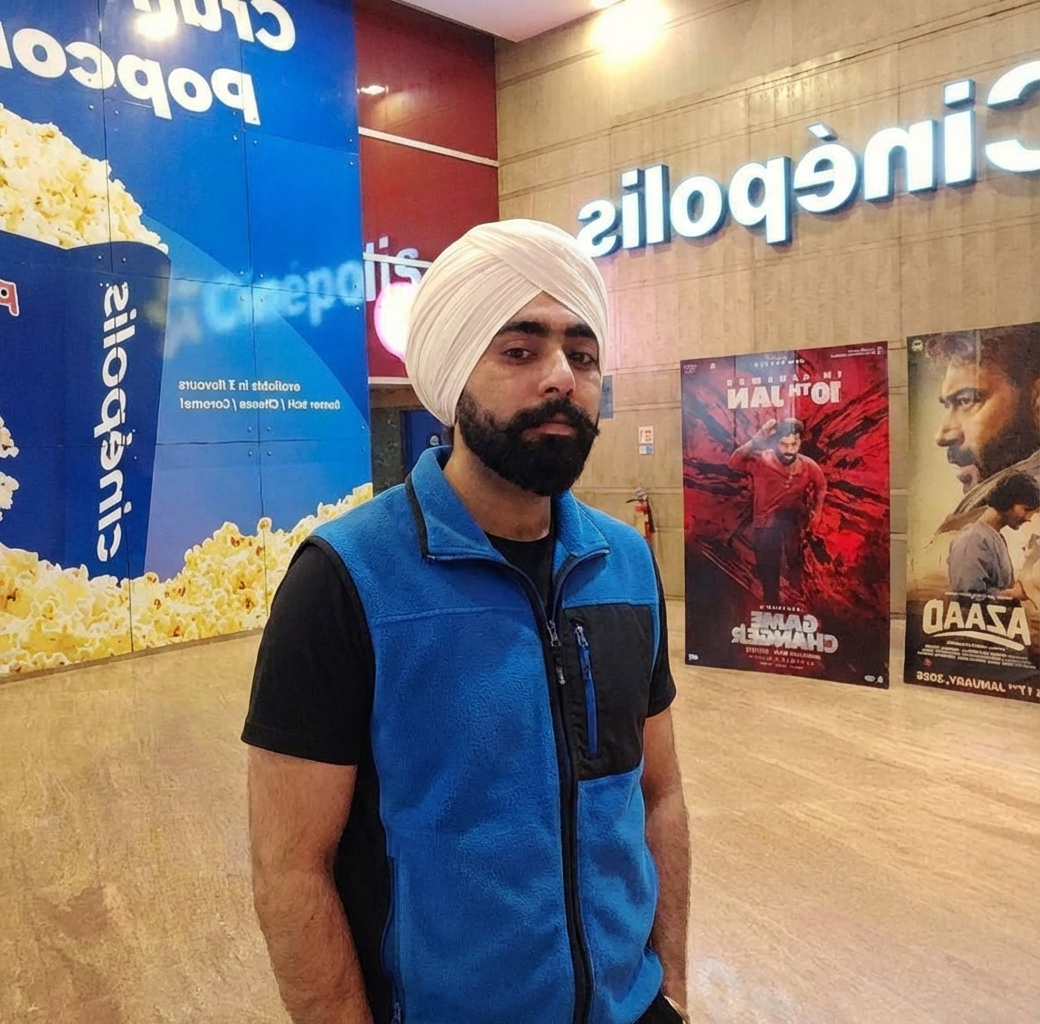
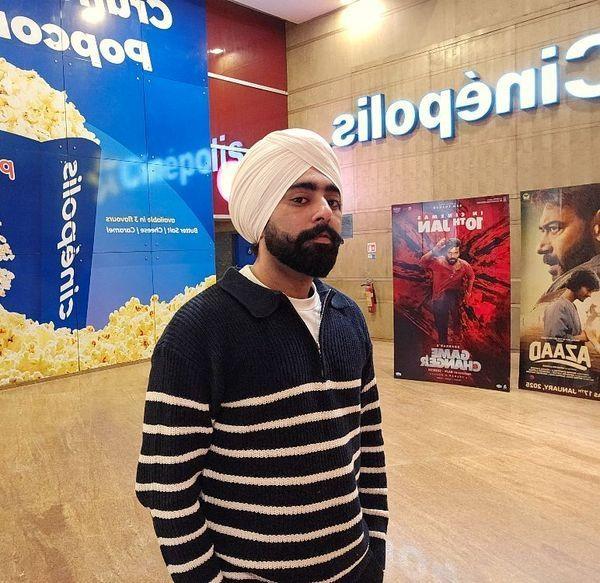
- **Body Mapping:** The target user has a standard build similar to the source model. The vest must sit with a "regular fit," meaning it should hang vertically from the chest and shoulders rather than hugging the torso like the user's current ribbed sweater. The fabric must bridge the gap between the pectorals and the waist without collapsing inward. The shoulder seam of the vest needs to align with the user's acromion process, ensuring the sleeveless cut of the vest sits correctly over the transferred t-shirt sleeves.
- **Occlusion Handling:** The primary occlusion zone is the neckline. The user's full beard descends over the collar area. The new garment's stand-up collar must be rendered explicitly *behind* the beard. The turban is high enough to be unaffected, but the transition from the neck to the trap muscles must be clean. There are no hand occlusions, allowing for a straightforward torso map.
PHASE 3: ENVIRONMENT & LIGHTING
- **Light Match:** The user is in a commercial cinema lobby with high-intensity, diffused overhead artificial lighting (likely warm-white LEDs). The lighting creates a subtle top-down gradient. The source garment (currently flat-lit in a studio) must be relit to reflect this overhead source, casting soft shadows under the pectoral line and inside the open collar.
- **Color Calibration:** The "Studio Blue" of the vest must be white-balanced to match the warmer, slightly yellow tint of the cinema lobby environment. The black yoke must not be rendered as absolute RGB(0,0,0) but lifted to match the black point of the scene (similar to the dark areas in the background movie posters) to ensure it integrates with the ambient noise and grain of the target photo.
PHASE 4: IDENTITY PROTECTION
- **Facial Lock:** Absolute pixel freeze is required for the entire Turban (Dastar), the forehead, eyes, nose, and specifically the beard hair structure. The skin tone of the face must be sampled to generate consistent skin texture for the forearms, as the source garment has short sleeves while the user currently wears long sleeves.
- **Body Integrity:** The user's shoulder width and posture must remain unchanged. The simulation must not slim the waist to match the source model; the garment must expand to fit the user's existing volume while maintaining the vest's inherent stiff drape.