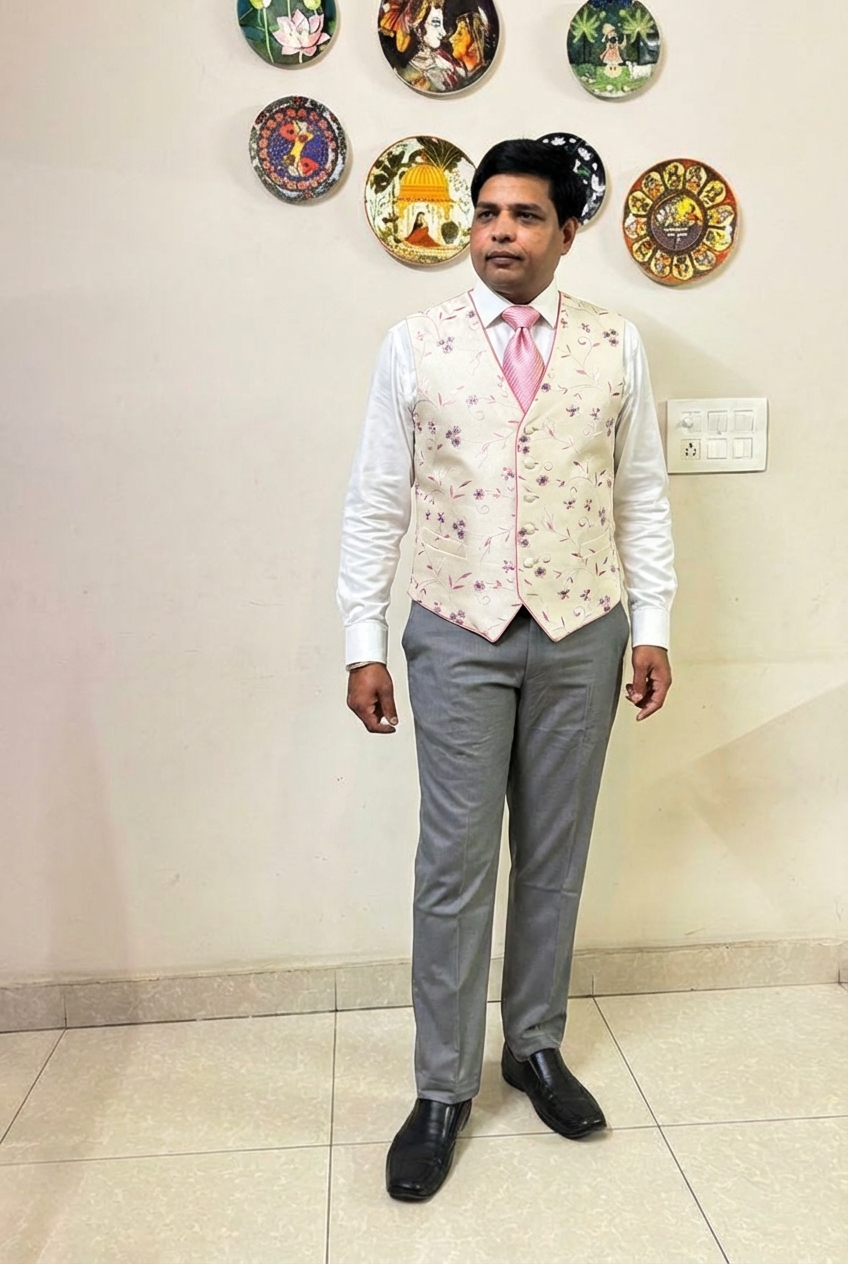
Thinking Process
PHASE 1: VISUAL DECONSTRUCTION
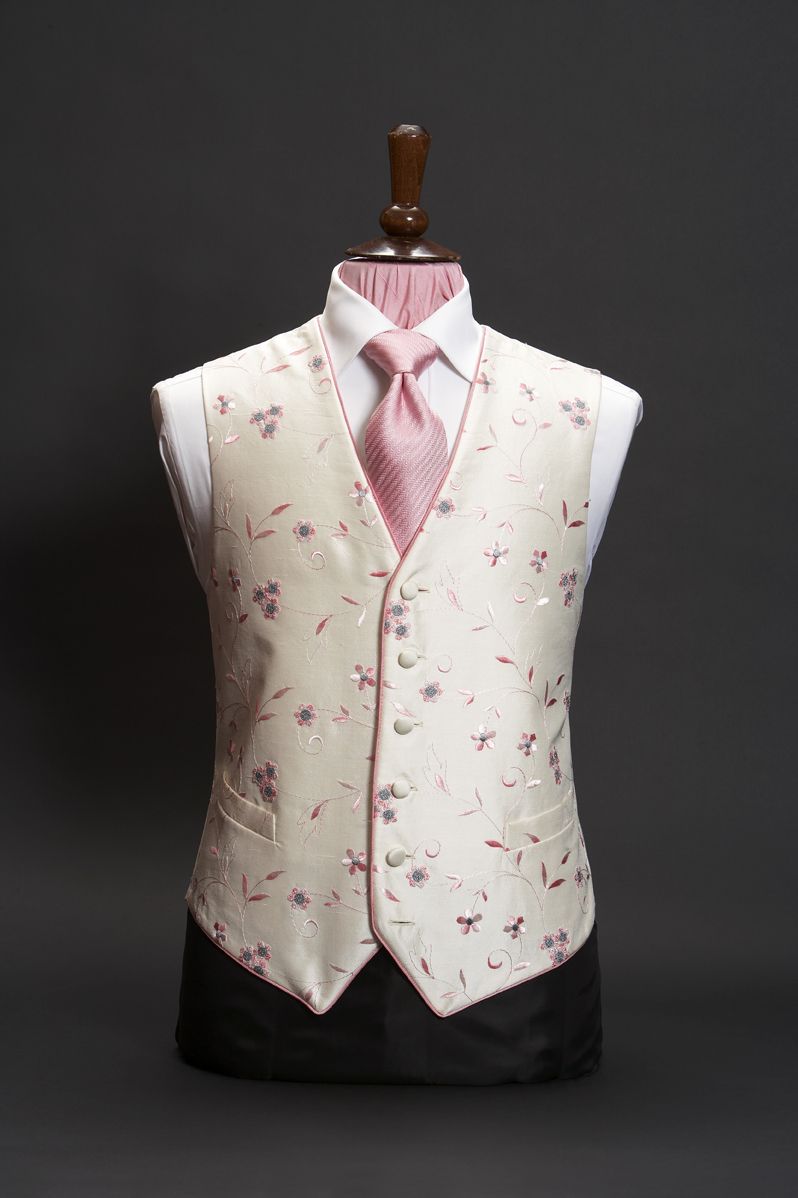
- **Fabric Physics:** The source garment is a structured waistcoat (likely silk or satin brocade) with a high sheen. Unlike the user's current matte cotton shirt, this material has anisotropic reflectivity—it must shimmer slightly as the angle of light changes. The fabric is stiff and non-elastic; it will not stretch but rather hold its tailored architectural shape.
- **Key Features:** The floral embroidery (pink and grey motifs) and the pink piping along the lapels and hem are high-frequency details that must remain sharp. The five fabric-covered buttons and the double-welt pockets must retain their 3D depth map (normal bumps) and not appear flat. The "V" neckline and the pointed bottom hem are critical geometry boundaries.
PHASE 2: FIT & DRAPE SIMULATION
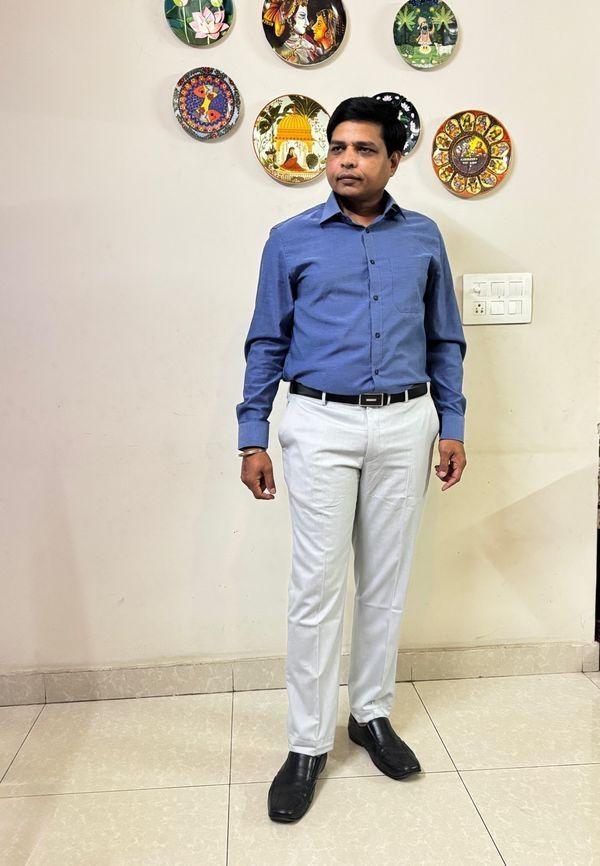
- **Body Mapping:** The waistcoat is a tailored fit. It must sit closer to the torso than the user's current loose-fitting blue shirt. The shoulder seams of the waistcoat (or the underlying shirt if transferred as a set) must align with the user's acromion (shoulder bone). The pointed hem of the waistcoat should extend past the user's belt line, covering the waistband of the trousers but leaving the side pockets of the trousers accessible. The garment handles gravity rigidly; it should smooth out the folds seen in the user's current blue shirt rather than conforming to them.
- **Occlusion Handling:** The user's pose is open, with arms slightly abducted. There are no hair or jewelry occlusions to manage. However, since the user is wearing a long-sleeved shirt and the source is a sleeveless vest, the simulation must account for the layering. If the vest is applied over the existing blue shirt, the armholes must cast ambient occlusion shadows onto the blue sleeves.
PHASE 3: ENVIRONMENT & LIGHTING
- **Light Match:** The user is in a room with diffuse, overhead indoor lighting (cool/neutral white), creating soft shadows accumulating towards the floor. The source image has high-contrast studio lighting. The high-contrast highlights on the mannequin must be neutralized and relit to match the softer, flatter ambient light of the user's room. The waistcoat's sheen must reflect the room's apparent light sources, not the studio strobes.
- **Color Calibration:** The cream/ivory color of the waistcoat must be color-graded to match the white balance of the user's photo. The warm tones of the waistcoat should not look yellow; they need to be desaturated slightly to harmonize with the cool white wall and grey trousers.
PHASE 4: IDENTITY PROTECTION
- **Facial Lock:** The user's entire head region, from the neck upwards (including the Adam's apple, jawline, ears, and hair), must be strictly masked and frozen.
- **Body Integrity:** The user's abdominal width and shoulder breadth must be preserved. The tailored fit of the waistcoat must simply overlay the existing volume; under no circumstances should the simulation "slim" the user or alter the width of the torso to fit the mannequin's proportions. The user's hand size and skin tone must remain untouched.