Thinking Process
PHASE 1: VISUAL DECONSTRUCTION
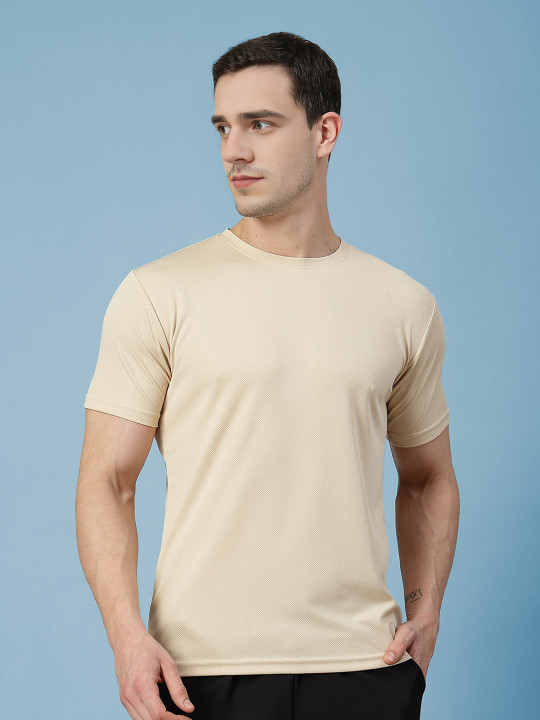
- **Fabric Physics:** The source garment is a textured, waffle-knit or pique performance fabric (likely polyester or cotton blend). It possesses a matte finish with high-frequency surface detail that diffuses light rather than reflecting it sharply. The material has moderate elasticity and drape; it is not stiff like denim but holds more structural integrity than silk.
- **Key Features:** The micro-textured weave pattern must remain visible and crisp after transfer. The simple crew neck collar construction, the double-stitched hem at the sleeves and waist, and the specific warm beige/cream color tone are critical invariants.
PHASE 2: FIT & DRAPE SIMULATION
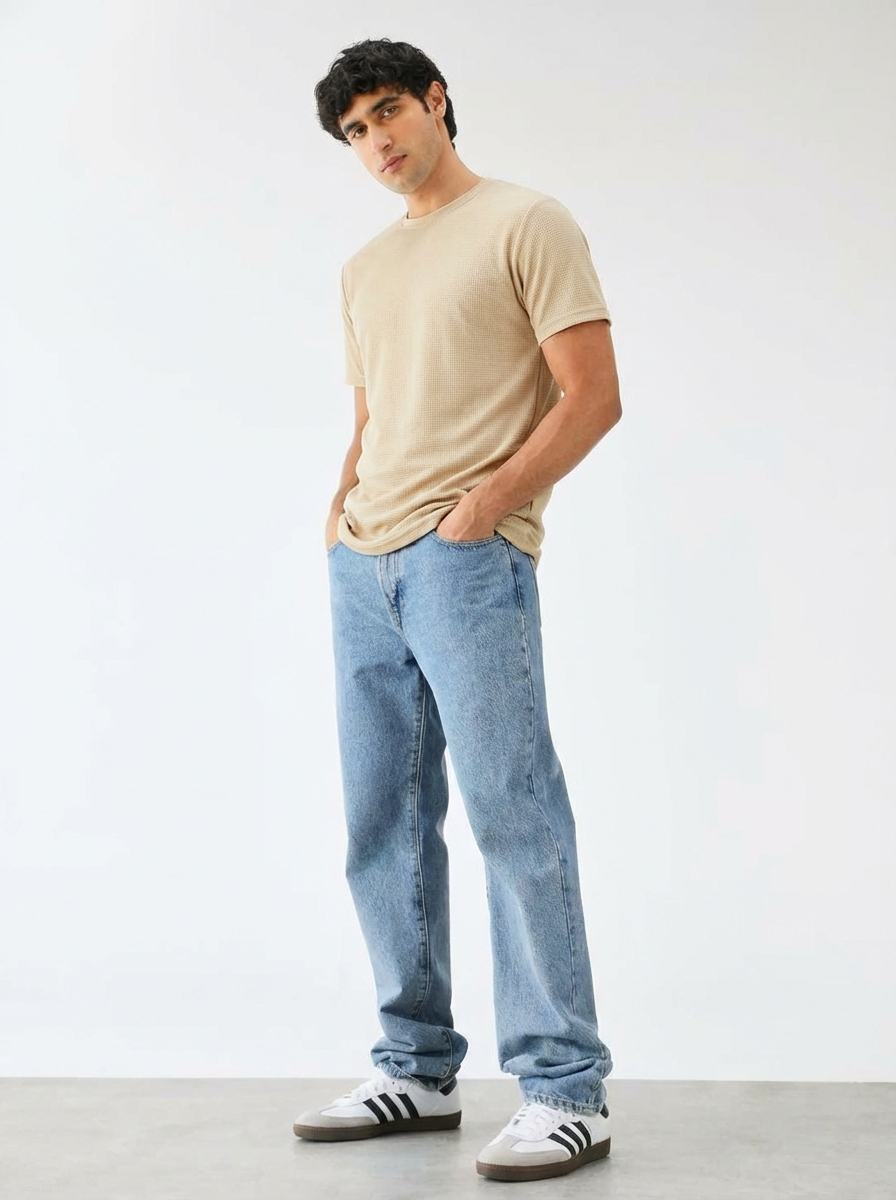
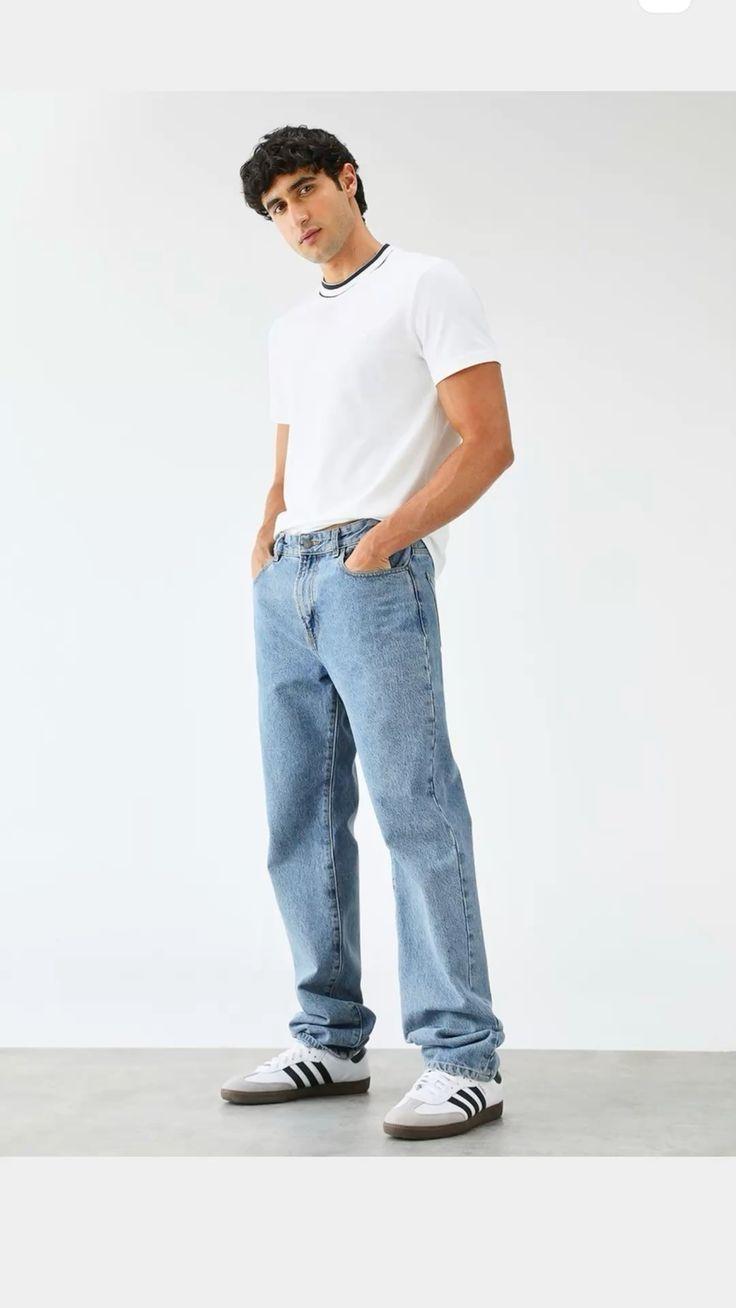
- **Body Mapping:** The target user has a slightly slighter build than the source model. The simulation must account for the target's specific pose where the hips are slightly cocked and the torso is angled. Tension folds should appear diagonally from the armpits toward the chest due to the relaxed posture. The sleeves should sit mid-bicep, following the contour of the target's arm without compressing the skin.
- **Occlusion Handling:** The critical occlusion area is the waist/hip region. The user's hands are thrust into the front pockets of the jeans. The garment simulation must generate a physics-accurate collision where the hem of the shirt bunches or drapes *around* and *behind* the wrists and forearms. The shirt must not overlay the hands or the thumbs visible outside the pockets.
PHASE 3: ENVIRONMENT & LIGHTING
- **Light Match:** The target environment is a high-key studio setting with soft, diffuse white lighting coming primarily from the front-top. The source garment, currently lit against a blue background, must be neutralized to remove any blue spill. Shadows on the new garment must be soft and fall downward to match the shadow cast by the user's shoes on the floor.
- **Color Calibration:** The beige tone of the shirt must be color-graded to match the neutral white point of the target image. Ensure the fabric does not appear washed out by the bright target lighting; contrast must be maintained to keep the texture visible.
PHASE 4: IDENTITY PROTECTION
- **Facial Lock:** Absolute freeze on the target user's face, hair, neck, and the specific skin tone of the arms and neck. The jawline and hairline must remain pixel-perfectly identical to the original image.
- **Body Integrity:** Strictly prohibit warping or resizing of the target user's underlying torso mesh. The target's shoulder width, arm girth, and waist size must remain unchanged; the garment must deform to fit the user, not the user to fit the garment.