Thinking Process
PHASE 1: VISUAL DECONSTRUCTION
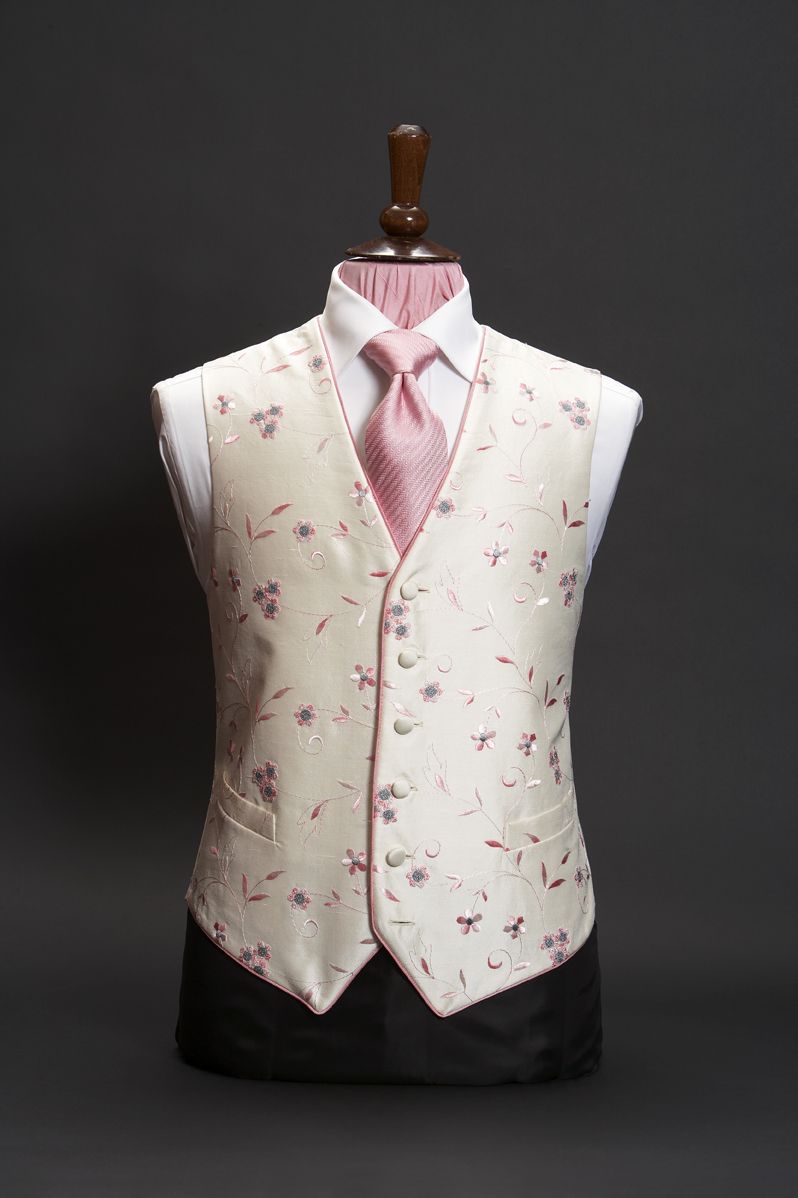
- **Fabric Physics:** The source garment is a composite ensemble. The primary layer is a cream-colored waistcoat likely made of silk brocade or satin, characterized by stiffness, high structural integrity, and anisotropic specular highlights (sheen). The underlying layer is a crisp white cotton broadcloth shirt (rigid collar, minimal stretch). The tie is a textured woven silk. The simulation must render the waistcoat as semi-rigid, resisting the draping gravity that affects the user's current cotton t-shirt.
- **Key Features:** The pink and grey floral embroidery pattern must remain distinct without blurring. The pink piping along the waistcoat edges (lapel and bottom hem) is a defining boundary line. The five cloth-covered buttons must retain their convex dimensionality. The "dimple" in the pink tie knot and the spread of the white collar are critical rigid geometry points.
PHASE 2: FIT & DRAPE SIMULATION
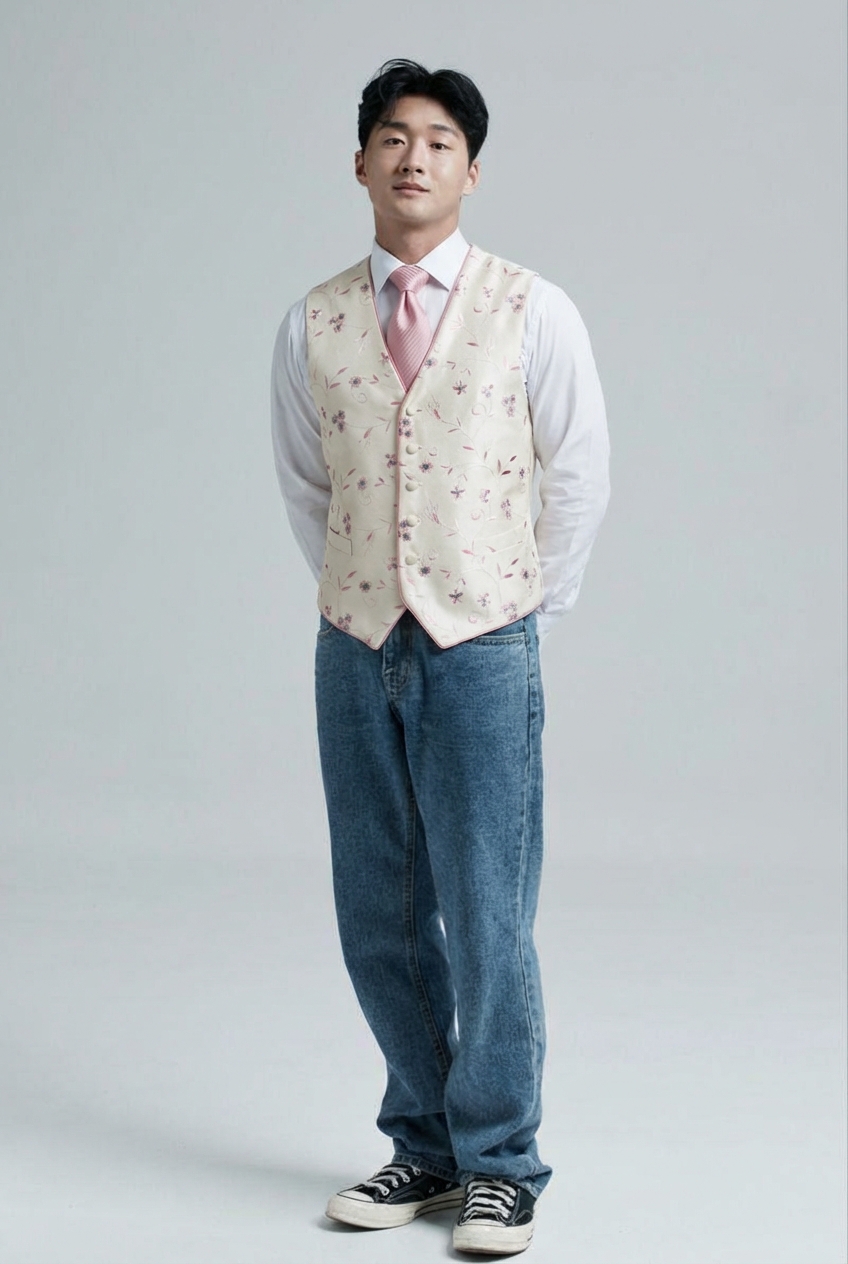
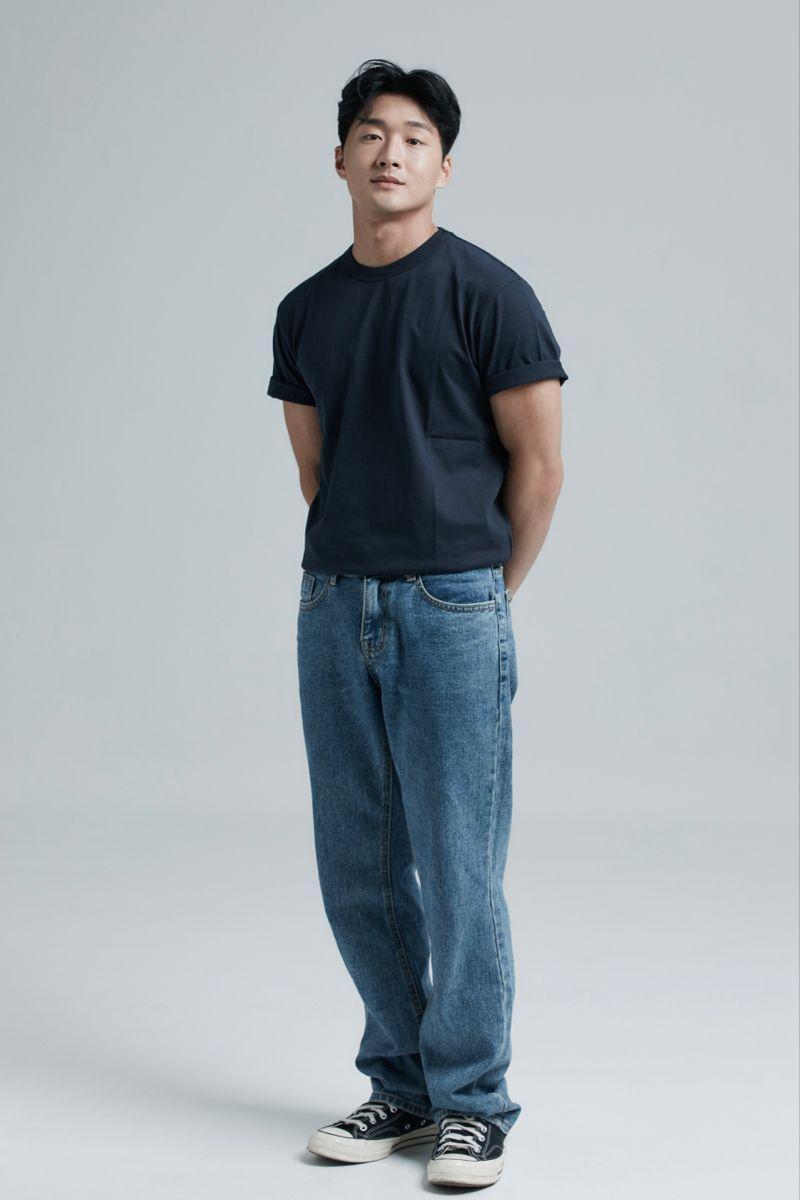
- **Body Mapping:** The user has a muscular, athletic build (broad shoulders, developed biceps) which contrasts with the slender mannequin. The waistcoat must expand laterally to accommodate the user's chest circumference while maintaining a tailored, flat lay against the torso. Because the user's hands are clasped behind his back, his pectorals are pushed forward; the waistcoat buttons should show slight tension but not distortion. The white shirt must be generated to cover the user's currently bare arms, likely extending to the wrist (standard formal wear) or terminating at the bicep if interpreting strictly from the visible mannequin cut, though full sleeve generation is preferred for realism.
- **Occlusion Handling:** The user's jawline and neck are clear of obstructions. The primary occlusion challenge is the arm positioning; the new shirt sleeves must wrap around the deltoids and disappear naturally behind the torso to match the "hands behind back" pose. No hair or jewelry occlusion is present.
PHASE 3: ENVIRONMENT & LIGHTING
- **Light Match:** The user is in a high-key studio setting with soft, diffuse lighting originating from the front-left. The source garment is currently lit with higher contrast/drama. The try-on simulation must soften the shadows on the waistcoat and increase the overall exposure of the garment. The sheen on the satin vest must reflect the softbox lighting source evident in the user's eyes.
- **Color Calibration:** The source garment has a warm, yellow-undertone cast from the photography. This must be neutralized to match the cool/neutral white balance of the user's studio background. The cream color should appear ivory, not yellow, and the white shirt collar must match the white point of the user's scene (e.g., the whites of the eyes/sneakers).
PHASE 4: IDENTITY PROTECTION
- **Facial Lock:** The user's face, ears, and hair must be masked and frozen. The neck area above the thyroid cartilage must remain untouched until the new shirt collar creates a replacement boundary.
- **Body Integrity:** Strictly prohibited to slim the user to match the mannequin's dimensions. The user's shoulder width and stance must drive the garment's mesh deformation. The transition line between the new waistcoat and the existing denim jeans must be handled carefully to preserve the user's hip width and the existing waistband of the jeans.