Thinking Process
PHASE 1: VISUAL DECONSTRUCTION
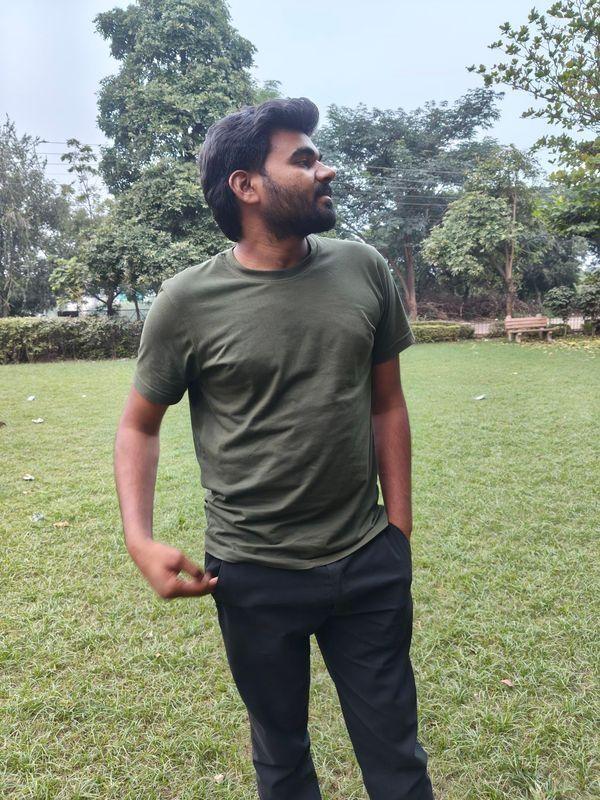
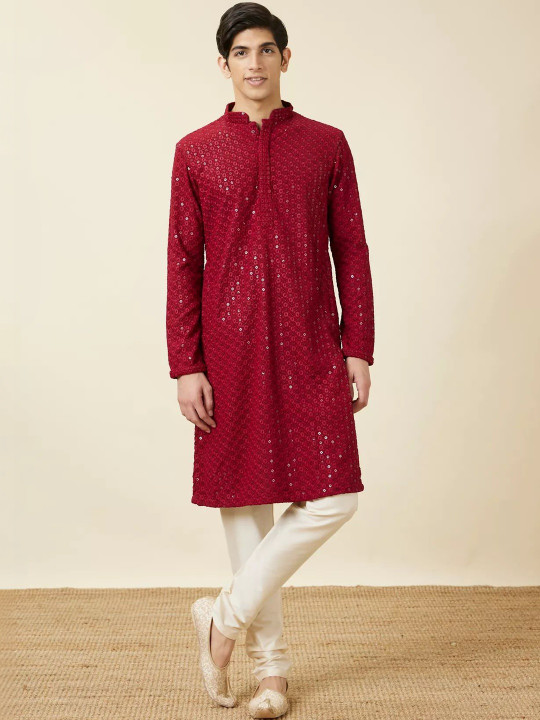
- **Fabric Physics:** The source garment is a heavily embroidered Kurta, likely a silk-georgette or synthetic blend with significant weight due to sequin work. Unlike the user's current jersey cotton t-shirt, this material resists clinging and holds a structured, vertical shape. It features high specularity (shine) due to the sequins, which must react to the environment rather than appearing matte.
- **Key Features:** The Mandarin collar (standing collar) is distinct and higher than the current crew neck. The intricate, repetitive sequin/embroidery pattern must remain sharp without blurring. The straight-cut long sleeves and the deep maroon/ruby red hue are critical. The garment is a tunic length (extending to knees), implying the hemline will fall well below the user's current waistline.
PHASE 2: FIT & DRAPE SIMULATION
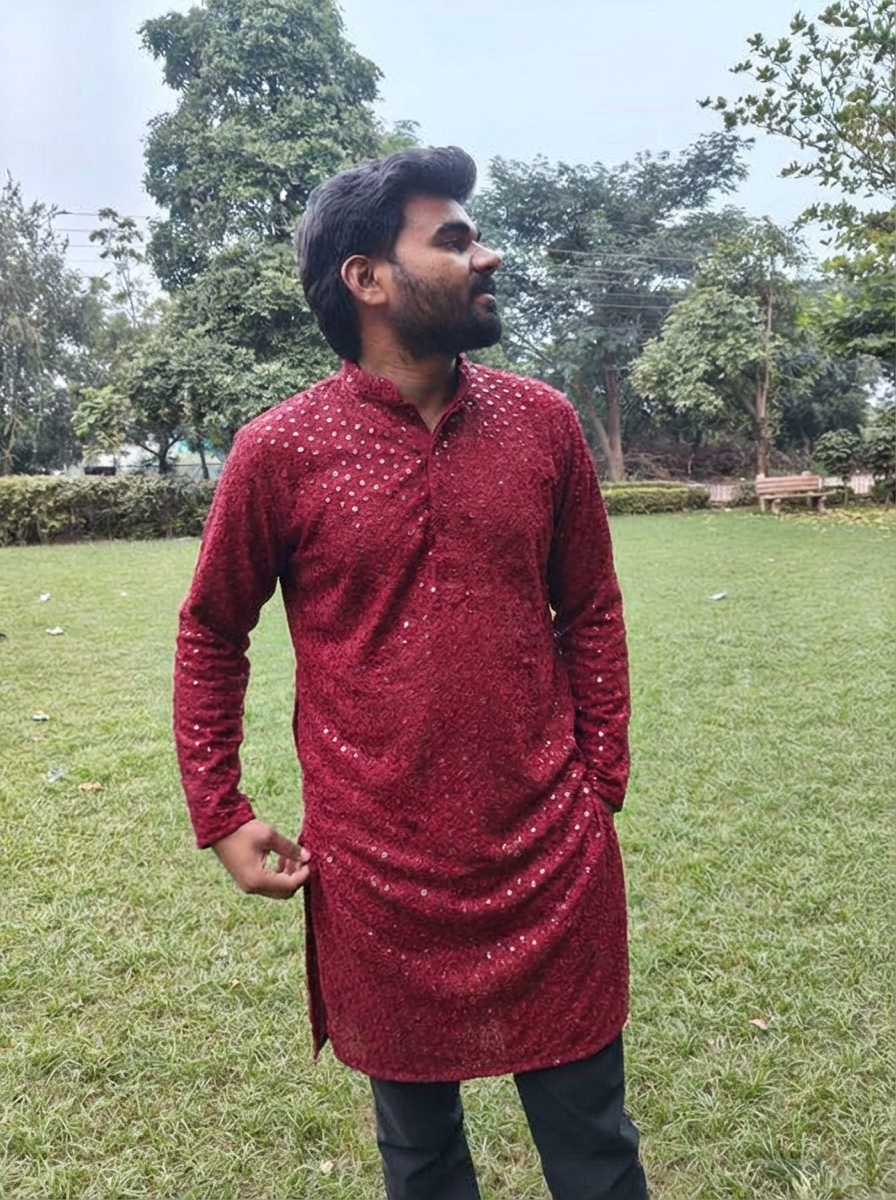
- **Body Mapping:** The Kurta must replace the current form-fitting t-shirt with a looser, rectangular silhouette. The fabric should bridge the gap between the chest and waist rather than following the curve of the stomach. At the user's bent right elbow, the fabric requires "accordion" compression folds. The skirt of the Kurta must extend downwards over the user's black trousers, hanging straight due to gravity, likely obscuring the pockets and upper thigh area.
- **Occlusion Handling:** The user's hair at the nape of the neck and behind the ear must be segmented and layered *over* the new, higher collar. The user's right hand position near the hip requires the Kurta to drape *behind* the hand or be pushed slightly by the wrist interaction, ensuring the hand remains visible and in front of the fabric.
PHASE 3: ENVIRONMENT & LIGHTING
- **Light Match:** The user is in an outdoor environment with soft, diffused, overcast lighting (cool/neutral temperature). The source garment has warm studio lighting. The Kurta's color temperature must be cooled to match the ambient daylight. Shadows should be soft and spread out (ambient occlusion) rather than hard directional shadows.
- **Color Calibration:** The sequins on the Kurta must reflect the ambient environment colors (soft whites of the sky and greens of the grass) rather than studio softboxes. The deep red saturation needs to be slightly desaturated to match the lower contrast of the outdoor "real world" setting.
PHASE 4: IDENTITY PROTECTION
- **Facial Lock:** Absolute freeze required on the user's profile, including the beard line, ear, and full hairstyle. The neck seam must be carefully blended where the new collar sits.
- **Body Integrity:** The user has a broader, more muscular build than the source model. The simulation must expand the Kurta's mesh to fit the user's shoulder width and chest volume without slimming the user or warping the embroidery pattern unnaturally.