Thinking Process
PHASE 1: VISUAL DECONSTRUCTION
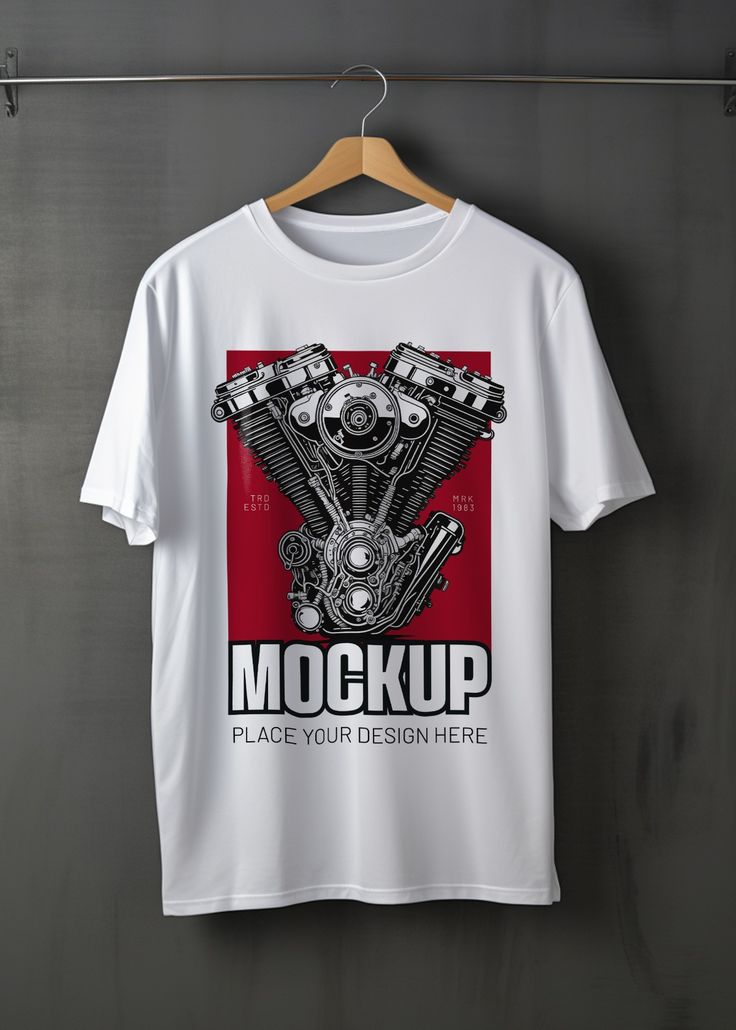
- **Fabric Physics:** The source garment is a standard 100% cotton or cotton-blend jersey. It features a matte finish with very low specular highlights. The drape should be semi-structured but soft; it will not hold rigid folds like the current heavy knit sweater, nor will it flow like silk. It should show micro-wrinkles typical of cotton jersey near stress points.
- **Key Features:**
- **Graphic Integrity:** The central red rectangular print featuring the V-twin engine illustration and the text "MOCKUP PLACE YOUR DESIGN HERE" must be preserved with high fidelity.
- **Neckline:** The crew neck (round collar) construction must replace the current V-neck/collared sweater structure.
- **Sleeves:** Short sleeves with double-stitched hemming.
- **Fit:** Standard fit (not compression, not oversized).
PHASE 2: FIT & DRAPE SIMULATION
- **Body Mapping:**
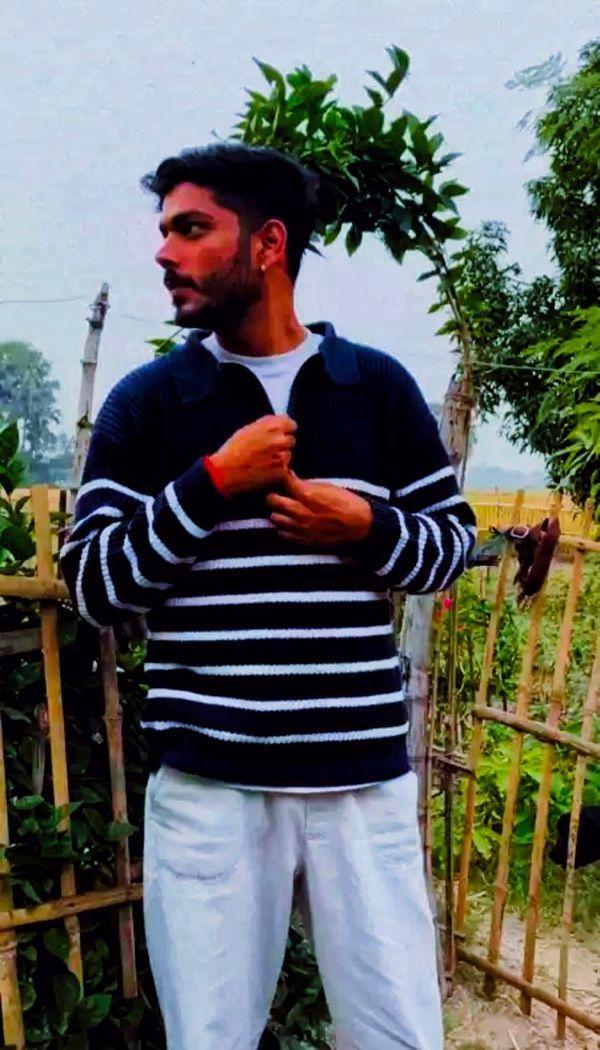
- **Volume Reduction:** The current garment is a thick, bulky knit sweater. The target simulation must estimate the user's true torso volume beneath this bulk to ensure the t-shirt fits the skin closer than the sweater does.
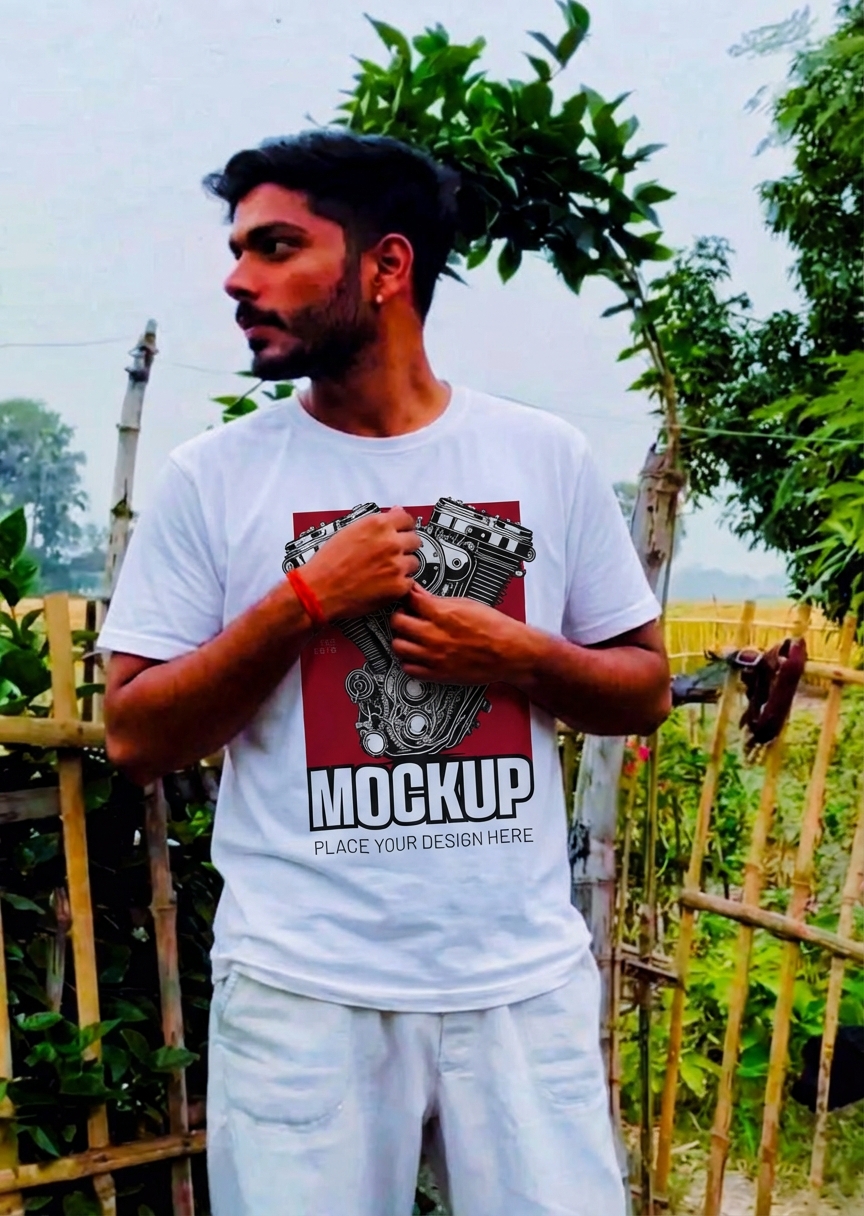
- **Pose Interaction:** The user's elbows are bent, with arms brought up to the chest. The t-shirt fabric must bunch horizontally across the stomach area due to the bent torso posture and gather tightly in the armpits.
- **Neckline Reconstruction:** The current sweater has a high collar. The simulation must inpaint/reconstruct the user's lower neck and trapezius area to accommodate the open crew neck of the t-shirt.
- **Occlusion Handling:**
- **Hands & Fingers:** The user's hands are actively gripping/interacting with the current sweater's lapels. This is a critical occlusion zone. The hands must be segmented and layered *over* the new t-shirt.
- **Graphic Distortion:** Because the hands are positioned over the center chest, they will partially obscure the engine graphic. The graphic must be warped to follow the curvature of the chest *behind* the hands, not pasted flatly over them.
PHASE 3: ENVIRONMENT & LIGHTING
- **Light Match:**
- **Ambient Condition:** The user environment is outdoors with diffuse, overcast/cloudy lighting (cool temperature). There are no harsh directional shadows.
- **Shadow Logic:** Shadows on the t-shirt should be soft and ambient occlusion-based (darker in armpits and where the arms press against the torso).
- **Reflectivity:** The bright white studio lighting of the source image must be neutralized. The white t-shirt must take on the slightly cool, blue-grey tint of the outdoor environment to match the white balance of the user's pants.
- **Color Calibration:** The red background of the graphic should be slightly desaturated to match the lower contrast of the user image, preventing it from looking like a "sticker" placed on top.
PHASE 4: IDENTITY PROTECTION
- **Facial Lock:** The user's side profile, including jawline, facial hair, ear structure, and the hair on top of the head, must be strictly frozen and masked out of any generation.
- **Body Integrity:** While the volume of the clothing changes (thick sweater to thin t-shirt), the underlying anatomical structure (shoulder width, arm length, torso length) must remain unaltered. Do not slim the user's actual body mass; only remove the artificial bulk of the current sweater.