Thinking Process
PHASE 1: VISUAL DECONSTRUCTION
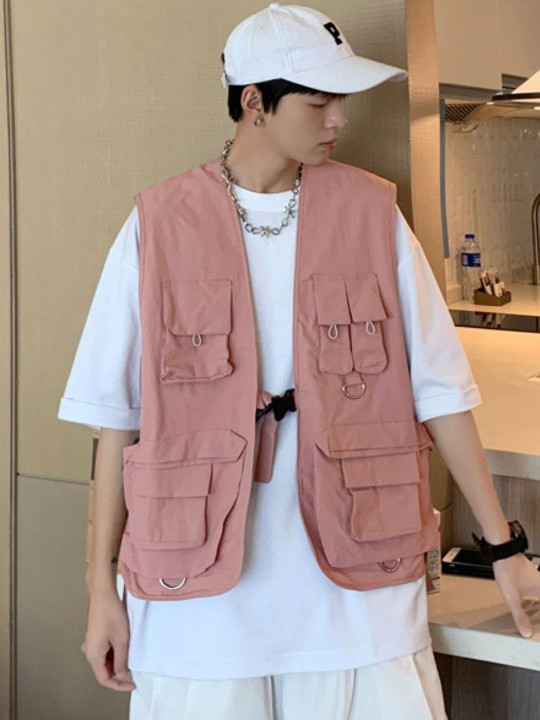
- **Fabric Physics:** The target ensemble consists of two distinct layers: an inner heavyweight cotton jersey T-shirt and an outer utility vest made of stiff canvas or nylon blend. The vest has high structural rigidity and low elasticity; it should not cling to the body but rather sit atop the undershirt. The D-rings and metal hardware require specular highlights, while the vest fabric requires a matte, textured finish to simulate canvas weave.
- **Key Features:** The 3D geometry of the cargo pockets (box pleats and flaps) must maintain volume and not look flattened. Crucial details include the silver metal D-rings on the hem and chest, the central black buckle/strap mechanism, and the distinct "dusty pink/salmon" colorway. The oversized, drop-shoulder silhouette of the white undershirt sleeve must be preserved.
PHASE 2: FIT & DRAPE SIMULATION
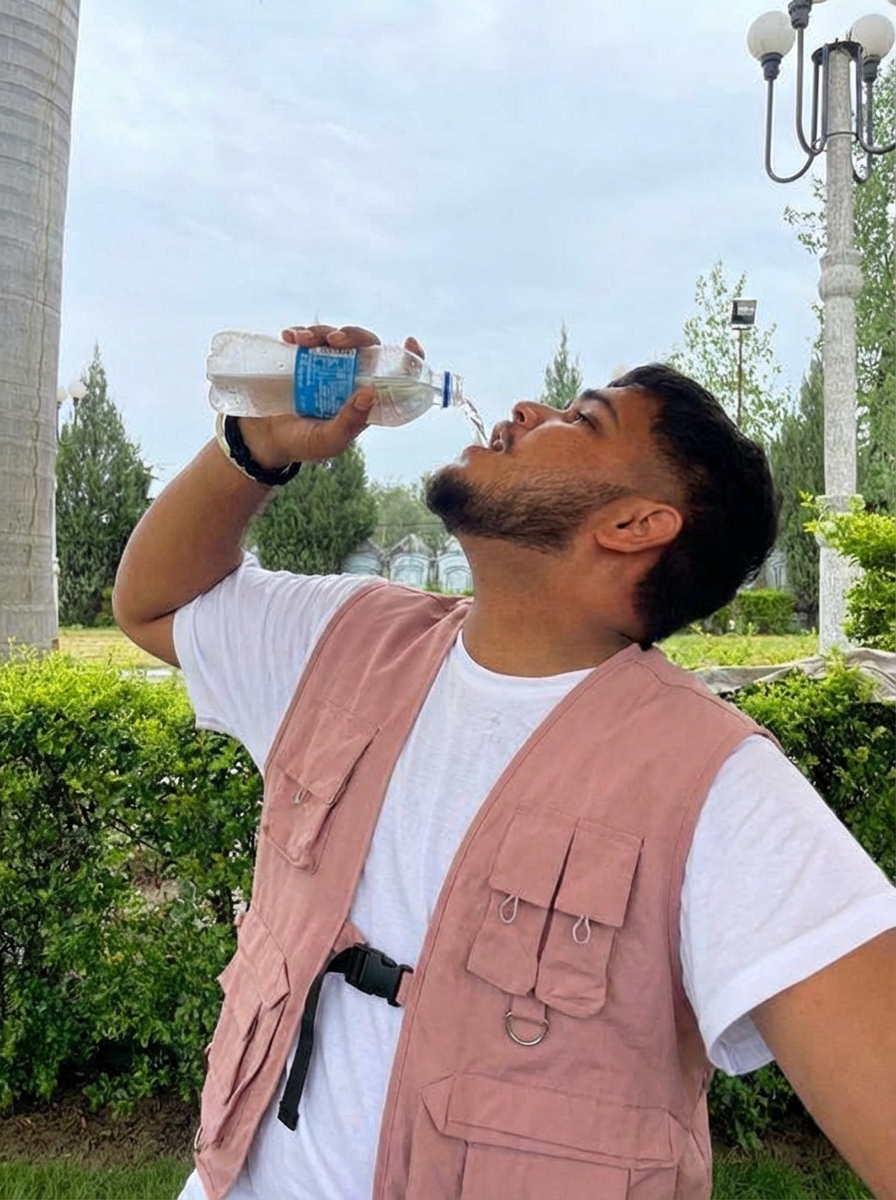
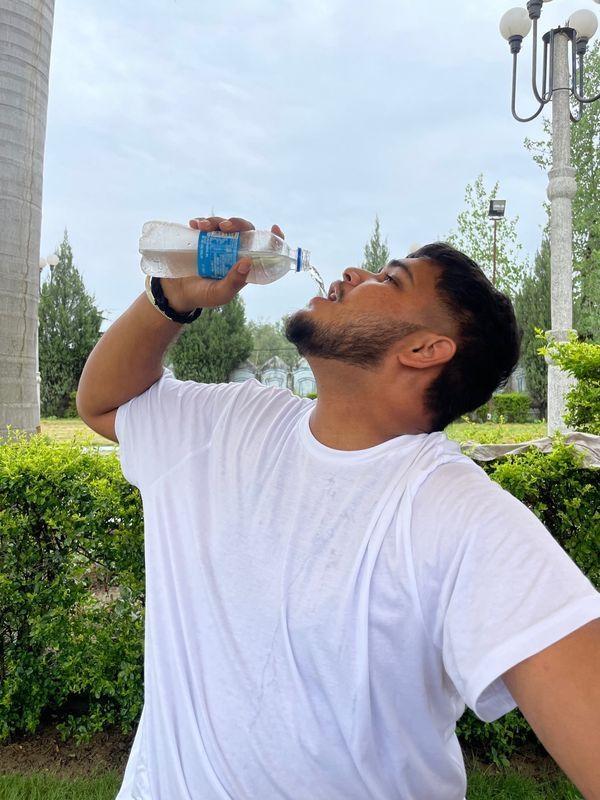
- **Body Mapping:** Due to the user's raised right arm (drinking pose), the garment simulation must account for asymmetrical tension. The right armhole of the vest will lift higher, causing the fabric to bunch slightly at the right clavicle. The left side of the vest should hang straight down due to gravity, pulling away from the torso slightly. The underlying white T-shirt sleeve on the right arm will compress and fold significantly into the armpit/deltoid area.
- **Occlusion Handling:** The user's right hand, wrist, and the black beaded bracelet/watch are currently elevated. The simulation must strictly mask the wrist area to ensure the sleeve goes *under* the bracelet and hand. The user's beard overlaps the neckline; the garment collar must pass *behind* the beard hair to maintain depth realism.
PHASE 3: ENVIRONMENT & LIGHTING
- **Light Match:** The User Image features soft, diffused, cool-toned daylight (overcast sky) coming from above/behind. The Source Image has warm, directional indoor studio lighting. The new garment's lighting must be neutralized and relit with a cool ambient skylight. Shadows cast by the vest pockets must be soft and diffuse, not harsh.
- **Color Calibration:** The source garment's warm, pink tone must be color-graded to reflect the cooler outdoor environment. A slight desaturation and blue-shift are required to prevent the vest from looking like a pasted sticker. The white of the source undershirt must match the exposure and white balance of the user's existing surroundings (avoiding blowout).
PHASE 4: IDENTITY PROTECTION
- **Facial Lock:** Absolute freeze on the entire head region, specifically the jawline, beard, ears, and the complex interaction between the mouth and the water bottle. The neck region above the suprasternal notch must remain untouched.
- **Body Integrity:** The user has a broader, more muscular build than the source model. The simulation must warp the garment to fit the user's volume (shoulder width and chest depth) without slimming the user or distorting the aspect ratio of the vest's pockets. The user's skin tone on the visible right arm must be preserved.