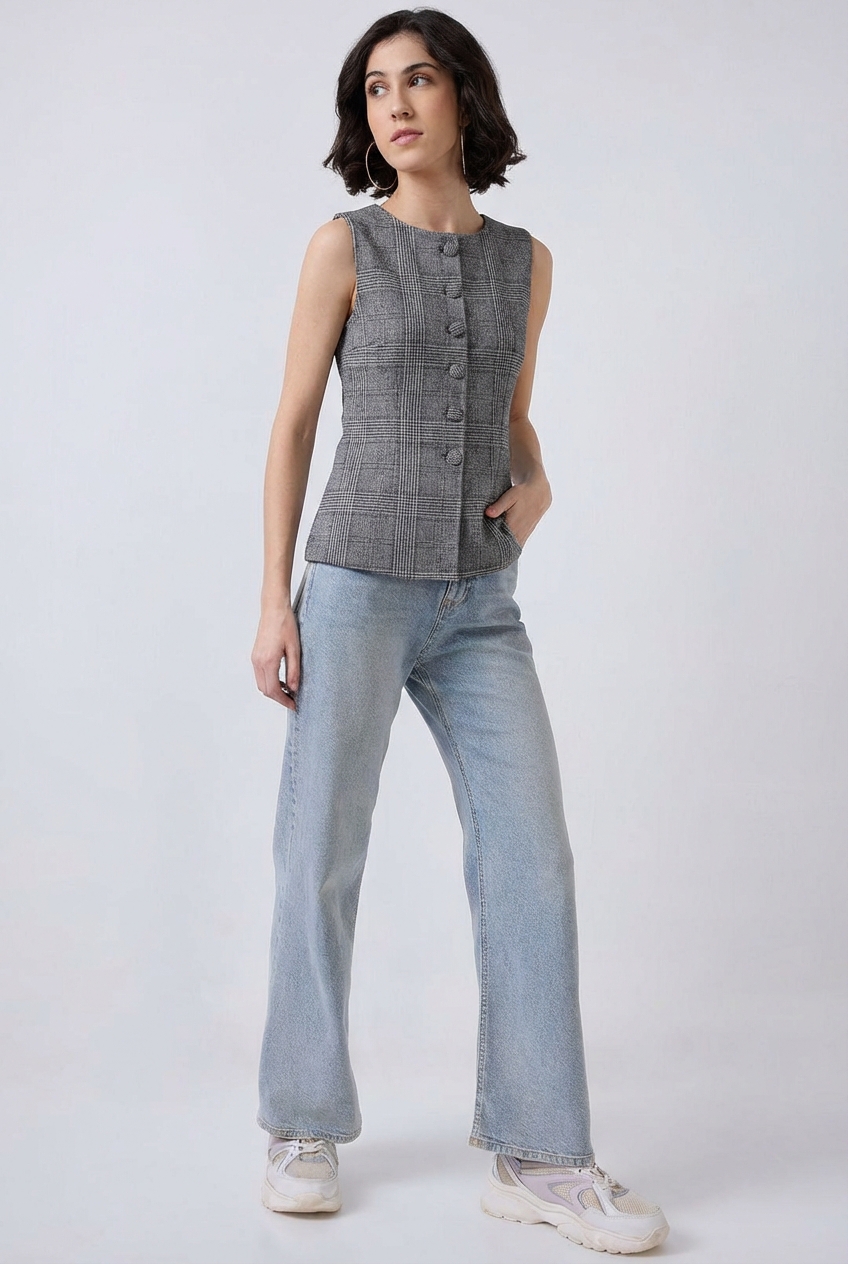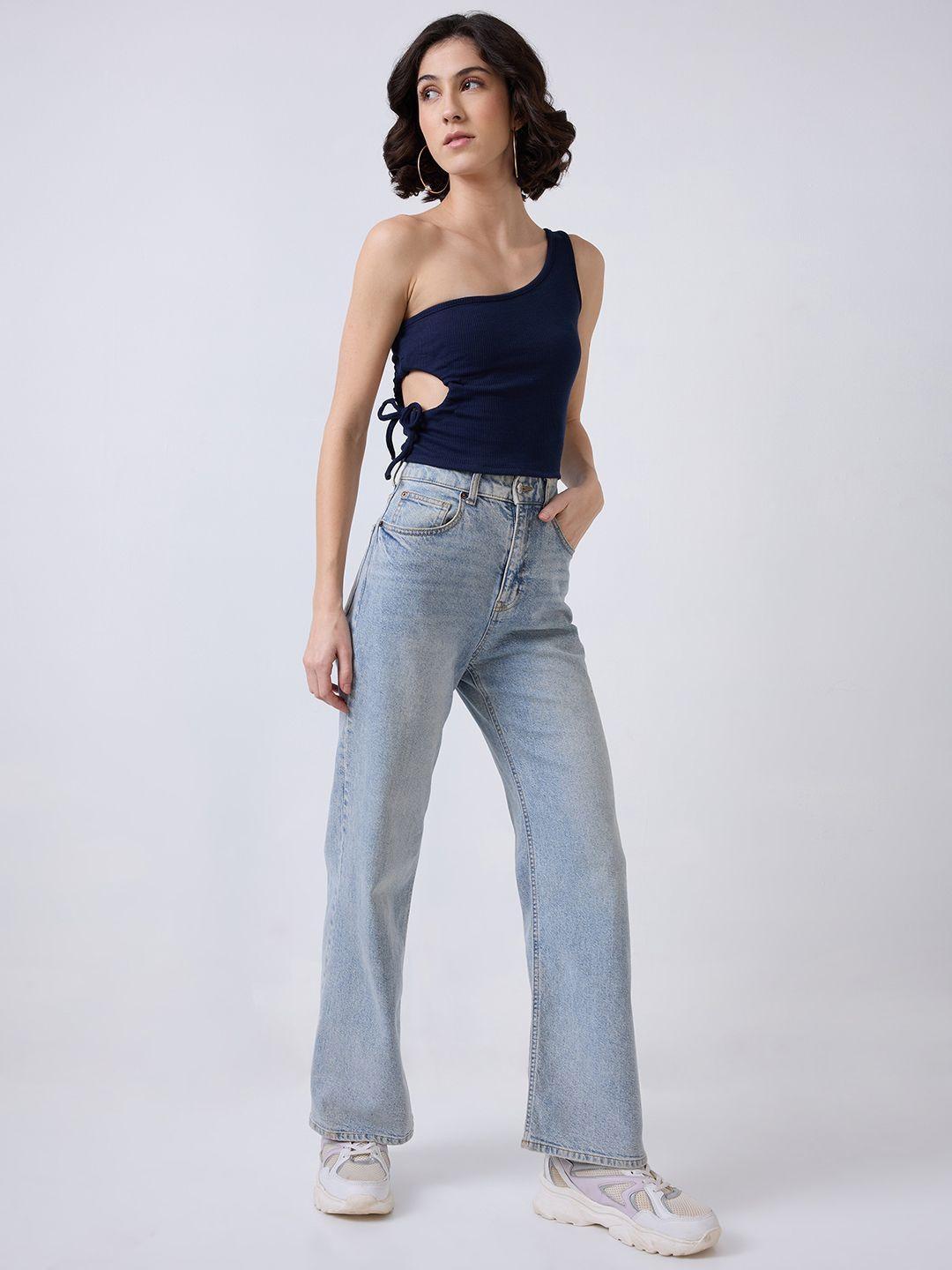
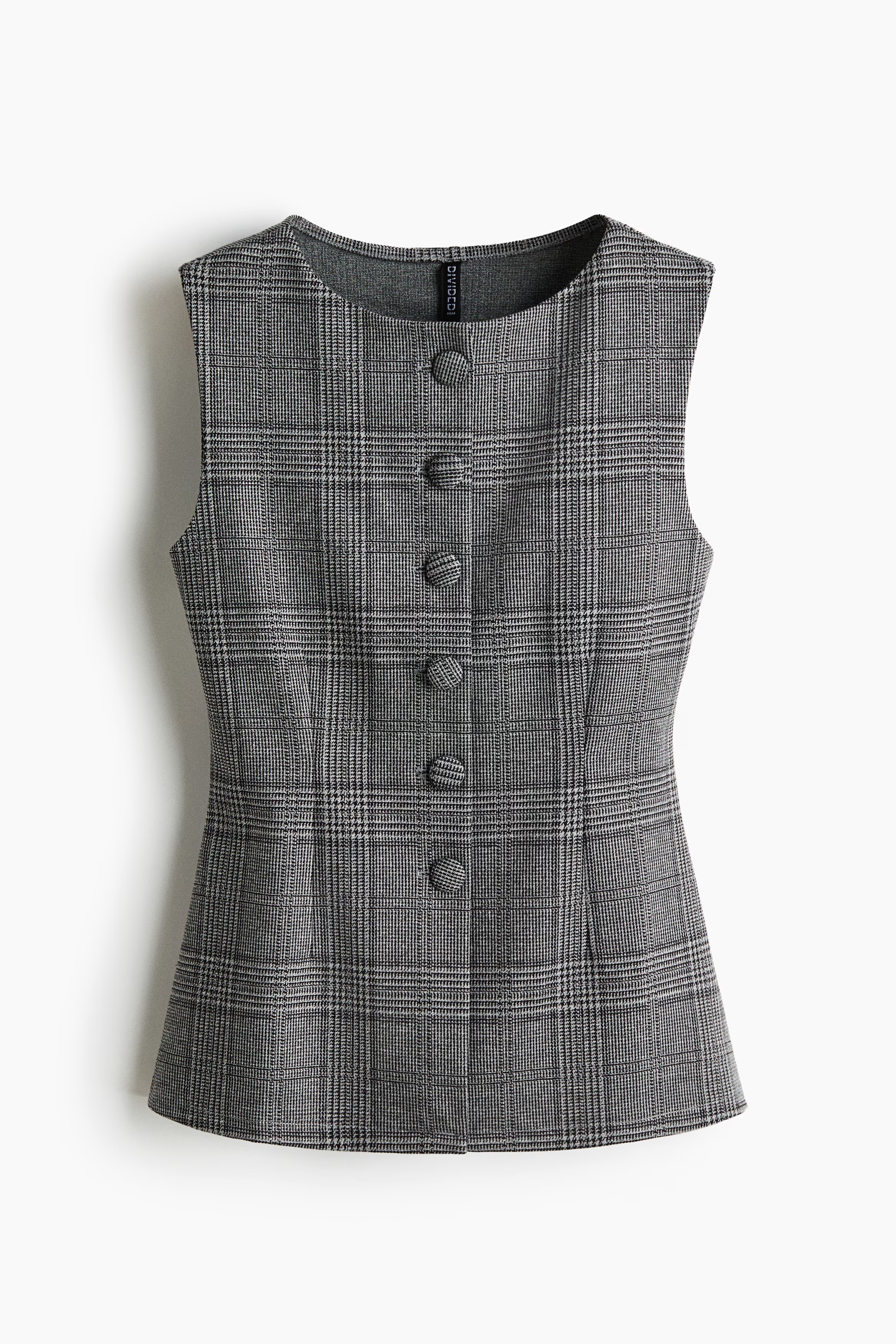
Thinking Process
PHASE 1: VISUAL DECONSTRUCTION
- **Fabric Physics:** The source garment is a structured, woven textile (likely a wool-blend or heavy polyester tweed). It possesses high stiffness and low elasticity compared to the user's current ribbed top. The surface is matte with a tactile texture due to the weave; it should diffuse light rather than reflect it specularly.
- **Key Features:**
- **Pattern:** Complex Glen Plaid/Houndstooth check (grey, black, white) which must not become distorted or blurred during warping.
- **Closures:** Six fabric-covered buttons down the center placket; these must retain their 3D convex shape and cast small drop shadows.
- **Structure:** High round neckline, princess seams (vertical darts) for shaping, and sleeveless armholes with bias binding.
- **Tag:** The "DIVIDED" neck label is visible in the source but should be occluded by the user's neck/back in the final render.
PHASE 2: FIT & DRAPE SIMULATION
- **Body Mapping:**
- **Shoulder Reconstruction:** The user is currently wearing a one-shoulder top. The simulation must generate the missing left strap (viewer's right) of the new vest over her bare shoulder, ensuring the armhole sits anatomically correctly near the axilla.
- **Silhouette Change:** Unlike the current body-con tank, the target vest is semi-fitted and structured. It should skim the torso rather than cling, hanging straight from the bust to the hips with minimal wrinkling.
- **Hemline Interaction:** The vest is longer than the current crop top. It should extend past the waistband of the jeans, effectively covering the button/fly area and the top of the pockets.
- **Occlusion Handling:**
- **Hair:** The user's dark bob touches the nape of the neck. The vest's high collar must pass *under* the hair tips, creating a realistic collision where the hair rests on the fabric.
- **Left Arm/Pocket:** The user's left hand (viewer's right) is in her pocket. The vest hem will likely drape over the wrist or bunch slightly where the arm enters the pocket interaction zone.
- **Earrings:** The large gold hoop earrings must remain the top-most layer, unaffected by the garment transfer.
PHASE 3: ENVIRONMENT & LIGHTING
- **Light Match:** The user is in a high-key studio setting with soft, diffuse lighting coming from the front-right. The new garment requires ambient occlusion generated under the chin and armpits. Shadows cast by the buttons must align with the shadow cast by the user's nose (down and slightly left).
- **Color Calibration:** The source image is slightly warmer/darker. The white threads in the plaid pattern must be color-corrected to match the cool, neutral white point of the user's environment to avoid the vest looking "yellowed."
PHASE 4: IDENTITY PROTECTION
- **Facial Lock:** Absolute freeze on the facial region (eyes, nose, mouth) and the jawline. The neck geometry must remain consistent, only modified where the new high collar obscures it.
- **Body Integrity:** The user's arm thickness and shoulder width must remain unchanged. The simulation must add volume *outward* for the vest's fabric thickness, rather than shrinking the user's body to fit the clothes. Skin tone on the arms and face must not be altered by color bleed from the grey garment.