Thinking Process
PHASE 1: VISUAL DECONSTRUCTION
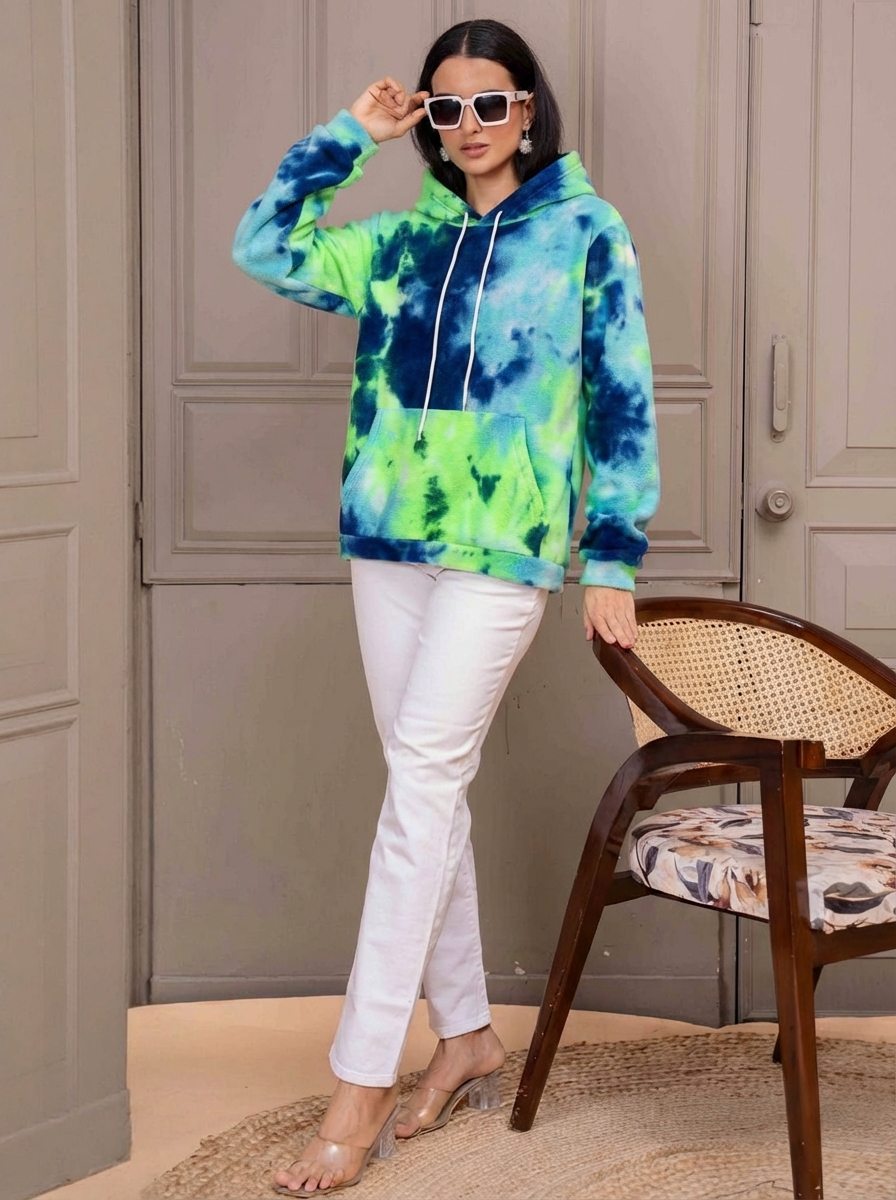
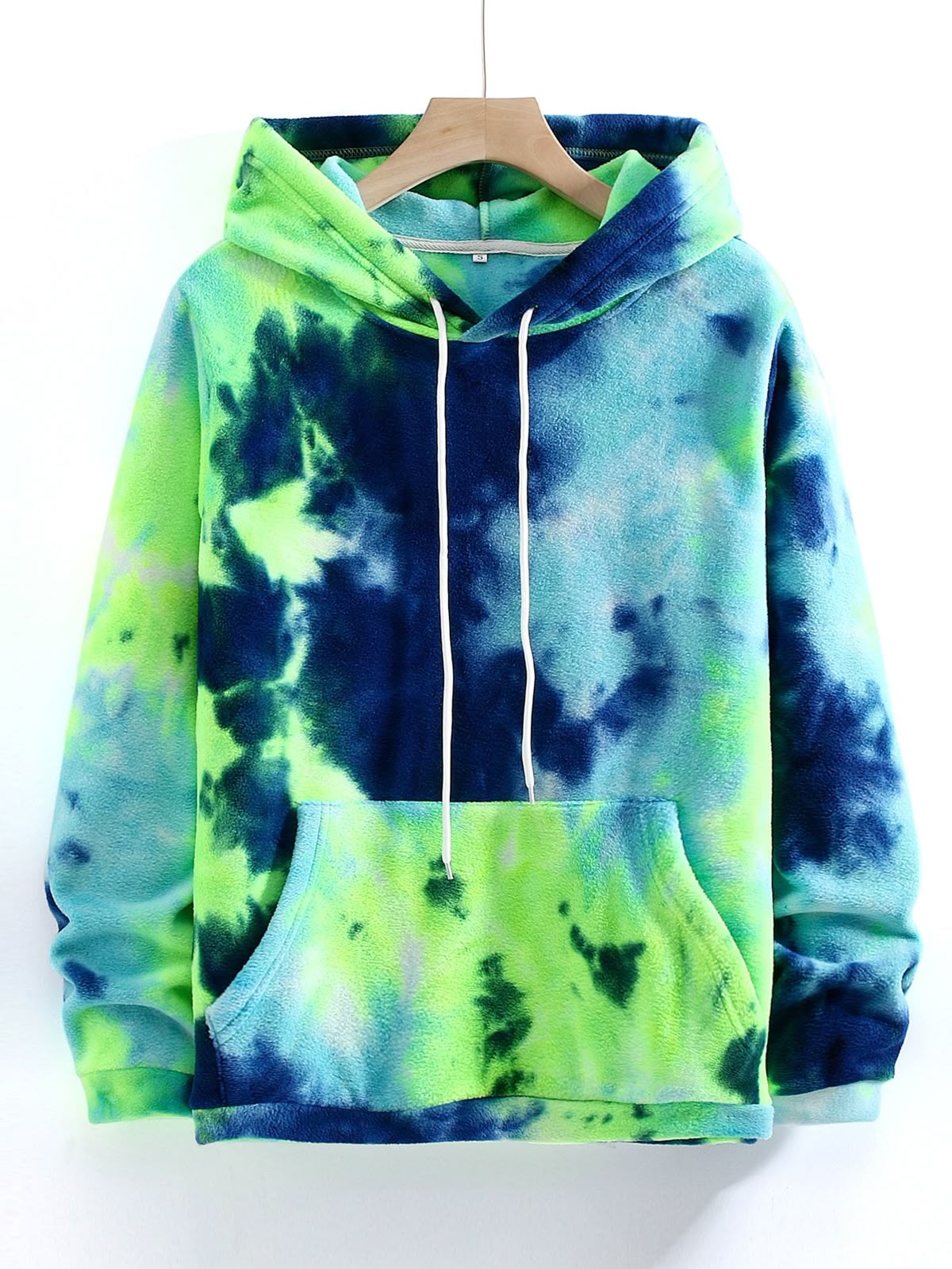
- **Fabric Physics:** The source garment is a fleece or heavy cotton-blend hoodie with a "teddy" or brushed texture. It has high thickness and low elasticity. The material is matte and highly light-absorbent (diffuse reflection only); it should not show specular highlights. The drape is heavy and semi-rigid, creating soft, thick folds rather than sharp creases.
- **Key Features:** The tie-dye pattern (neon green/blue) must maintain spatial consistency. Critical elements to preserve include the white rope drawstrings (must react to gravity), the front kangaroo pocket structure, the ribbed elastic cuffs at the wrists and hemline, and the bulk of the hood resting at the neckline.
PHASE 2: FIT & DRAPE SIMULATION
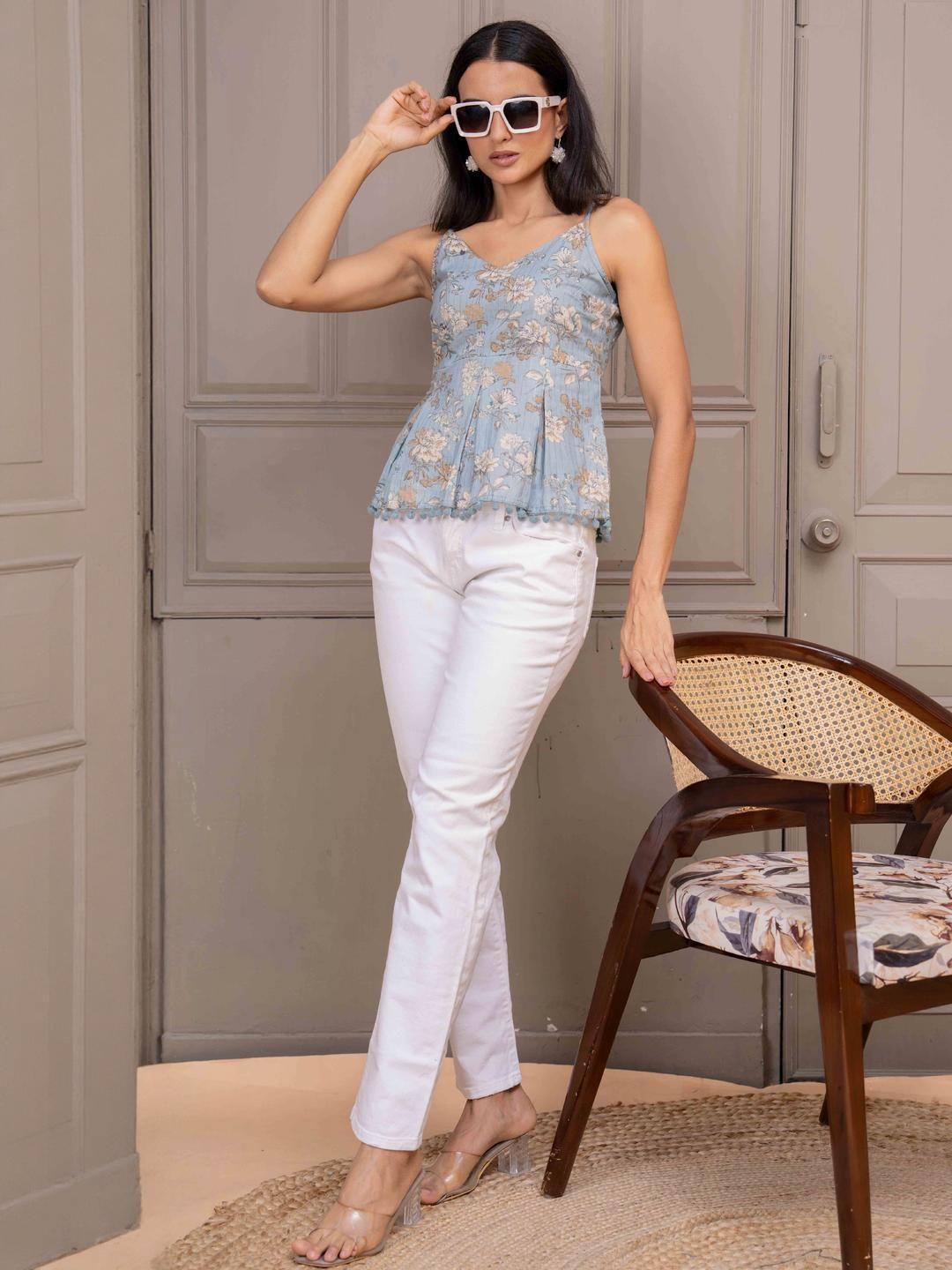
- **Body Mapping:** The garment must transition from the current form-fitting camisole silhouette to a relaxed, oversized streetwear silhouette.
- **Right Arm (Bent):** Significant fabric bunching and compression wrinkles are required at the inner elbow. The sleeve cuff must sit naturally at the wrist, likely sliding down slightly due to the raised arm.
- **Left Arm (Straight):** The fabric will hang straight with gravity, pooling slightly above the ribbed cuff at the wrist.
- **Torso:** The hoodie will obscure the current waistline of the white jeans. It should hang somewhat loosely away from the midriff, not hugging the curves, adding volume to the upper body.
- **Occlusion Handling:**
- **Hair:** The user's long dark hair currently rests on bare shoulders. The hoodie material must be generated *underneath* the hair, or the hair must be re-projected on top of the hood fabric around the neck/shoulder area.
- **Right Hand:** The hand touching the sunglasses is a hard occlusion layer; the sleeve cuff must terminate before the hand or sit behind the wrist joint, ensuring no fabric clips through the fingers/face.
- **Left Hand:** The hand resting on the chair must impinge upon the sleeve cuff/hem; the chair back is a background element.
PHASE 3: ENVIRONMENT & LIGHTING
- **Light Match:** The user scene features soft, warm, diffuse studio lighting originating from the front-left. The new garment must generate self-shadowing (ambient occlusion) particularly inside the hood cavity, under the bent right arm, and beneath the kangaroo pocket. The hoodie's brightness needs to be modulated to match the contrast levels of the white jeans.
- **Color Calibration:** The source image has cool, high-contrast lighting. The neon green and deep blue of the hoodie must be color-graded with a slight warm cast to integrate with the beige/brown tones of the room and the user's warm skin tone, preventing the garment from looking "pasted on."
PHASE 4: IDENTITY PROTECTION
- **Facial Lock:** Absolute freeze required on the entire head region, including the sunglasses, nose, mouth, jawline, and the specific angle of the neck. The position of the right hand and fingers near the face must remain pixel-perfect.
- **Body Integrity:** Strictly prohibit any slimming or warping of the user's lower body (legs, white jeans). The hips and leg stance must remain anchored. The upper body volume will increase due to the hoodie's thickness, but the underlying skeletal shoulder width must not change.