Thinking Process
PHASE 1: VISUAL DECONSTRUCTION
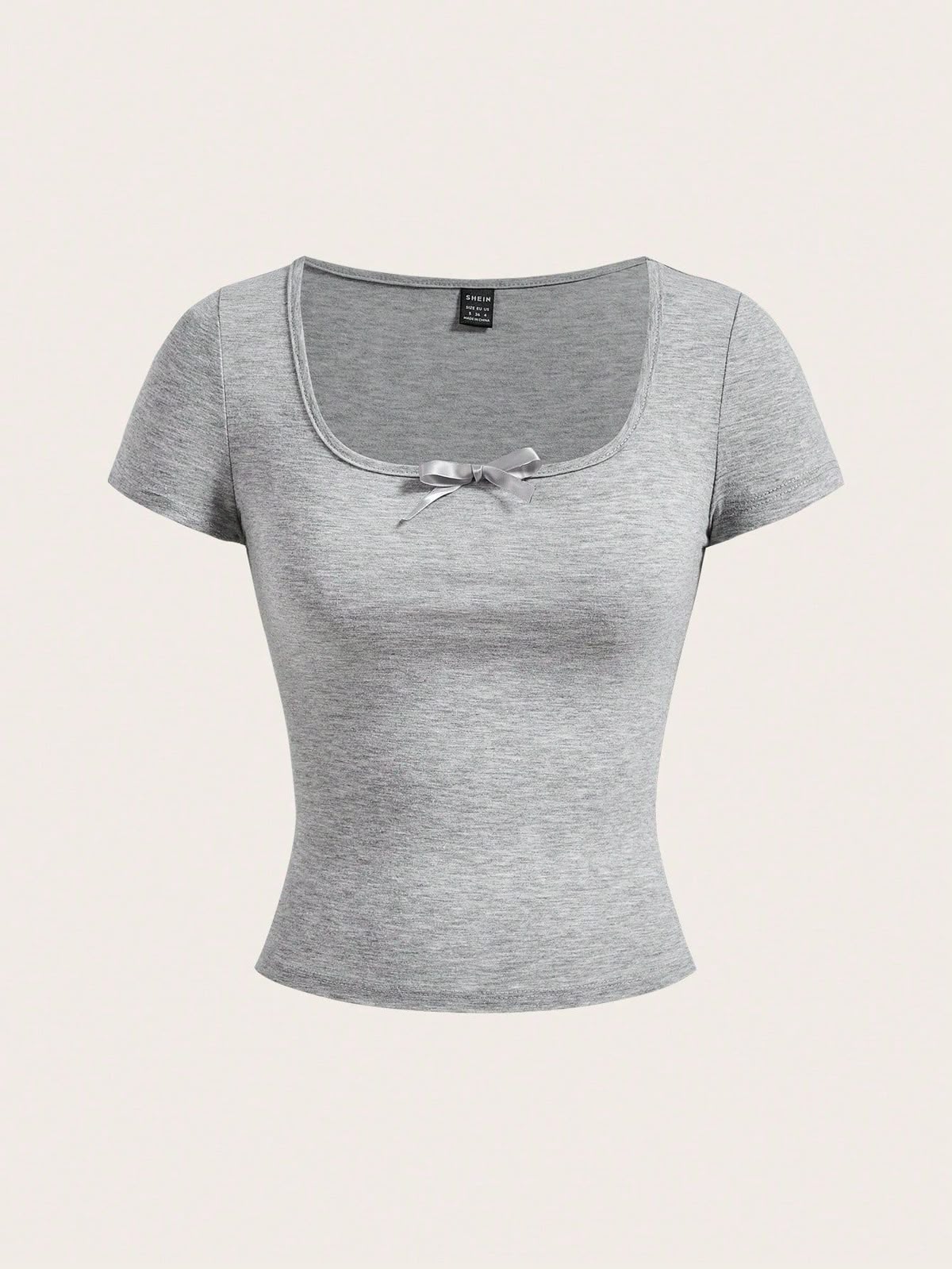
- **Fabric Physics:** The source garment appears to be a cotton-spandex or jersey knit blend (heather grey). It has high elasticity and a matte finish. Unlike the user's current loose, woven top, this material is fitted and will contour closely to the body. It should absorb light with very soft, diffuse highlights, showing no specular shine.
- **Key Features:** The small satin bow at the center of the square neckline is the critical detail that must be preserved without distortion. The "cap sleeve" cut needs to be maintained. The slight heathered texture of the grey fabric must be visible to prevent it from looking like solid grey fill. The tag inside the collar should be removed or obscured by the neck/hair natural positioning.
PHASE 2: FIT & DRAPE SIMULATION
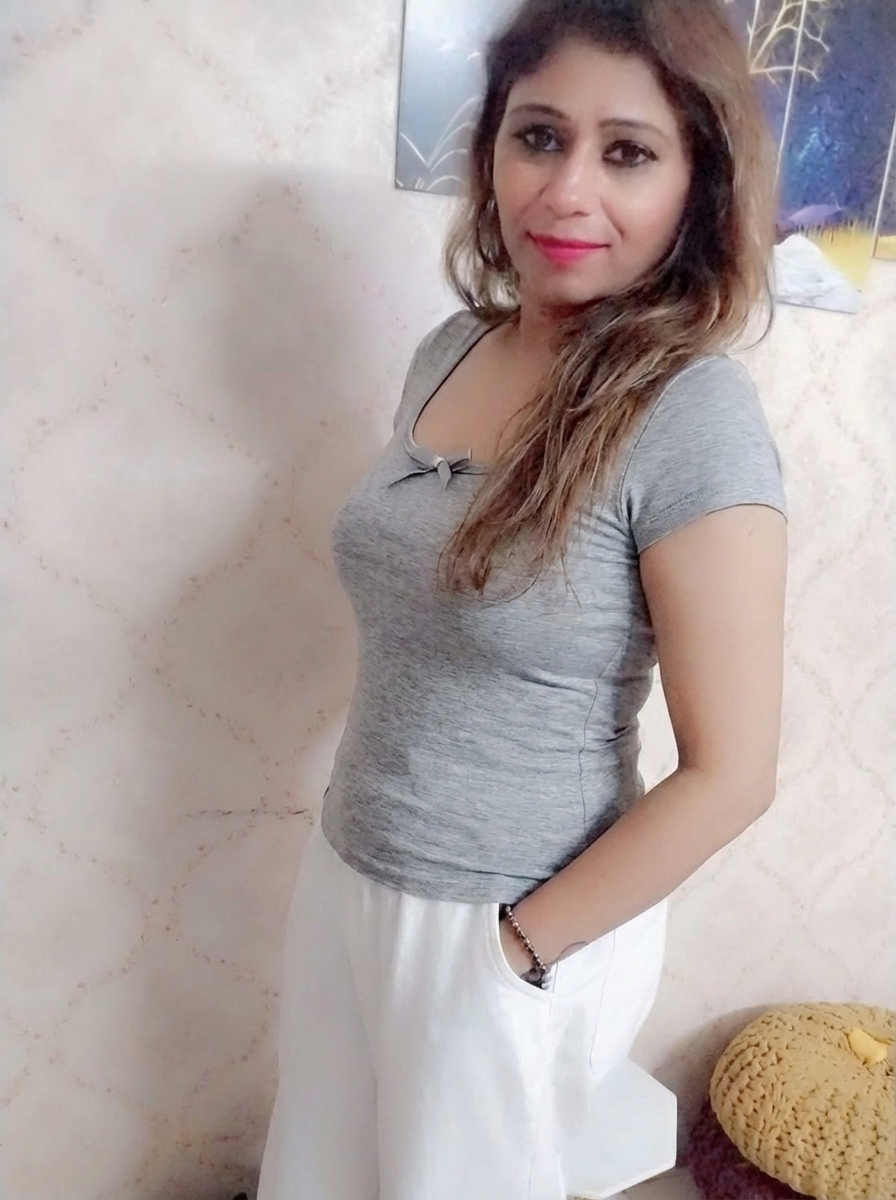
- **Body Mapping:** The user is standing in a 3/4 turn (angled away from the camera). The frontal source image must be volumetrically warped to wrap around the torso's rotation. Since the source is a fitted "baby tee" style, it must conform to the curvature of the bust and waist, contrasting with the loose trapezoidal shape of the current floral top. The hemline should sit near the high hip/waistband of the white pants.
- **Occlusion Handling:** This is the most critical technical challenge. The user has long, textured hair cascading over the left shoulder and chest. The new grey top must be generated *underneath* these hair strands. The hair segmentation mask must be aggressive to ensure strands are not erased or plastered over the new neckline. The user's left arm/wrist is partially blocking the hip area; the shirt hem must interact naturally behind the wrist if it reaches that low.
PHASE 3: ENVIRONMENT & LIGHTING
- **Light Match:** The user's environment has soft, diffuse indoor lighting, seemingly coming from the front-left, casting soft shadows to the right. The flat, bright studio lighting of the source garment must be dimmed. Shadows need to be generated mainly in the axillary (armpit) region and under the bust to match the room's depth cues.
- **Color Calibration:** The user's image has a slightly cool/magenta ambient cast typical of indoor smartphone photography. The neutral grey of the source garment must be color-graded slightly towards this cool tone to blend appropriately, otherwise, it will look too "warm" or "clean" compared to the white pants and skin tone.
PHASE 4: IDENTITY PROTECTION
- **Facial Lock:** The entire head region, specifically the jawline, lips, nose, and eyes, must be strictly frozen. The hairline and the volume of the hair must remain pixel-identical to the original.
- **Body Integrity:** Do not alter the user's BMI or skeletal structure. While the new shirt is tighter, the underlying body volume (arm width, waist width relative to hips) must remain consistent with the original image. Do not slim the arms or change the skin tone of the exposed arms.