
Thinking Process
PHASE 1: VISUAL DECONSTRUCTION
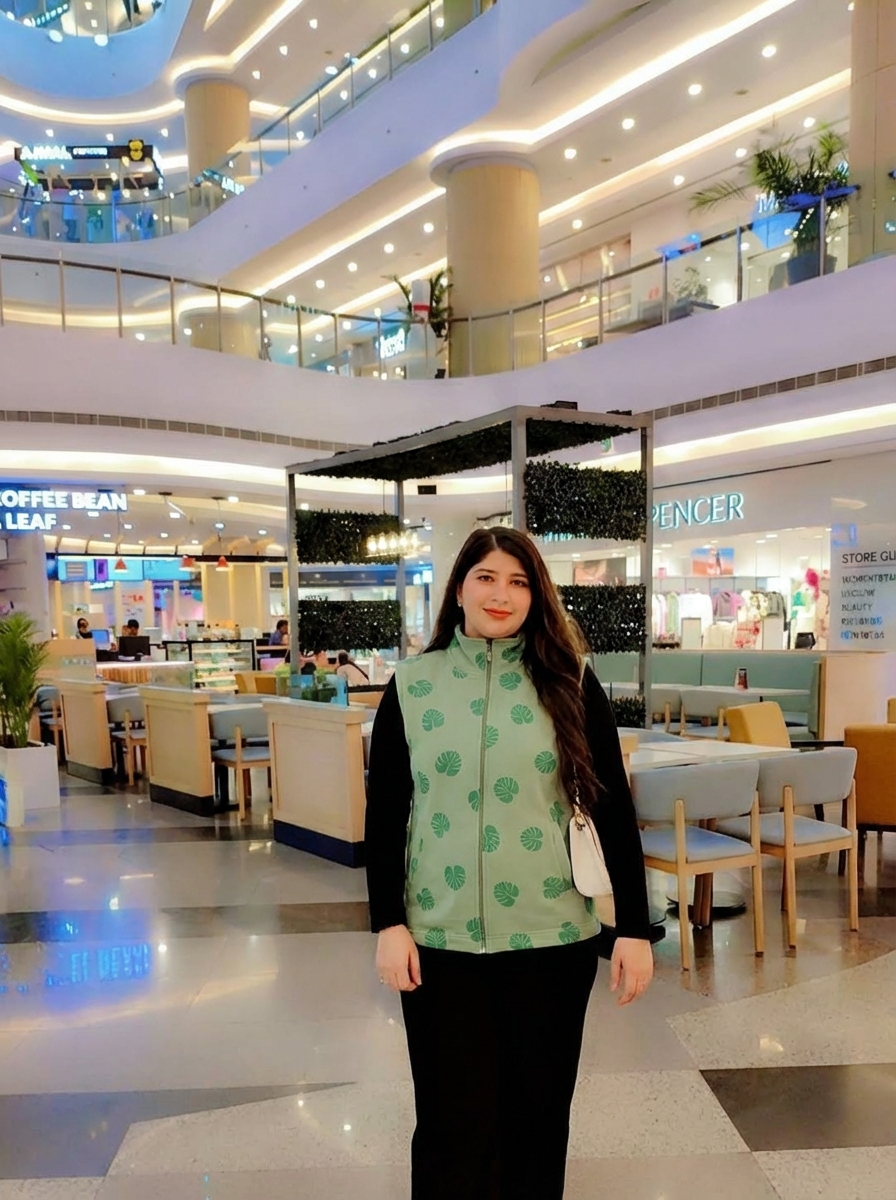
- **Fabric Physics:** The source garment is a structured fleece or thick cotton-blend jersey gilet (vest). It possesses a matte finish with high light absorption (low specularity). The material has moderate stiffness, evidenced by the standing collar and the way the hem holds its shape without clinging, requiring a simulation of semi-rigid cloth dynamics rather than fluid drape.
- **Key Features:** The central vertical zipper with its distinct pull tab, the standing funnel-neck collar, the specific "Monstera" leaf pattern distribution, and the welted side pockets must be preserved. The contrast between the sage green vest and the black long-sleeve underlayer (if being transferred as a set) is critical for visual depth.
PHASE 2: FIT & DRAPE SIMULATION
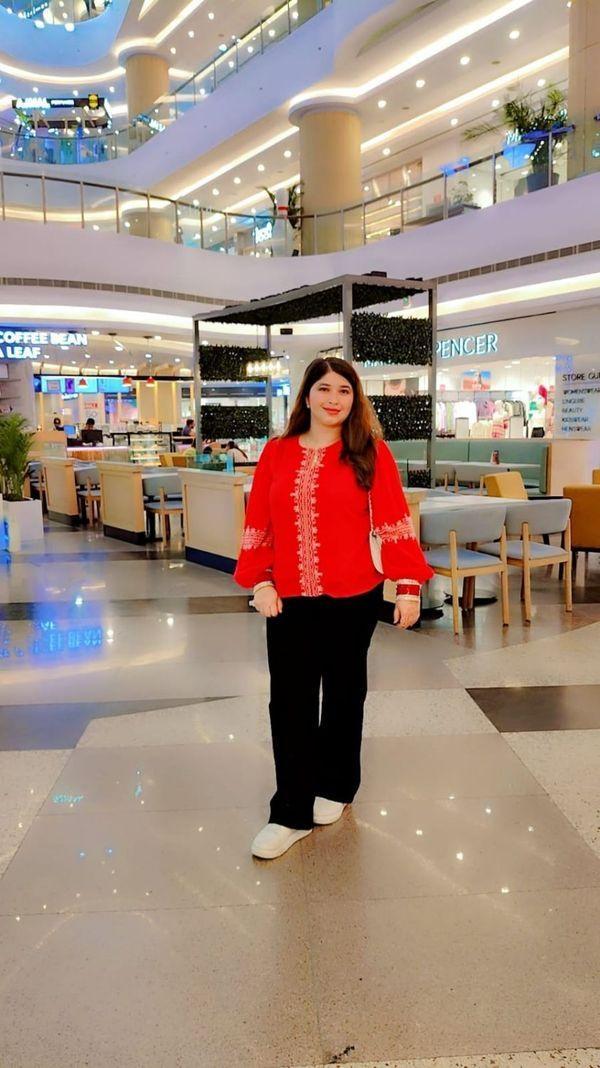
- **Body Mapping:** The vest must adapt to the user's torso width, which is slightly broader than the source model. The garment should hang vertically from the shoulders with a relaxed fit, avoiding tightness around the bust or waist. The collar must sit naturally around the user's neck, replacing the current red neckline, without cutting into the jawline. The black sleeves (assuming full upper-garment transfer) must conform to the user's arm volume, replacing the loose red sleeves with the tighter fit of the source's black underlayer.
- **Occlusion Handling:**
1. **Hair:** The user's long dark hair flows over both shoulders and down the chest. This is a critical occlusion; the hair mask must be generated first, and the new vest must be rendered *behind* the falling hair strands.
2. **Accessories:** The white purse/bag visible on the user's left side (viewer's right) interacts with the hip/waist area. The garment simulation must account for this object, ensuring the vest passes behind the bag or terminates naturally before intersecting it.
PHASE 3: ENVIRONMENT & LIGHTING
- **Light Match:** The target environment is a shopping mall with diffuse, cool-toned overhead LED lighting. The source image has studio lighting (neutral/warm). The generated garment must be relit to reflect the cool ambient temperature of the mall. Shadows on the vest should cast downward (from ceiling lights) rather than laterally, matching the lack of harsh directional shadows in the user's original photo.
- **Color Calibration:** The sage green of the vest may appear washed out in bright mall lighting. Saturation needs to be slightly boosted to maintain the pattern visibility against the bright, reflective background, while the black under-sleeves must remain true black without crushing details into the dark background of the pants.
PHASE 4: IDENTITY PROTECTION
- **Facial Lock:** Absolute freeze on the user's facial features, skin tone, and head shape. The boundary line is the neck; the jawline must remain untouched by the high collar of the vest.
- **Body Integrity:** The simulation must respect the user's natural silhouette. Do not warp the user's torso to match the slimmer profile of the source model. The vest must be computationally "sized up" to fit the user's actual proportions, ensuring the leaf pattern wraps around the curves correctly without linear stretching. The lower body (black trousers) must remain completely unaltered.