Thinking Process
PHASE 1: VISUAL DECONSTRUCTION
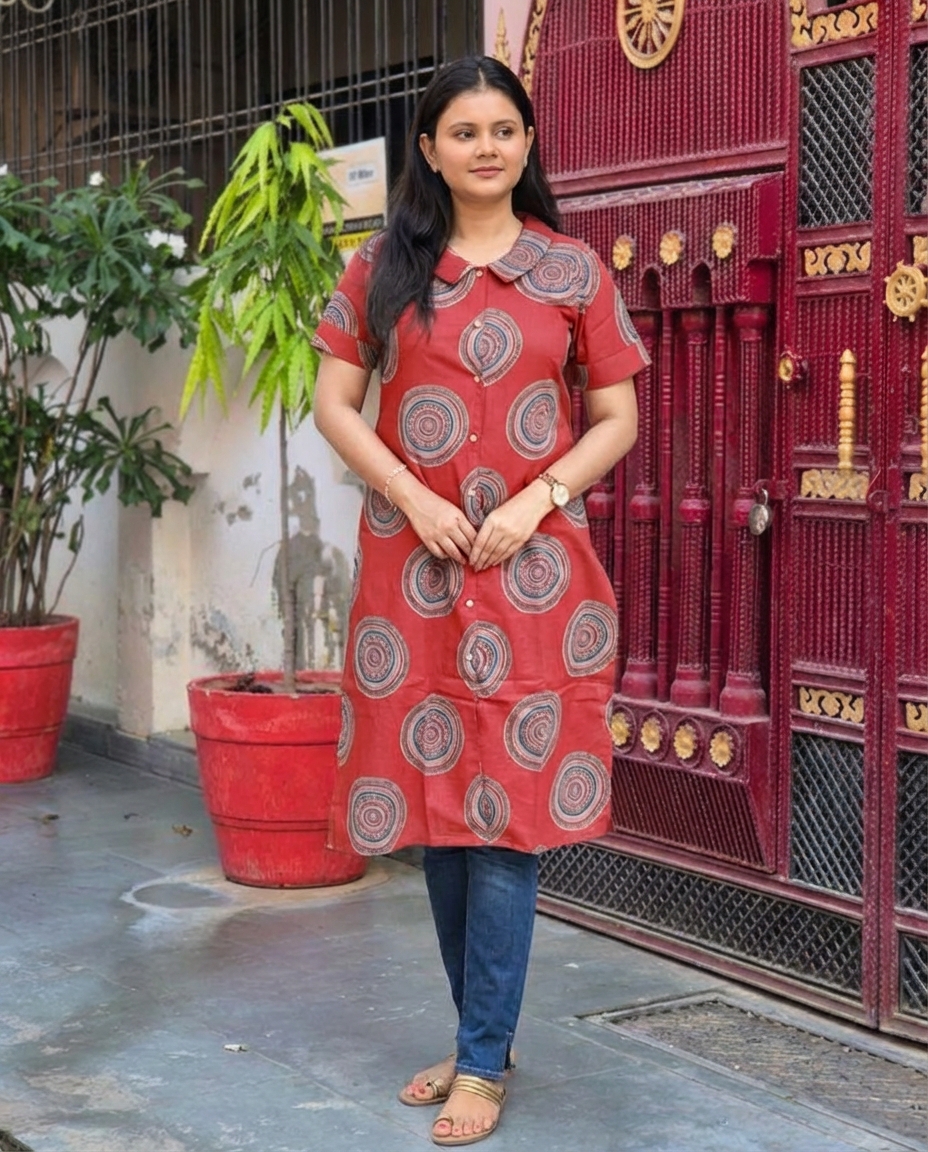
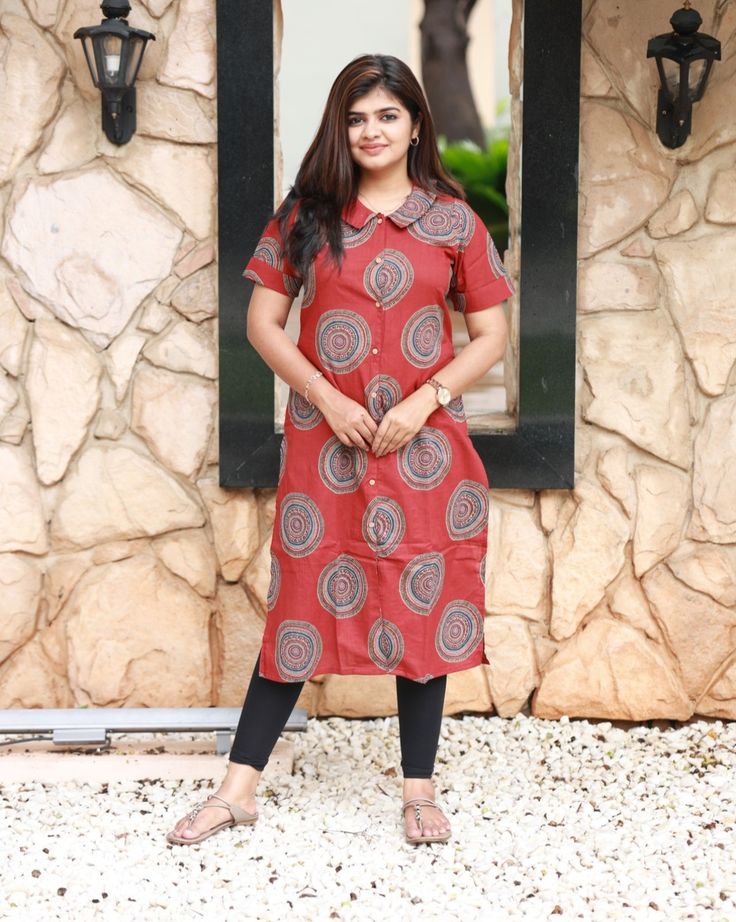
- **Fabric Physics:** The source garment is a knee-length tunic (kurta), likely composed of cotton or a cotton-linen blend. It possesses a matte finish with diffuse light reflection (no specular highlights). The fabric has moderate weight, allowing for a structured drape that holds the shape of the collar and cuffs while hanging relatively straight due to gravity, rather than clinging to body contours.
- **Key Features:** The Peter Pan collar, the central button placket with visible buttons, and the cuffed short sleeves are critical rigid elements. The large, repeating circular medallion patterns must not be distorted by excessive warping. The side slits at the bottom hem and the brick-red base color must be preserved.
PHASE 2: FIT & DRAPE SIMULATION
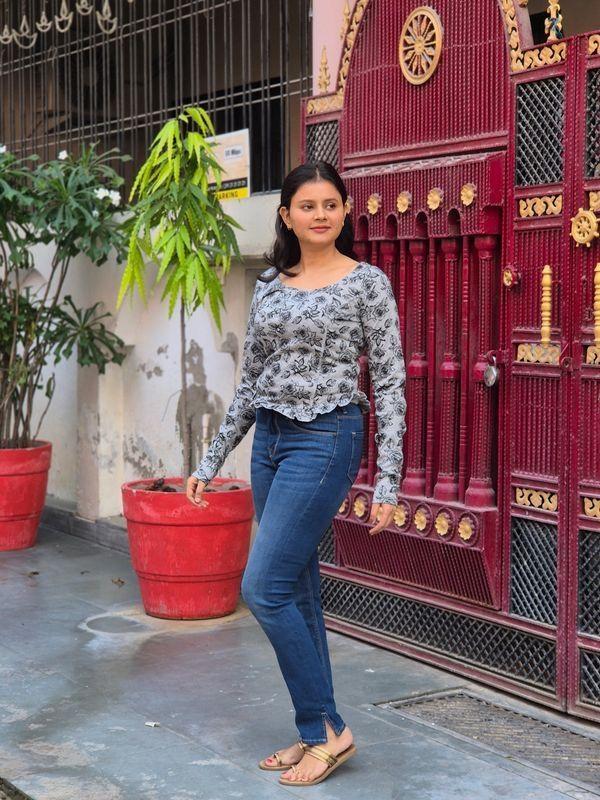
- **Body Mapping:** Unlike the user's current fitted top, the new garment is a loose-fitting tunic. The simulation must extend past the user's waist, draping over the hips and upper thighs, effectively covering the top portion of the jeans. The fit should be relaxed at the waist. Because the source is short-sleeved and the target is long-sleeved, the user's forearms must be structurally inferred (inpainted) to look natural where the new short sleeves end.
- **Occlusion Handling:** The user's dark hair falls onto the shoulders and back; this hair mask must be segmented and layered *over* the new red tunic collar and upper back. The user's hands are clear of the torso, but the garment's hemline must naturally interact with the upper thighs without clipping into the jeans.
PHASE 3: ENVIRONMENT & LIGHTING
- **Light Match:** The user is in a soft, diffused outdoor daylight setting (overcast or open shade). The lighting is relatively flat with soft shadows. The new garment must shed the directional studio lighting of the source image and adopt a uniform, ambient illumination. Shadows should be generated under the collar, inside the sleeve cuffs, and a soft cast shadow must fall onto the jeans where the tunic hem ends.
- **Color Calibration:** The brick-red tone of the tunic must be color-graded to match the cooler, natural daylight of the user's environment, preventing the red from looking too saturated or "pasted on" against the grey pavement and red gate background.
PHASE 4: IDENTITY PROTECTION
- **Facial Lock:** The user's facial features (eyes, nose, mouth), jawline, and hairstyle are strictly frozen. The generated skin tone for the exposed forearms (due to sleeve length change) must perfectly match the user's face and feet.
- **Body Integrity:** The user's shoulder width and posture must remain unchanged. Do not slim the user's torso to match the source model; the tunic must expand to fit the user's natural proportions while maintaining its intended loose silhouette.