Thinking Process
PHASE 1: VISUAL DECONSTRUCTION
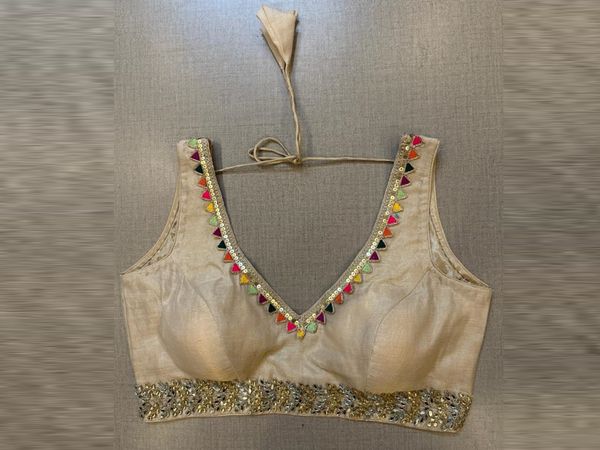
- **Fabric Physics:** The source garment is a structured, semi-stiff material (likely raw silk or art silk) with a subtle sheen. Unlike the user's current cotton jersey t-shirt, this fabric does not stretch significantly. It should render with anisotropic specular highlights to mimic the silk texture and distinct, hard metallic reflections on the mirror-work embellishments.
- **Key Features:** The deep V-neckline bordered by multi-colored triangular embroidery must be preserved without distortion. The heavy band of silver/gold mirror work and sequins at the hemline is rigid and must maintain its linear integrity. The sleeveless construction (deep armholes) and the structured "cup" shape of the bust area are critical design elements.
PHASE 2: FIT & DRAPE SIMULATION
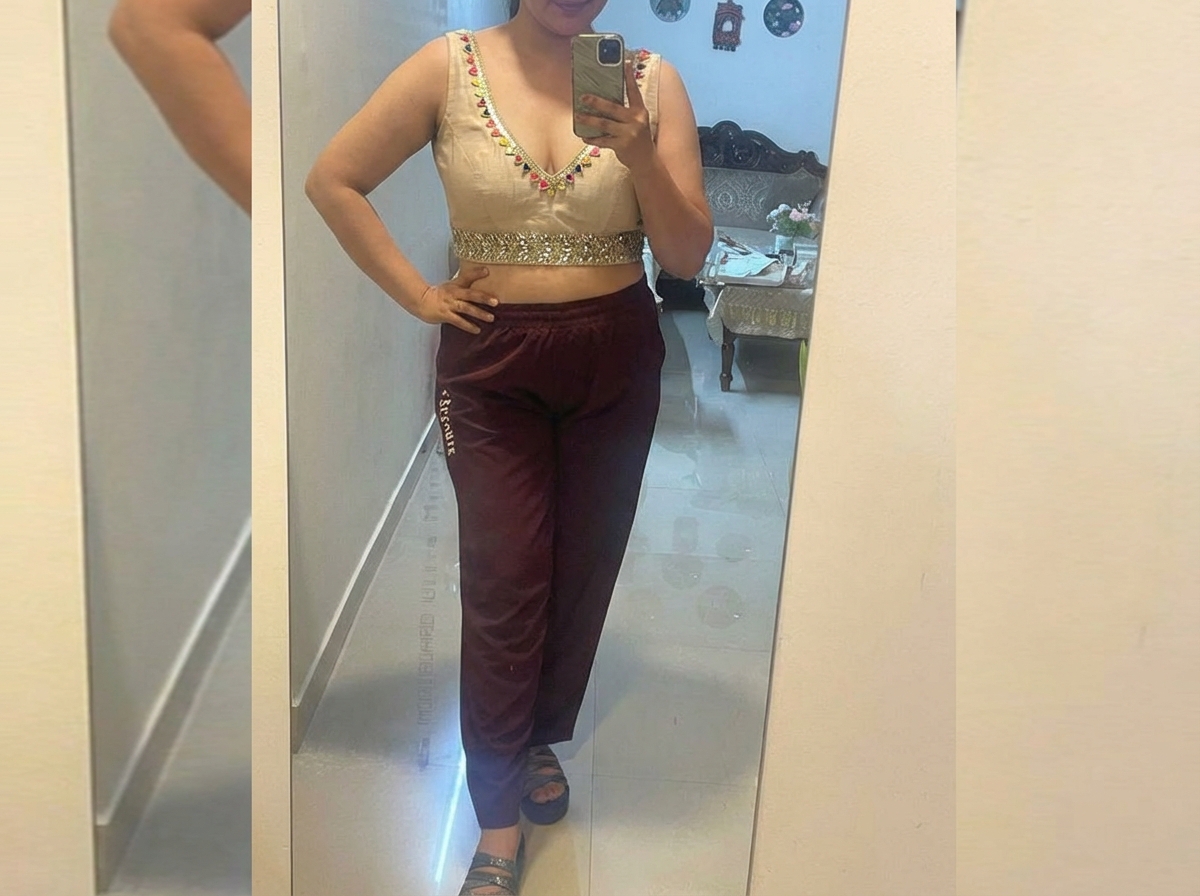
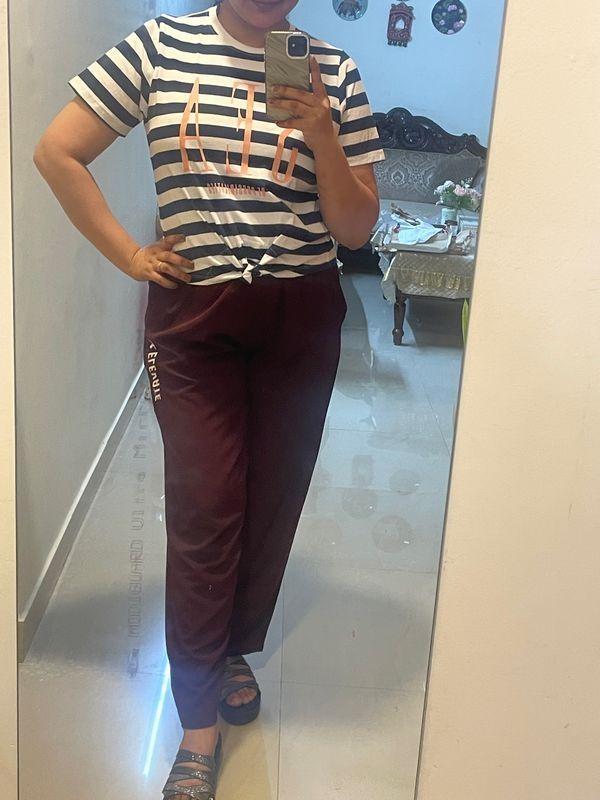
- **Body Mapping:** This is a transition from a loose, knotted t-shirt to a fitted, cropped choli/blouse. The simulation must ignore the volumetric bulge of the current t-shirt's bottom knot and map the new garment closely to the skin surface of the torso/ribcage. Since the source is sleeveless, the simulation requires generative in-painting to reveal the user's upper arms where the current t-shirt sleeves exist. The hem of the new garment will sit higher than the current shirt, likely resting at the natural waist/midriff.
- **Occlusion Handling:** CRITICAL: The user's left hand and the smartphone are positioned directly over the center chest/sternum area. The new garment must be rendered *behind* the phone and hand. The user's right hand rests on the hip; the embroidered hem of the blouse must pass *under* the thumb/fingers of this hand, not cover them.
PHASE 3: ENVIRONMENT & LIGHTING
- **Light Match:** The user image is a mirror selfie in indoor, cool-toned artificial lighting (likely fluorescent or LED). The source garment (currently warm and flat-lit) must be cool-shifted to match the room's ambient temperature.
- **Color Calibration:** Shadows must be cast by the phone and arm onto the new fabric to ground it in reality. The mirror work on the blouse hem should reflect the ambient room brightness but must be dulled slightly to match the noise/grain level of the user's mirror reflection.
PHASE 4: IDENTITY PROTECTION
- **Facial Lock:** The visible portions of the user's face (chin, jawline, lips) and neck must remain absolutely frozen. The position of the phone relative to the face is a fixed anchor point.
- **Body Integrity:** The user's arm volume (currently partially hidden by sleeves) must be estimated accurately without slimming. The waist and hip width must remain unchanged; the garment must fit the body, the body must not change to fit the garment. Skin tone generated for the exposed arms must perfectly match the visible forearm skin tone.