Thinking Process
PHASE 1: VISUAL DECONSTRUCTION
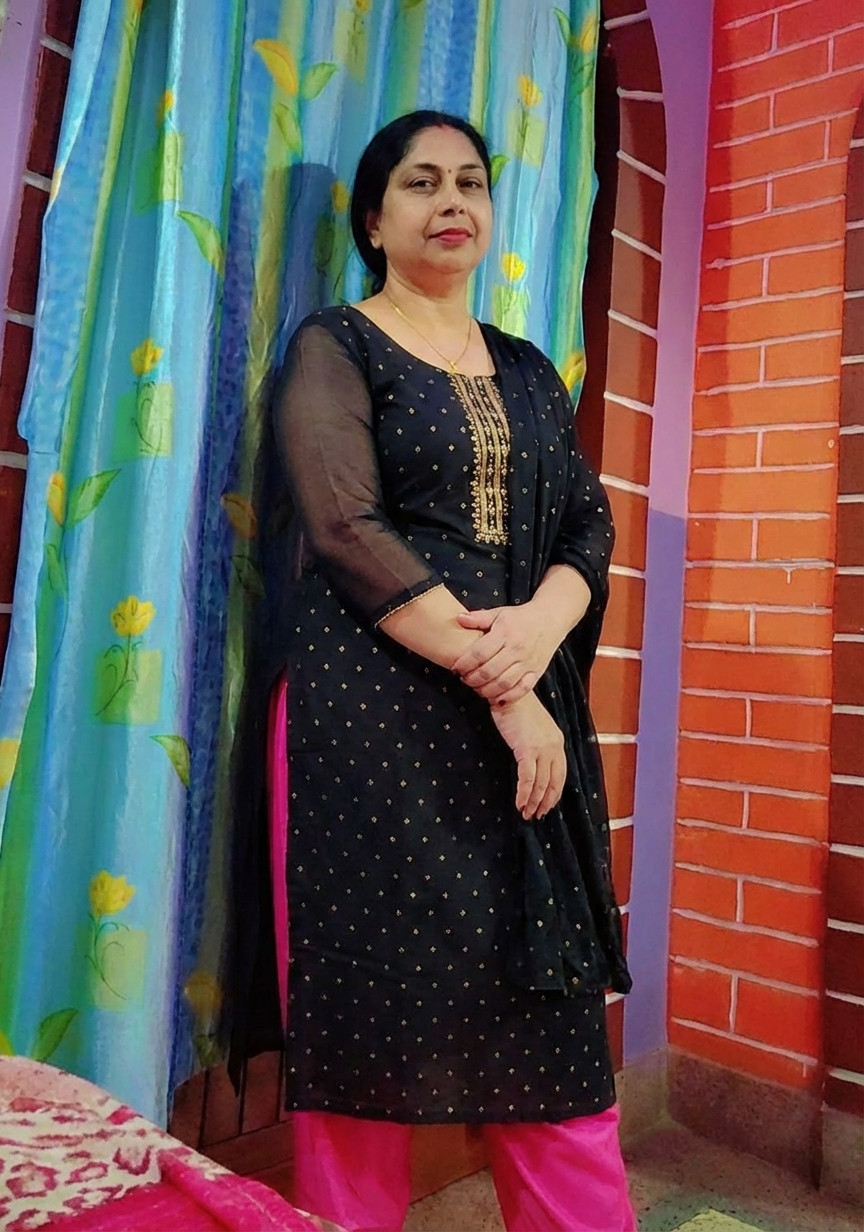
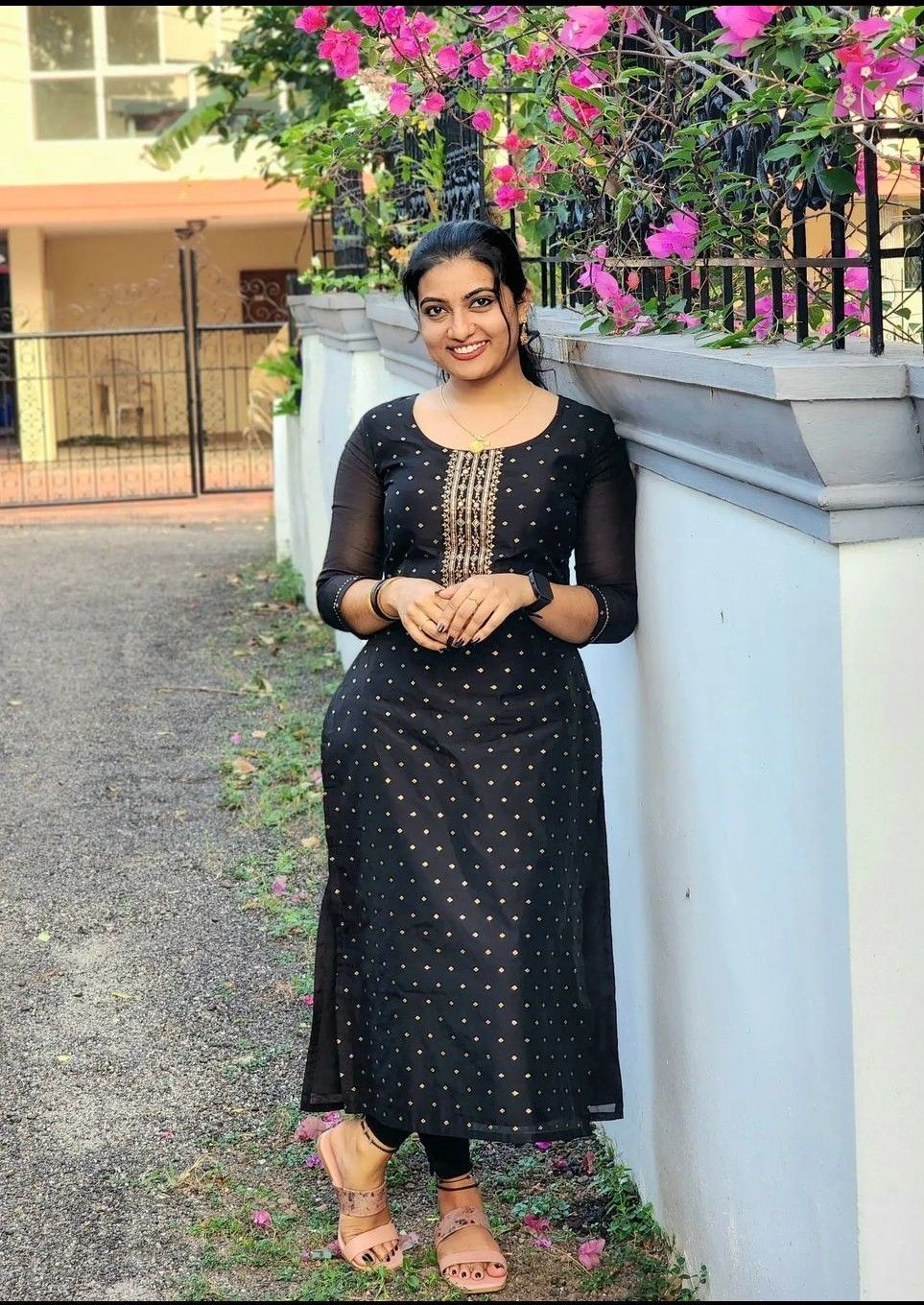
- **Fabric Physics:** The source garment is a black kurti, likely made of rayon or a silk-blend. The bodice is opaque with a subtle sheen, while the sleeves appear to be a semi-sheer georgette or chiffon material. The simulation must render the sleeves with slight transparency (alpha blending) to show skin tone underneath, contrasting with the solid opacity of the main torso. The gold foil prints should exhibit high specularity (reflective shine) distinct from the matte black base.
- **Key Features:** The central gold geometric embroidery panel running from the neckline to the solar plexus must be preserved without distortion. The scattered gold "butti" (dot) pattern must maintain consistent spacing. The 3/4 length sleeves with solid fabric cuffs are critical structural elements. The scoop neckline shape must be retained.
PHASE 2: FIT & DRAPE SIMULATION
- **Body Mapping:** Due to the user's clasped hand pose, the fabric must simulate compression and folding around the forearms and abdomen. The garment is a tunic (long top); therefore, the skirt portion must drape vertically over the hips and upper thighs, naturally interfering with the volume of the existing pink trousers. The fabric tension across the chest must account for the slight stretch caused by the upper arm position.
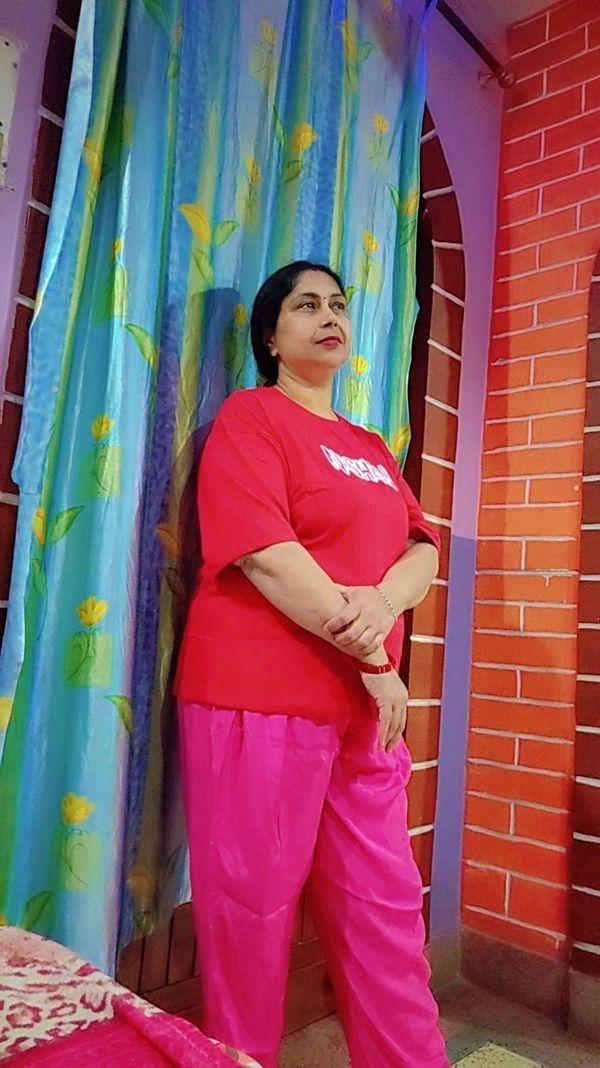
- **Occlusion Handling:** The user's hands and wrists are the primary occlusion layer. The main body of the kurti must be rendered *behind* the clasped hands. However, the new 3/4 sleeves must be generated *over* the user's upper arms (covering the current bare skin/red sleeves). The bracelet/watch on the left wrist must be segmented and layered *on top* of the new garment's fabric.
PHASE 3: ENVIRONMENT & LIGHTING
- **Light Match:** The user is in an indoor environment with soft, diffuse artificial lighting, likely overhead. The outdoor high-contrast sunlight from the source image must be neutralized. The black fabric should reflect the ambient room tone (slightly warmer/yellowish due to indoor bulbs) rather than the cool blue daylight of the source. Shadows should be soft and cast downwards and slightly to the right, consistent with the shadows on the curtain.
- **Color Calibration:** The "black" of the kurti must be color-graded to match the dynamic range of the user's photo. It should not be "crushed" (pure #000000) but rather a textured dark charcoal to match the noise level and exposure of the indoor shot. Any green reflection from the source image's foliage must be desaturated.
PHASE 4: IDENTITY PROTECTION
- **Facial Lock:** The user's entire head, including hair, hairline, neck, and facial expression, must remain pixel-perfectly frozen. No retouching of skin texture on the face or neck.
- **Body Integrity:** STRICT PROHIBITION on warping the user's body shape. The garment must be morphed to fit the user's existing BMI and shoulder width. Do not slim the waist or arms to match the silhouette of the source model in the cloth image.