Thinking Process
PHASE 1: VISUAL DECONSTRUCTION
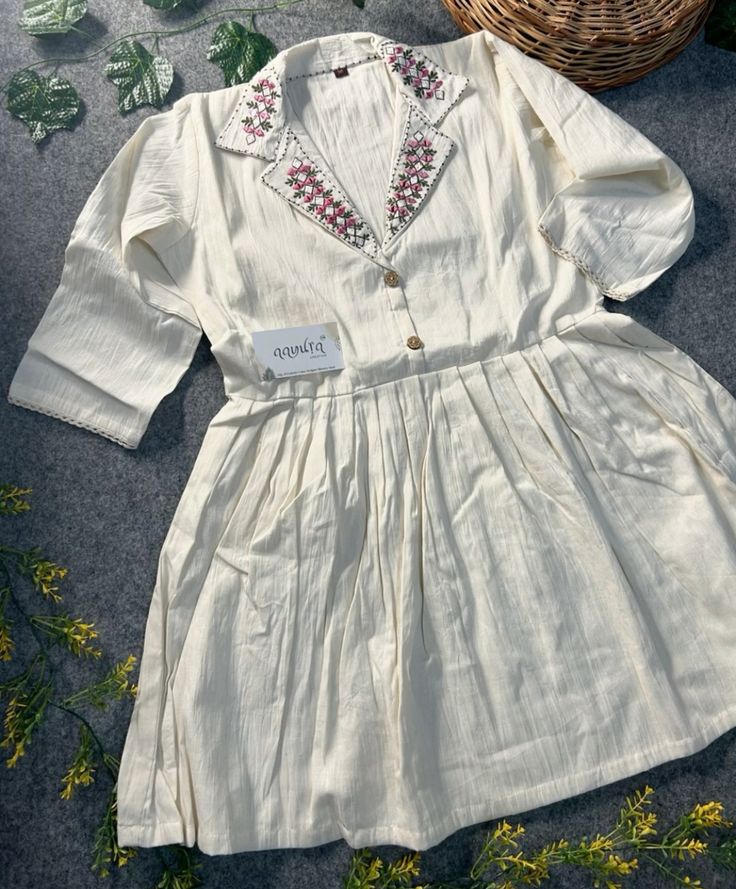
- **Fabric Physics:** The source garment appears to be a textured cotton or linen blend. It has a matte finish with high-frequency surface noise (slub texture). Simulation must render this as a breathable, semi-structured material that holds creases slightly (crisp) rather than draping heavily like jersey or silk. It should scatter light diffusely with no specular highlights.
- **Key Features:** The pink and green geometric embroidery on the notched lapel collar is the primary focal point and must remain high-resolution. The gathering/pleats at the empire waistline, the wooden buttons down the center placket, and the 3/4 sleeve length with hem detailing are critical. The paper brand tag ("Navura") pinned to the chest must be digitally removed.
PHASE 2: FIT & DRAPE SIMULATION
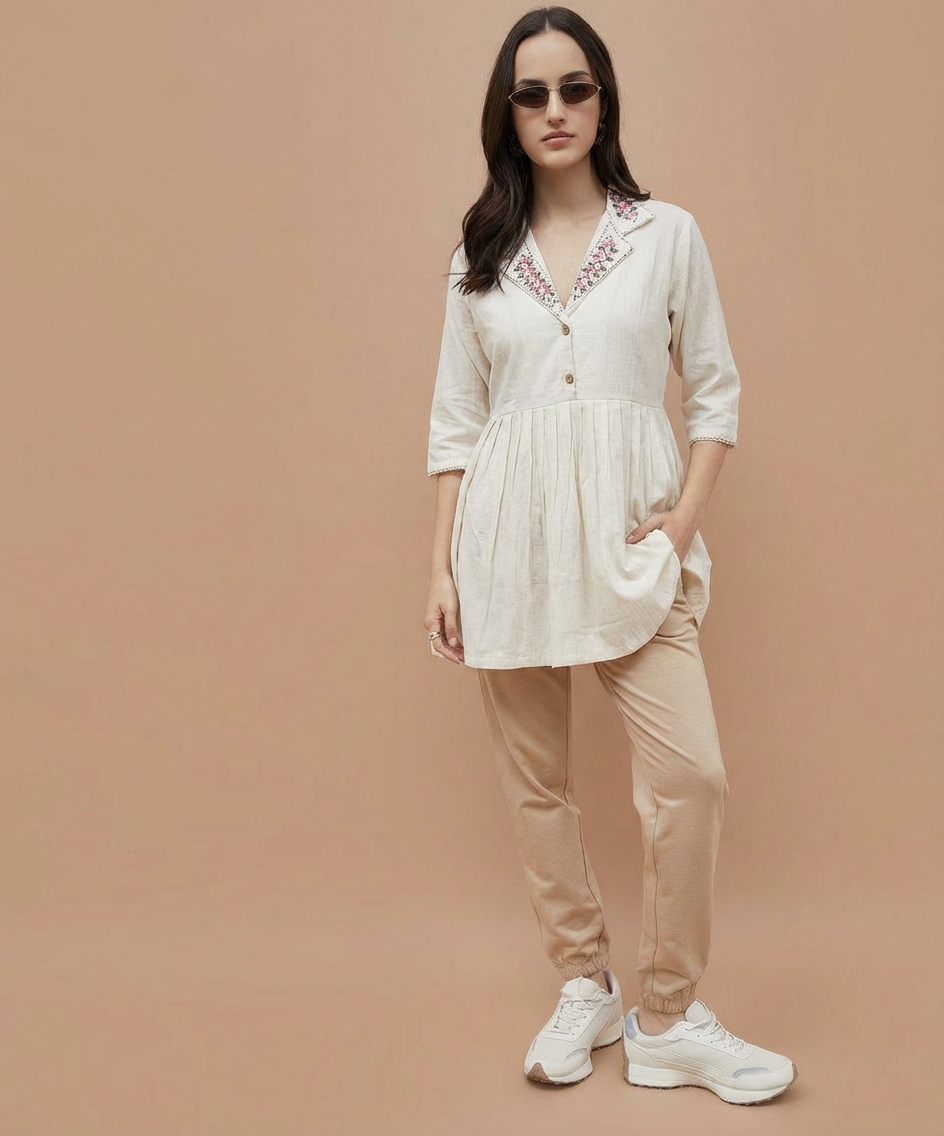
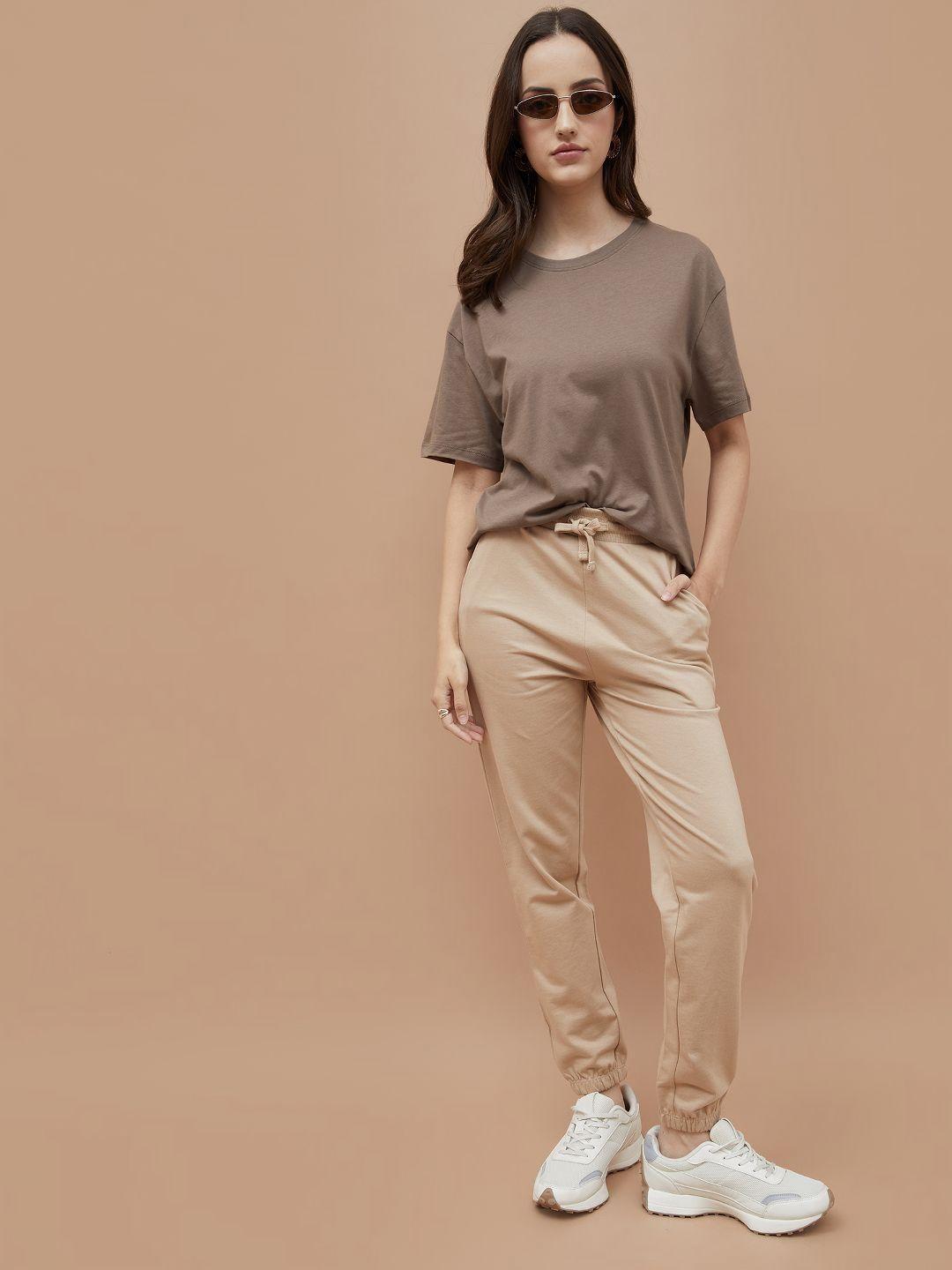
- **Body Mapping:** This is a tunic/short dress length garment. Unlike the user's current tucked-in t-shirt, this garment must hang *over* the waistband of the sweatpants. The waistline of the garment (where the pleats start) should align with the user's natural high waist / ribcage. The skirt portion must flare slightly over the hips and upper thighs, interacting with the volume of the sweatpants underneath. The 3/4 sleeves should terminate just below the elbow.
- **Occlusion Handling:**
1. **Hair:** The user's long, wavy dark hair falls over both shoulders and the chest. The new garment's collar and shoulders must be rendered *behind* these hair strands.
2. **Left Hand/Pocket:** The user's left hand is inserted into the pant pocket. The tunic's hem is likely long enough to cover this area. The simulation must either drape the fabric *over* the wrist (concealing the hand entry) or bunch the fabric naturally around the forearm if the garment is pulled back by the pose.
3. **Neck:** The V-neck is deeper than the current t-shirt; the user's skin texture from the sternum/clavicle area must be inpainted where the current t-shirt covers it.
PHASE 3: ENVIRONMENT & LIGHTING
- **Light Match:** The user image features soft, warm, diffused studio lighting, seemingly from the front-left, casting soft shadows to the user's right. The source garment is currently lit by cool, overhead daylight with hard shadows. The garment's lighting must be softened, and the shadows retargeted to fall to the user's right side and into the fabric folds (pleats).
- **Color Calibration:** The source garment is a cool-toned off-white/cream. To integrate into the user image, the white point must be shifted towards warmer, beige/sepia tones to match the studio background and the user's skin tone. The contrast of the embroidery must be preserved, but the white fabric should pick up the ambient "brown/beige" reflected light of the environment.
PHASE 4: IDENTITY PROTECTION
- **Facial Lock:** The user's sunglasses, nose, lips, jawline, and specific hair volume/texture must remain pixel-perfect and untouched.
- **Body Integrity:** Strict prohibition on altering the user's silhouette. The garment must fit the user's current geometry. Do not slim the arms or torso. The volume of the lower body (sweatpants) must remain constant; the tunic sits *on top* of this volume, not replacing it.