Thinking Process
PHASE 1: VISUAL DECONSTRUCTION
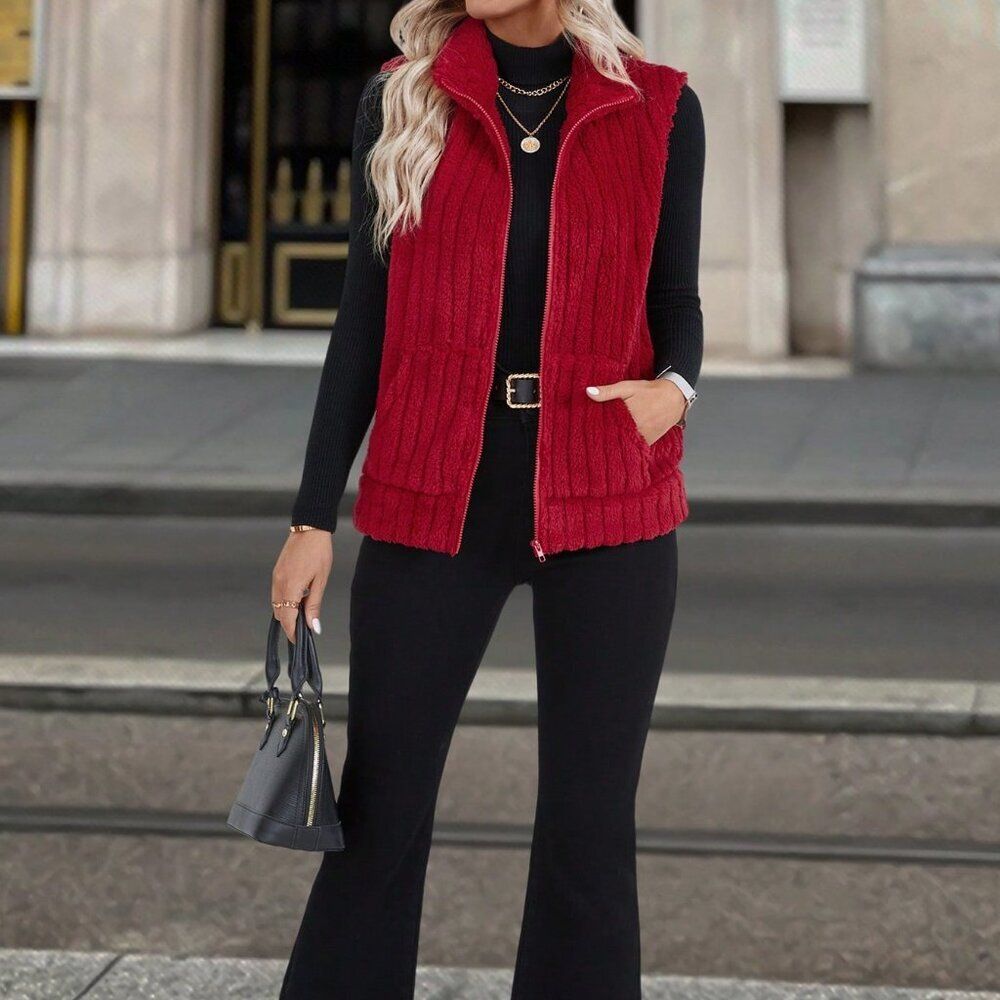
- **Fabric Physics:** The source garment is a high-pile, textured knit vest (appearing similar to chenille or wide-wale corduroy). It possesses significant material thickness and volumetric weight. It should **not** reflect light specularly like plastic or silk; instead, it requires subsurface scattering where light gets trapped in the fiber ridges, creating soft, fuzzy visual edges rather than sharp geometric cutoffs.
- **Key Features:**
1. **Vertical Ribbing/Texture:** The distinct vertical channeled texture must be preserved; flattening this would destroy the garment's realism.
2. **High Collar:** The standing mock-neck collar structure needs to maintain its stiffness and not collapse onto the clavicle.
3. **Hardware:** The central zipper teeth and metallic pull tab must retain their metallic sheen.
4. **Hemline:** The straight, slightly bulky hemline must remain consistent, avoiding the "stretched texture" look at the bottom.
PHASE 2: FIT & DRAPE SIMULATION
- **Body Mapping:**
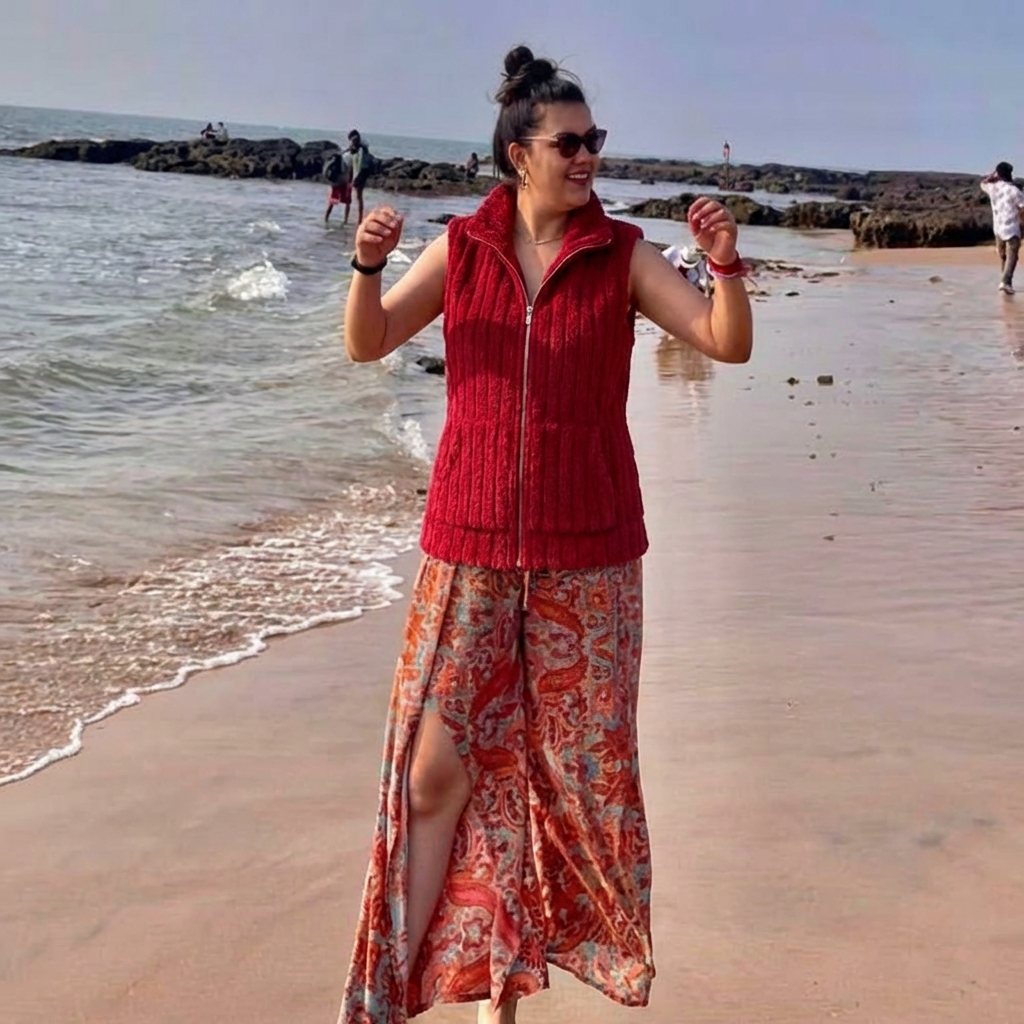
1. **Shoulder Anchoring:** The vest must anchor firmly on the user's trapezius muscles. Since the user's arms are raised and abducted (lifted away from the torso), the vest's armholes must gape slightly, pulling away from the lateral ribcage rather than clinging to the skin.
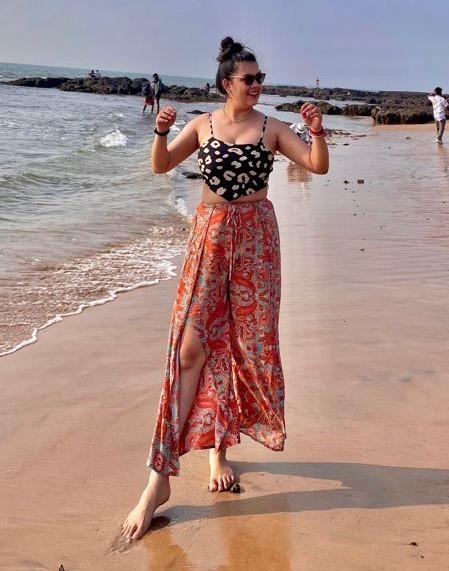
2. **Torso Interaction:** The vest is hip-length, while the user's current crop top exposes the midriff. The simulation must generate the vest covering the torso down to the upper hips, naturally draping over the waistband of the user's palazzo pants. It should add bulk to the silhouette, not skin-tight wrapping.
- **Occlusion Handling:**
1. **Necklace:** The user is wearing a thin chain necklace. Given the high collar of the vest, the necklace will likely be obscured. If the vest is rendered open, the necklace must be layered *under* the vest collar but *over* the user's skin.
2. **Arms/Hands:** The hands are clear of the torso, requiring no masking. However, the inner arm area near the armpit must be masked correctly to ensure the thick vest material renders *behind* the upper arm in the foreground perspective.
PHASE 3: ENVIRONMENT & LIGHTING
- **Light Match:** The user environment is a beach with harsh, direct sunlight coming from the upper right (creating strong shadows to the left).
1. **Shadows:** The vest must cast a hard, defined shadow onto the user's left arm and the top of the patterned pants. The interior of the collar (left side) must be in deep shadow.
2. **Texture Contrast:** The sunlight will create high-contrast micro-shadows within the vertical ribs of the fabric. The "peaks" of the texture must be highlighted brightly to match the sun intensity.
- **Color Calibration:** The source image is in diffuse, cool city lighting. The target image is warm beach lighting. The red of the vest must be warmed slightly (shifting towards orange-red) and increased in saturation to match the high-dynamic-range lighting of the beach scene.
PHASE 4: IDENTITY PROTECTION
- **Facial Lock:** The user's entire head, including the sunglasses, top-knot hairstyle, and jawline, must be frozen and pixel-preserved. The transfer must terminate at the base of the neck.
- **Body Integrity:** Strictly forbid any warping or slimming of the user's exposed arms or the width of her hips. The vest adds volume; the underlying body mesh must represent her actual size, not the mannequin's size. The skin tone of the arms and chest area (where visible) must remain unaltered.