Thinking Process
PHASE 1: VISUAL DECONSTRUCTION
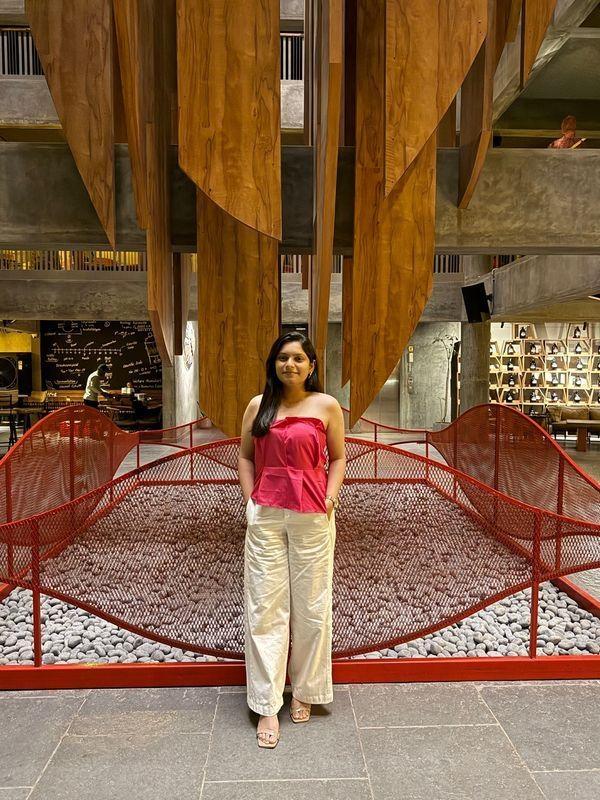
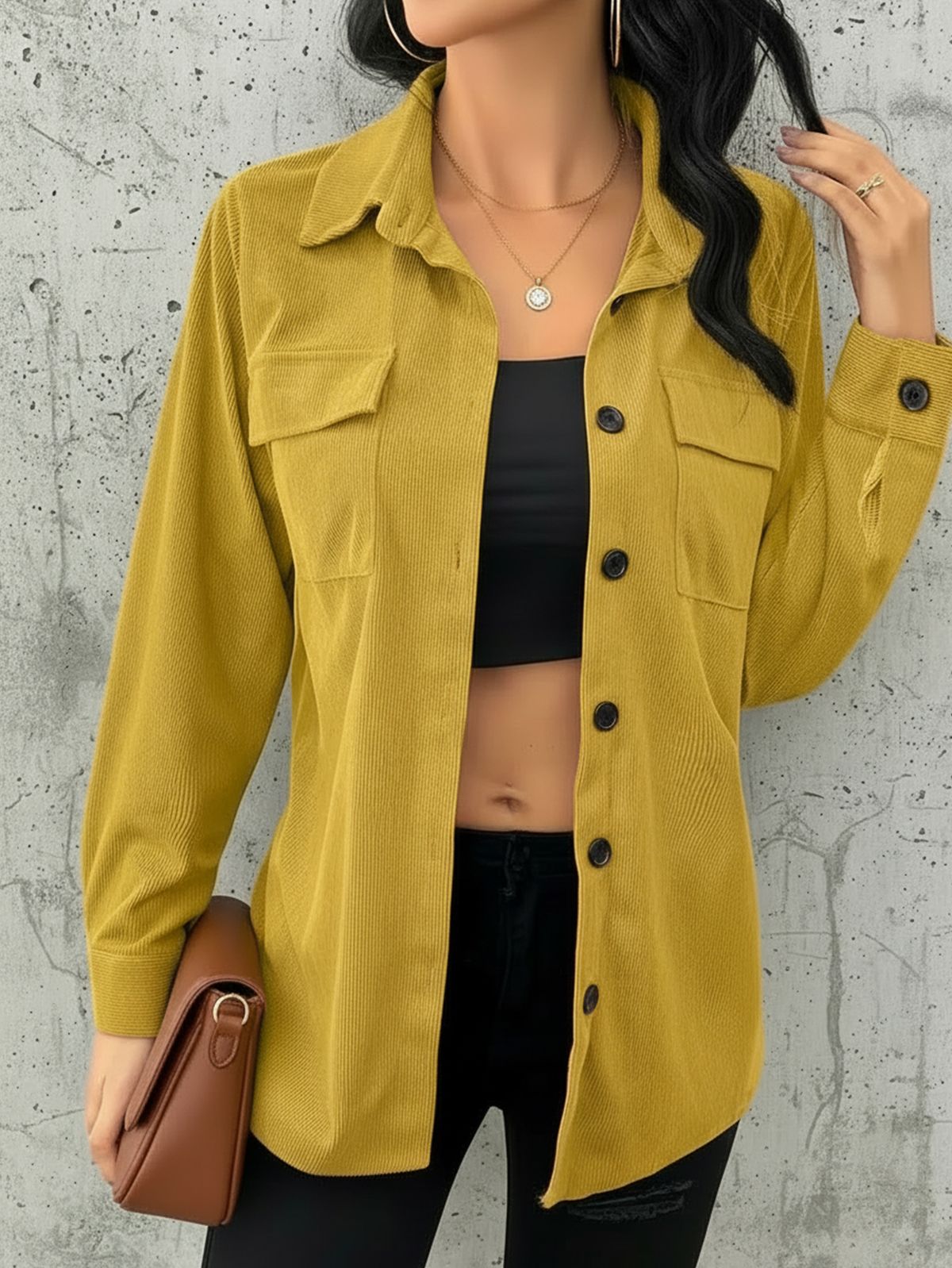
- **Fabric Physics:** The source garment is corduroy (ribbed velvet/cotton blend). The simulation must render the "wales" (vertical ridges) with anisotropic friction—meaning light catches the ridges while the valleys remain shadowed. The material has high structural stiffness (shear resistance); it will not cling to the body like the current pink top but will maintain a boxy, structured silhouette. It has a matte finish with low specular highlights.
- **Key Features:** The two chest pockets with buttoned flaps must retain their 3D volume and not look painted on. The distinct collar structure, the brown tortoise-shell buttons, and the textural grain of the corduroy must be preserved. The cuff thickness and the button placket stiffness are essential for realism.
PHASE 2: FIT & DRAPE SIMULATION
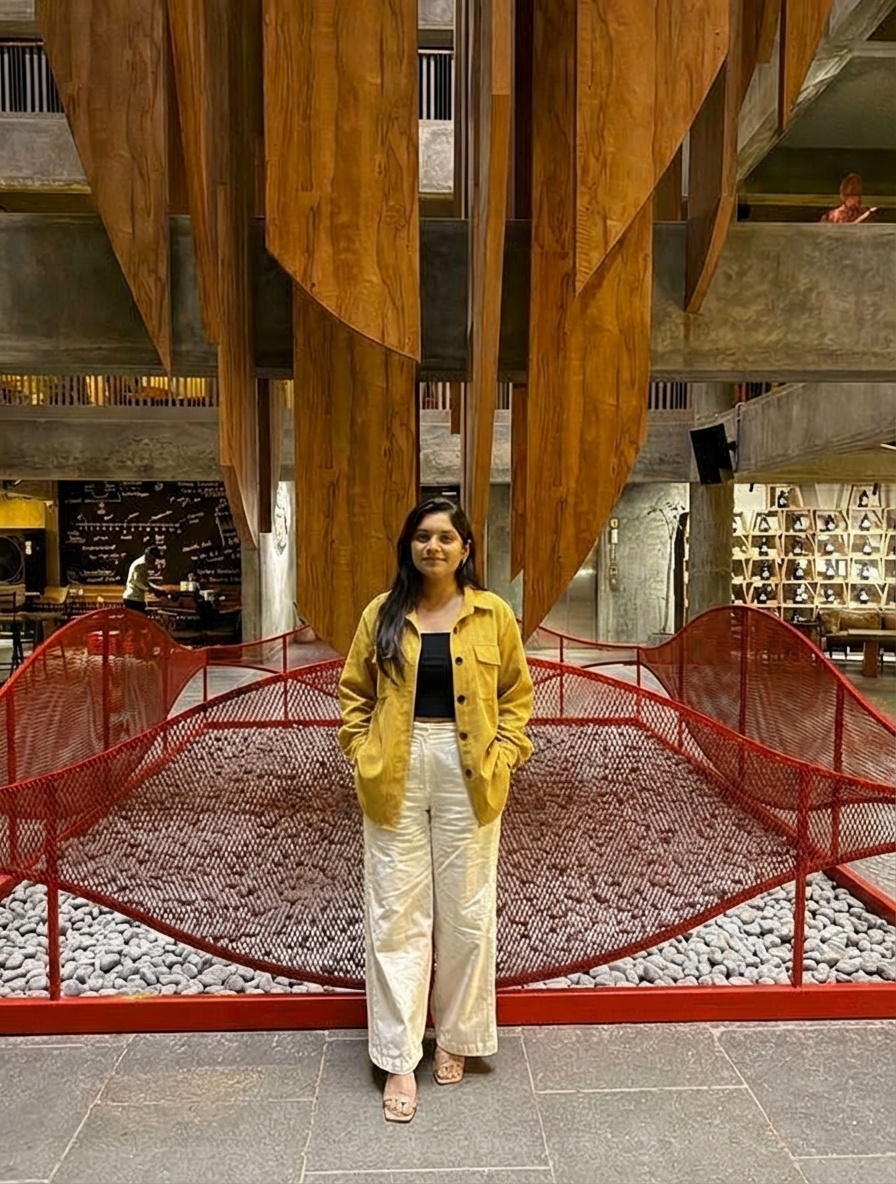
- **Body Mapping:** The user has a relaxed standing pose with slight hip protrusion. The corduroy shirt acts as an over-layer (shacket). It should sit wider than the current pink top, extending past the natural shoulder line (drop-shoulder effect). The hemline is long and must drape over the waistband of the white trousers, breaking naturally where the user's hips widen. The sleeves must track down the arms; since the user's hands are near her hips/pockets, the fabric at the cuffs must bunch/stack slightly at the wrist rather than hanging fully straight.
- **Occlusion Handling:** The user's long dark hair is the primary occlusion layer. The new garment's collar and shoulder area must be generated *underneath* the hair strands falling on both the left and right shoulders. The user's hands appear to be interacting with her pant pockets; the shirt cuffs must effectively interact here—either draping over the hands or bunching above the wrist, ensuring the hands remain the foreground layer if visible.
PHASE 3: ENVIRONMENT & LIGHTING
- **Light Match:** The user is in a large atrium with diffuse, overhead lighting casting soft shadows downward. The source image is flat-lit. We must introduce ambient occlusion in the folds of the corduroy (armpits, elbow creases) and cast a drop shadow from the new shirt onto the white trousers. The hair must cast a soft shadow onto the new yellow collar.
- **Color Calibration:** The target environment has warm, wooden tones. The bright mustard yellow of the source garment needs to be slightly desaturated and warmed to match the ambient color temperature of the atrium. Reduce the source image contrast to match the lower dynamic range of the user's candid photo.
PHASE 4: IDENTITY PROTECTION
- **Facial Lock:** The user's entire head, including eyes, nose, mouth, jawline, and skin tone, is frozen. The neck area above the clavicle is locked, though the new collar will obscure the lower neck.
- **Body Integrity:** Strictly maintain the user's shoulder width and posture. Do not warp the white trousers or slimming the hips. The simulation must fit the cloth to the body, not warp the body to the cloth. Preserve the user's skin tone on the arms if the sleeves are rolled up (though default assumes full length).