Thinking Process
PHASE 1: VISUAL DECONSTRUCTION
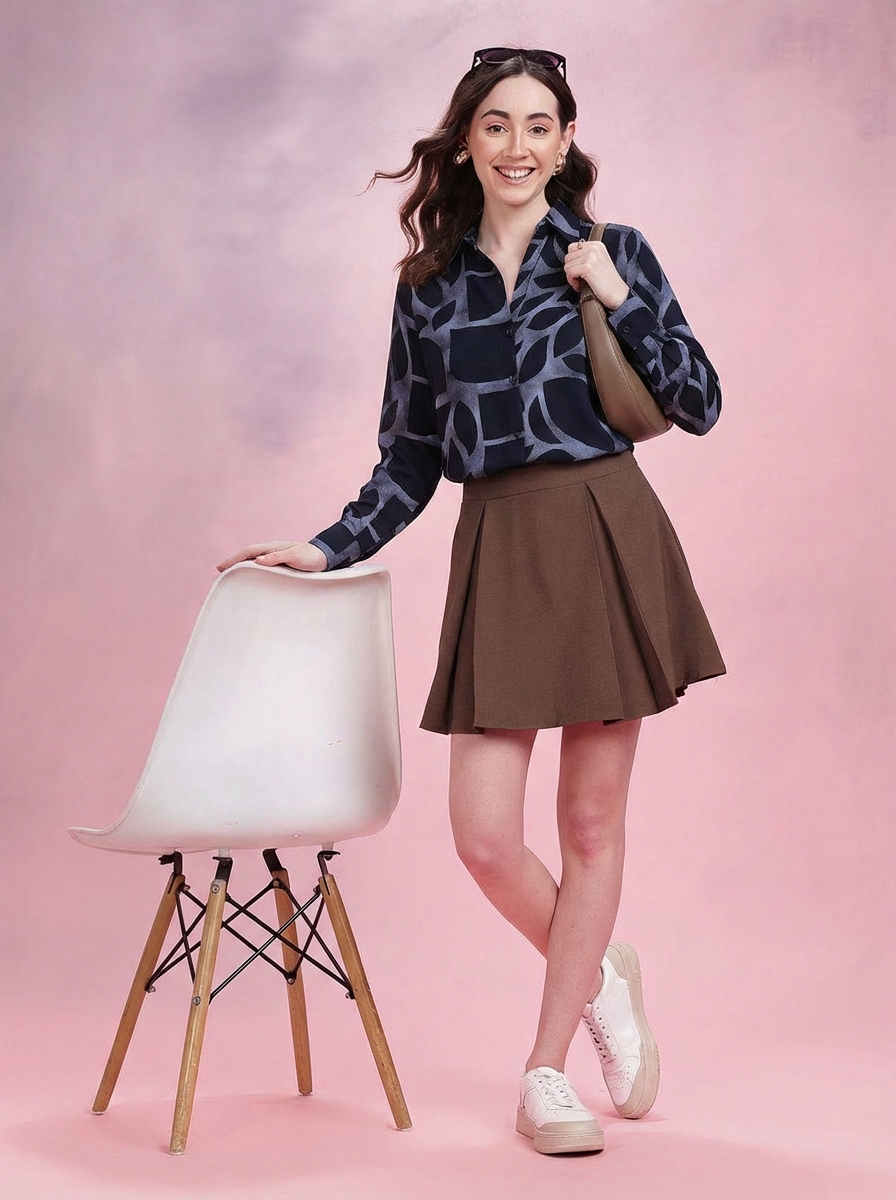
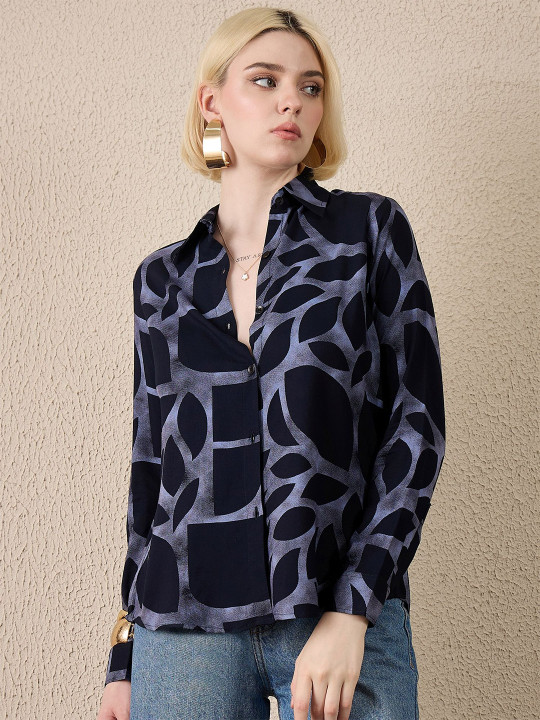
- **Fabric Physics:** The source garment appears to be a lightweight viscose or rayon blend. It exhibits high drape and fluidity, meaning it will follow gravity closely rather than holding a structural shape. It has a matte finish with very low specularity; light should diffuse softly across the surface without creating harsh hotspots.
- **Key Features:** The abstract leaf pattern (navy/black and grey-blue) must maintain its scale relative to the body. Essential structural elements include the classic collar, the central button placket (currently unbuttoned at the top), and the relaxed fit of the sleeves. The cuffs appearing in the source image must be generated at the target's wrists.
PHASE 2: FIT & DRAPE SIMULATION
- **Body Mapping:**
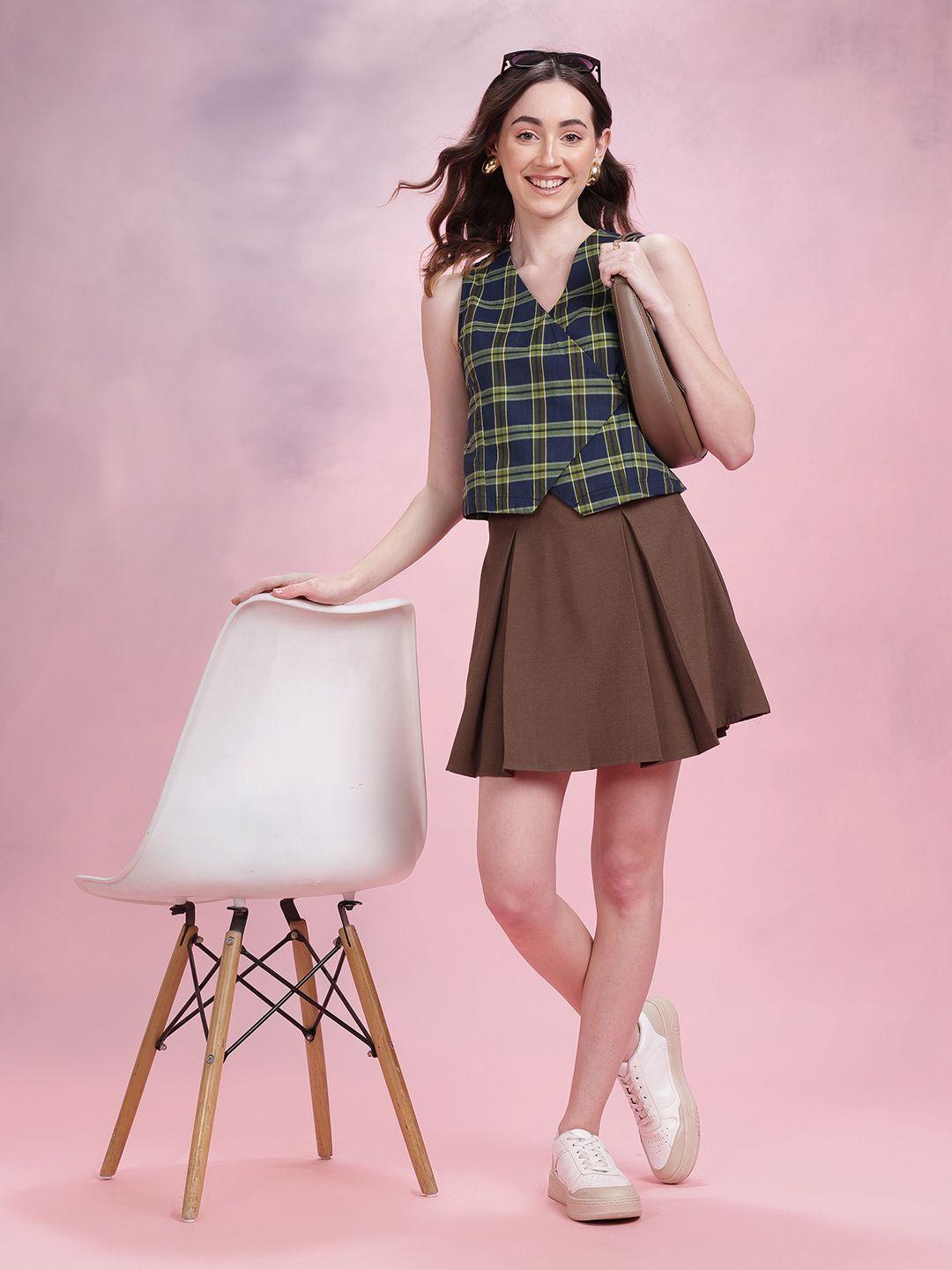
- **Shoulders & Arms:** The target is currently wearing a sleeveless vest, while the source is long-sleeved. Full volumetric sleeves must be generated for the target. On the user's right arm (resting on the chair), the fabric should stretch slightly across the deltoid and accumulate with minor stacking near the wrist/chair contact point. On the left arm (bent), deep transverse folds must form at the inner elbow (cubital fossa).
- **Torso:** The source shirt is a relaxed fit compared to the fitted vest. The simulation must show the shirt hanging somewhat loosely over the waist, adhering to gravity rather than the body's curvature. The hemline should naturally fall over the waistband of the brown skirt.
- **Occlusion Handling:**
- **Primary Occlusion:** The brown handbag and its strap on the user's left shoulder are critical. The new shirt fabric must pass *underneath* the strap and remain behind the bag body.
- **Secondary Occlusion:** The user's wavy hair falls over both shoulders; the new collar and shoulder seams must be layered *behind* these hair strands. The user's right hand resting on the chair must mask the end of the new sleeve/cuff.
PHASE 3: ENVIRONMENT & LIGHTING
- **Light Match:** The target environment utilizes soft, diffuse studio lighting with a pink/magenta bias from the background. The primary key light hits from the front-right. The new garment must cast soft shadows downward and to the user's left.
- **Color Calibration:** The source garment is cool-toned (blues). It requires a subtle warming filter or pink ambient occlusion pass to integrate with the warm pink backdrop of the user image. The black levels of the shirt must be lifted slightly to match the contrast range of the user photo, avoiding "crushed" blacks.
PHASE 4: IDENTITY PROTECTION
- **Facial Lock:** Absolute freeze required on the user's face, neck structure, jawline, and the sunglasses resting on the head. The facial expression and smile lines must remain pixel-perfect.
- **Body Integrity:** The user's arm thickness and shoulder width must serve as the collision boundary for the cloth simulation. Do not slim the arms or alter the posture to fit the garment. The legs and skirt positioning must remain untouched.