
Thinking Process
PHASE 1: VISUAL DECONSTRUCTION
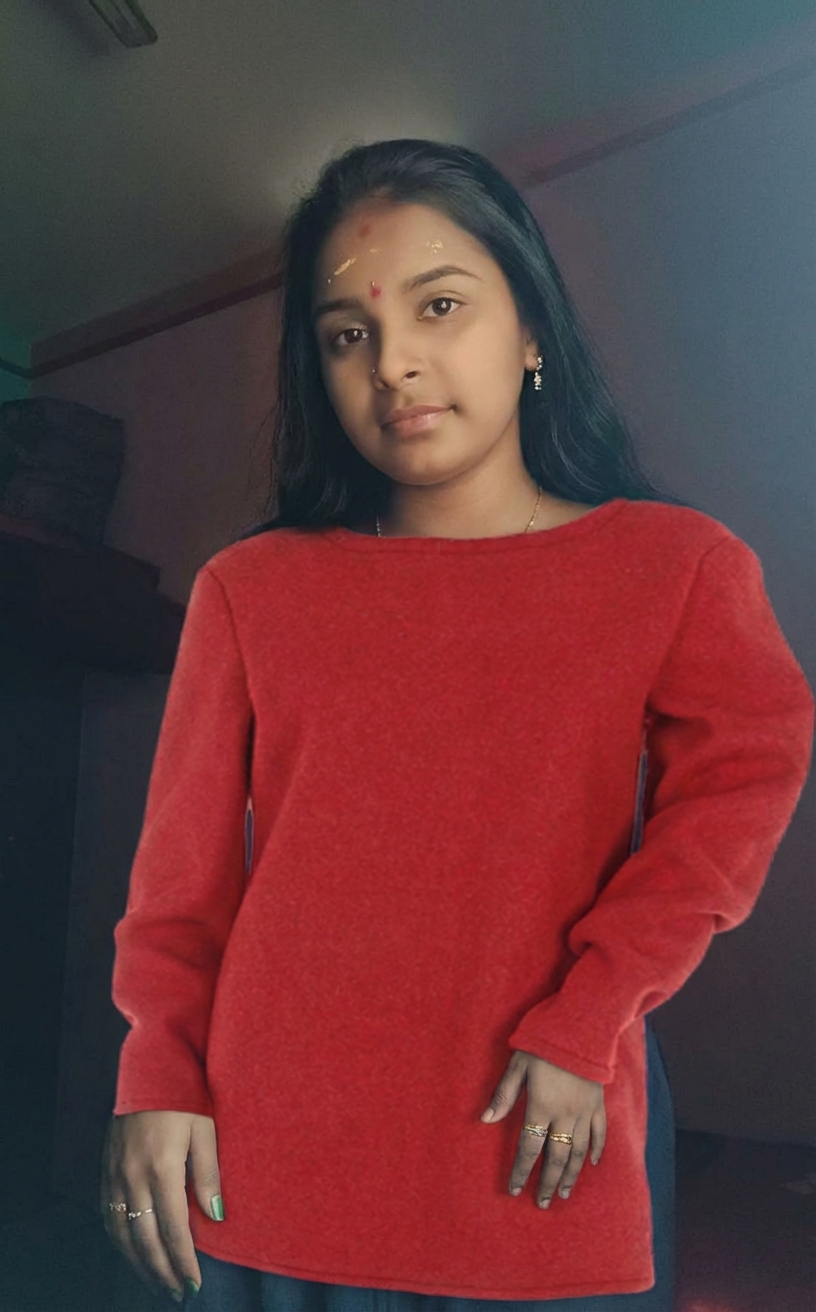
- **Fabric Physics:** The source garment is a medium-to-heavy weight knit (wool or synthetic blend) with a matte finish. It possesses low specularity (no shine) and high friction. Unlike the user's current light flowy blouse, this fabric must exhibit structural stiffness; folds should be thick, rounded, and voluminous rather than sharp or crinkled. The surface texture must retain the "fuzzy" distinct knit quality.
- **Key Features:** The high boat-neckline (bateau) is critical and distinct from the user's current V-neck. The long sleeves with slightly rolled or ribbed cuffs, the straight "boxy" silhouette, and the small side slits at the bottom hem must be preserved. The red hue must remain solid, ignoring the watermarks present on the source image.
PHASE 2: FIT & DRAPE SIMULATION
- **Body Mapping:**
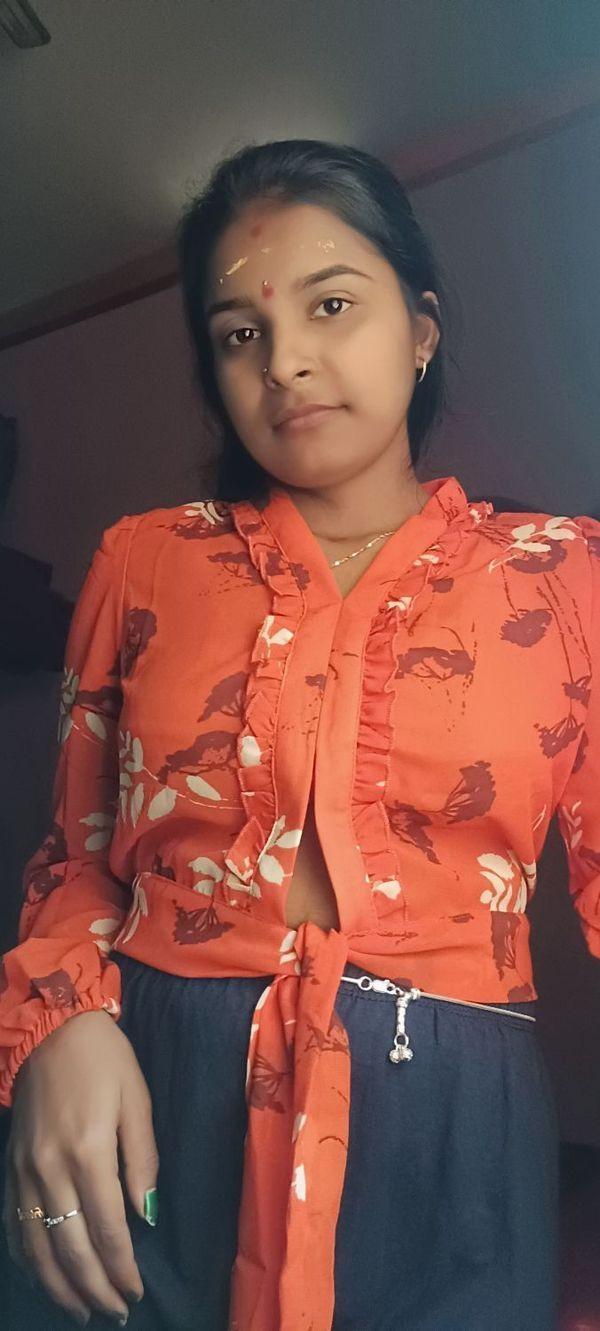
- **Shoulders/Neck:** The new neckline is higher and wider; it must bridge the collarbones without sagging, completely covering the user's current neckline and necklace area.
- **Torso:** The garment is a tunic/dress length. It must fall straight down from the bust, covering the currently exposed midriff, the navel, and the waist chain. It should drape over the top of the blue skirt/pants.
- **Arms:** On the user's right arm (viewer's left), the heavy fabric must crease softly at the inner elbow and bunch slightly at the wrist where it meets the hand.
- **Occlusion Handling:**
- **Hair:** The loose hair strands on the user's shoulders and neck must be segmented and layered *over* the new high boat-neck collar to avoid a "clipped" appearance.
- **Hands:** The user's right hand (resting on thigh) must remain in the foreground. The sleeve cuff should terminate at the wrist bone, ensuring the fingers and rings remain visible and unoccluded.
- **Waist Chain:** This accessory will be physically covered by the new garment's length and must be masked out (hidden) rather than layered on top, to maintain physics realism.
PHASE 3: ENVIRONMENT & LIGHTING
- **Light Match:** The user's environment features soft, diffuse indoor lighting, likely from a window or ceiling fixture in front of her. The source garment's high-contrast studio lighting (bright highlights) must be flattened. Shadows on the red knit should be soft and diffuse, appearing primarily in the underarm areas and where the sleeve bunches.
- **Color Calibration:** The source red is vibrant; it must be slightly desaturated or warmed to match the ambient color temperature of the user's room to prevent it from looking like a "sticker."
PHASE 4: IDENTITY PROTECTION
- **Facial Lock:** Absolute freeze required for the user's face (eyes, nose, lips), bindi, forehead markings, and visible ear. The jawline must remain sharp.
- **Body Integrity:** The simulation must respect the user's natural shoulder width and arm volume. Do not warp the user's body to fit the mannequin's proportions; the garment must expand to fit the user's existing silhouette without slimming or distorting the torso.