Thinking Process
PHASE 1: VISUAL DECONSTRUCTION
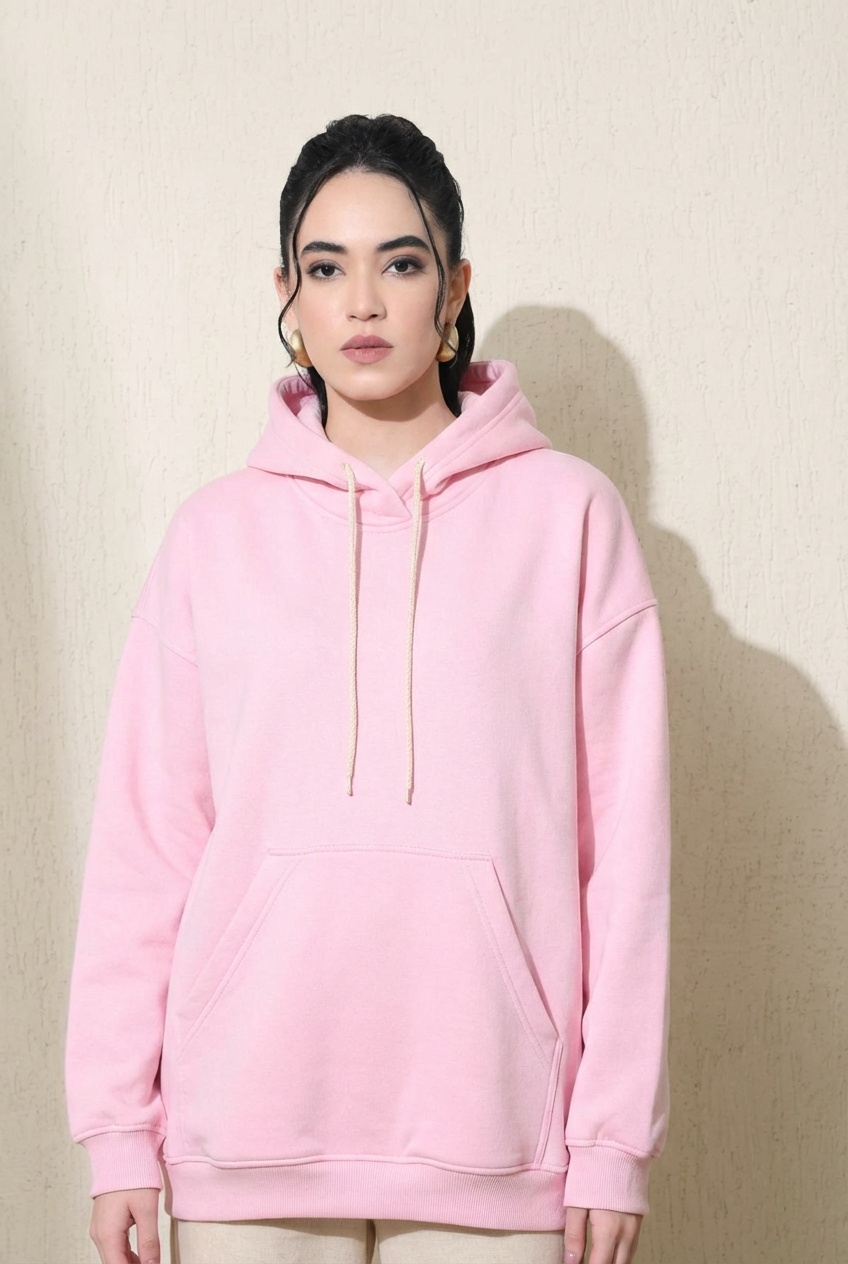
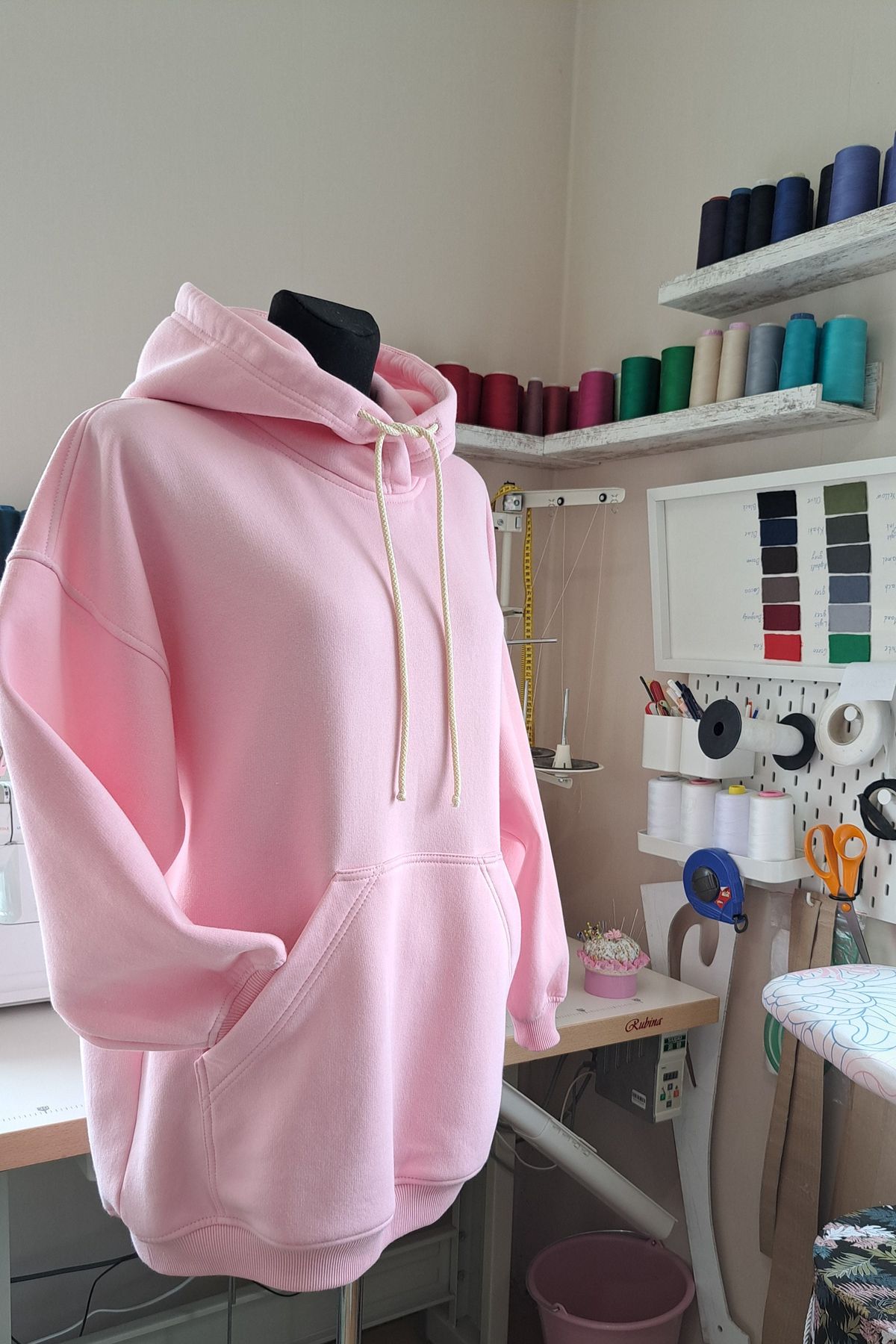
- **Fabric Physics:** The source garment is a heavy-weight cotton/fleece blend with a matte finish. It possesses high structural rigidity, meaning it will not cling to the body like the current silk/synthetic top, but rather hold its own voluminous shape. Light absorption should be high with very soft, diffuse specular highlights (no shine).
- **Key Features:** The structural volume of the hood around the neckline is critical. The ribbed elasticity of the wrist cuffs and bottom hem must be distinct from the main body fabric. The thick, braided white drawstrings and the center "kangaroo" pocket structure must be preserved. The drop-shoulder seam placement is essential to maintain the "oversized" aesthetic.
PHASE 2: FIT & DRAPE SIMULATION
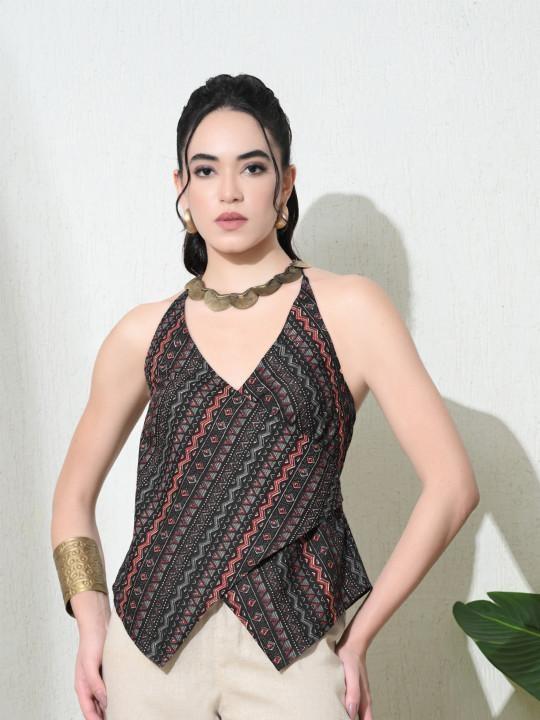
- **Body Mapping:** The garment is oversized and must drape significantly looser than the user's current fitted top. The fabric must bridge the gap between the shoulders and hips without tapering inward at the waist. The sleeves, being long and cuffed, will likely bunch slightly above the wrist or partially cover the hands due to gravity, as the user's arms are fully extended downward. The neckline will rise significantly, covering the current V-neck exposure.
- **Occlusion Handling:** The user's large metal necklace and the gold wrist cuff on the right arm fall within the coverage area of the hoodie; these must be occluded (covered) by the new fabric opacity. The user's hair is pulled back, but any loose strands at the nape of the neck must interact with the bulk of the hood—either tucked inside or resting heavily on top of the hood fabric.
PHASE 3: ENVIRONMENT & LIGHTING
- **Light Match:** The user's environment utilizes high-contrast studio lighting coming from the front-left, casting a sharp, hard shadow against the textured wall to the right. The soft, diffuse ambient lighting of the source image must be replaced. Deep, sharp shadows must be generated within the folds of the hoodie (under the arms, inside the hood, and under the kangaroo pocket) to match the high-contrast scene.
- **Color Calibration:** The pastel pink must be color-corrected to remove the warm, yellowish cast of the sewing room lighting. It should be rendered with a cooler, neutral white balance to match the clean studio flash of the user image, ensuring the pink pops against the beige wall without looking muddy.
PHASE 4: IDENTITY PROTECTION
- **Facial Lock:** The user's entire facial region, including the jawline, ears, and earrings, must be masked and frozen. The hairline must remain distinct where it meets the hood.
- **Body Integrity:** Strictly forbid any mesh deformation that slims the user's natural shoulder width or arm thickness. The simulation must add volume to the silhouette to reflect the oversized nature of the hoodie, rather than shrinking the hoodie to fit the user's current slim profile.