Thinking Process
PHASE 1: VISUAL DECONSTRUCTION
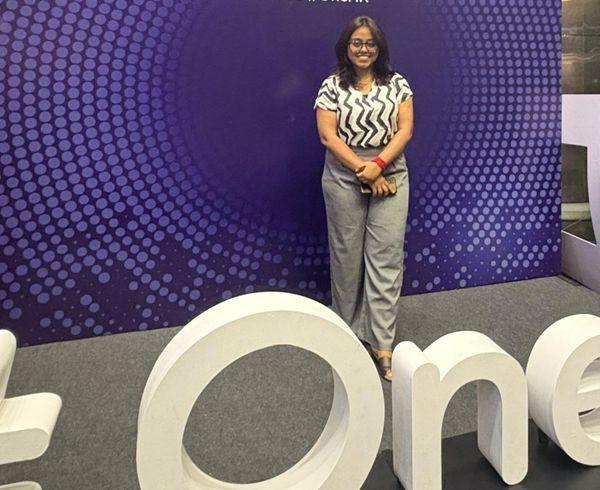
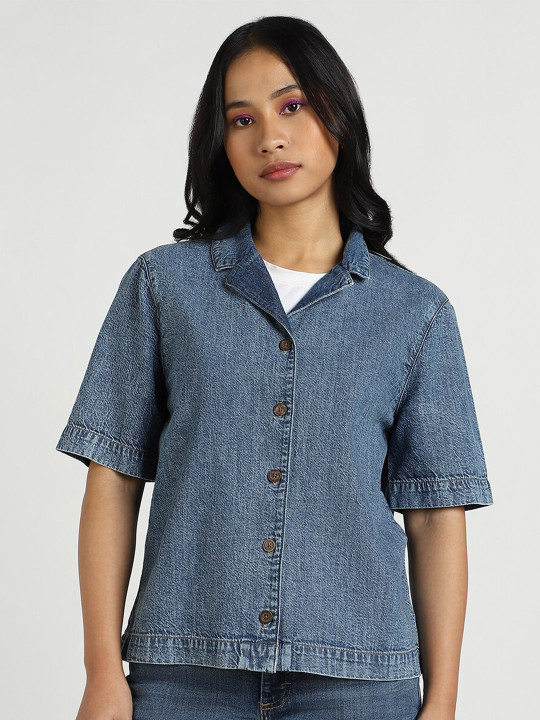
- **Fabric Physics:** The source garment is a medium-weight denim. Unlike the user's current soft-knit chevron top, this material has high structural rigidity and shear resistance. It should not cling to the torso but rather maintain a "boxy" silhouette. Light reflection should be matte with low-gloss specular highlights concentrated on the weave texture and fold peaks.
- **Key Features:** The notched lapel collar, five visible brown tortoise-shell buttons, and the reinforced stitching on the sleeve cuffs and bottom hem must be preserved. The visible white undershirt from the source image should be discarded; only the denim outer layer is to be transferred.
PHASE 2: FIT & DRAPE SIMULATION
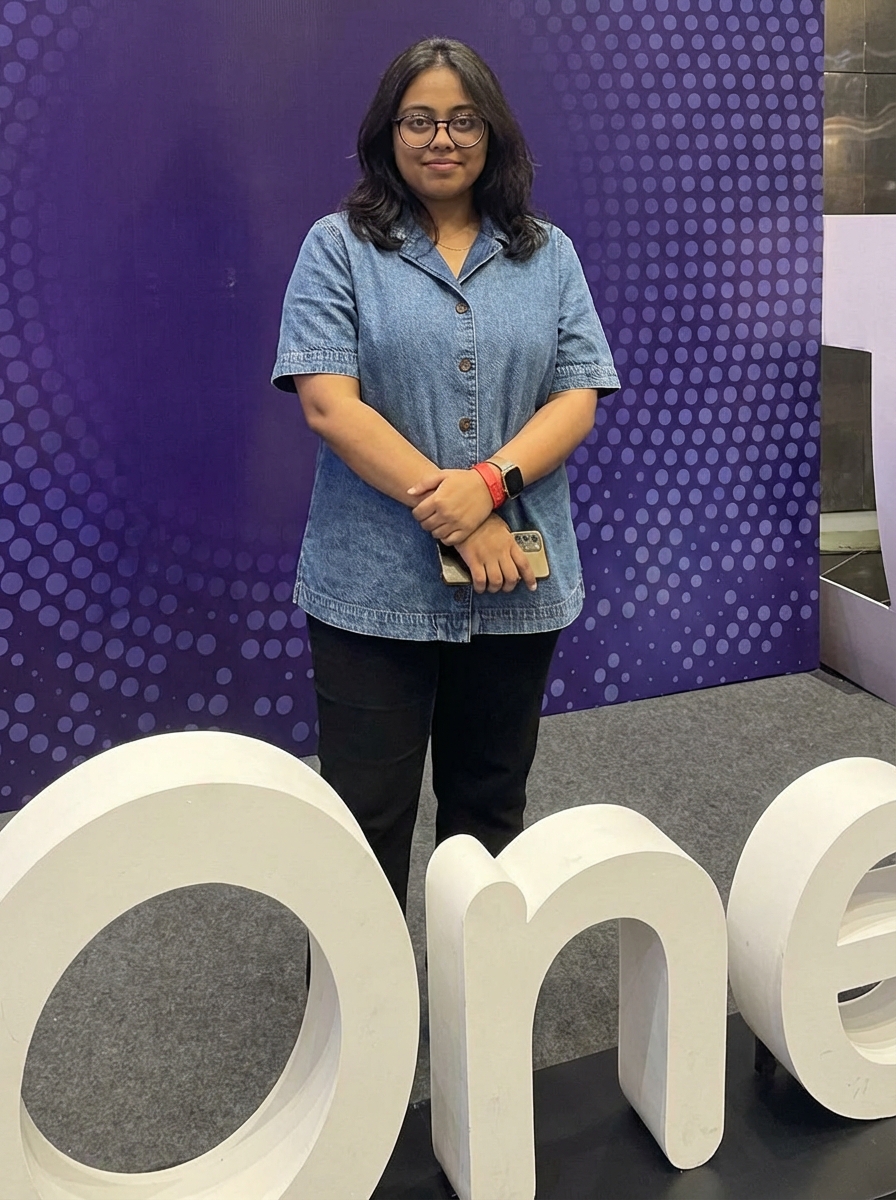
- **Body Mapping:** Due to the user's clasped hands at the waistline, the denim shirt—which appears to have a straight, hip-length cut—will likely collide with the forearms/wrists. The simulation must widen the garment slightly to accommodate the user's bust and shoulders, allowing the fabric to fall vertically rather than tapering in at the waist. The sleeves are wider than the user's current sleeves and should project outward, creating a shadow gap between the sleeve hem and the user's arm.
- **Occlusion Handling:**
1. **Hair:** The user's dark, shoulder-length hair is the primary occlusion layer. A high-precision mask must be generated for the hair to composite it *over* the new denim collar.
2. **Hands & Wrists:** The user's hands are clasped low. If the denim shirt's hemline reaches this point, the fabric must deform slightly around the wrists or be masked behind the hands.
3. **Accessories:** The red wristband (left) and watch/band (right) must remain visible and occlude the garment if the sleeves drape that low (though the sleeves appear short enough to avoid this).
PHASE 3: ENVIRONMENT & LIGHTING
- **Light Match:** The user environment features diffuse, soft ambient lighting, likely overhead event lighting, creating soft shadows behind the subject on the purple wall. The high-contrast studio lighting of the source garment must be softened. The shadows within the denim folds should be deepened slightly and color-graded to match the cool/neutral tones of the event space.
- **Color Calibration:** The user is standing against a large purple dotted backdrop. The blue denim requires a subtle "purple spill" or color cast integration to simulate the environmental reflection of the backdrop onto the fabric, preventing the shirt from looking like a cutout.
PHASE 4: IDENTITY PROTECTION
- **Facial Lock:** The user's face, glasses, neck area (above the collar line), and hair geometry must be frozen and pixel-preserved. The skin tone on the arms and neck must remain unaltered.
- **Body Integrity:** Strictly prohibit warping the user's underlying anatomical structure to fit the reference model's size. The garment mesh must be scaled up to fit the user's shoulders and torso volume, preserving her natural silhouette and arm width.