Thinking Process
PHASE 1: VISUAL DECONSTRUCTION
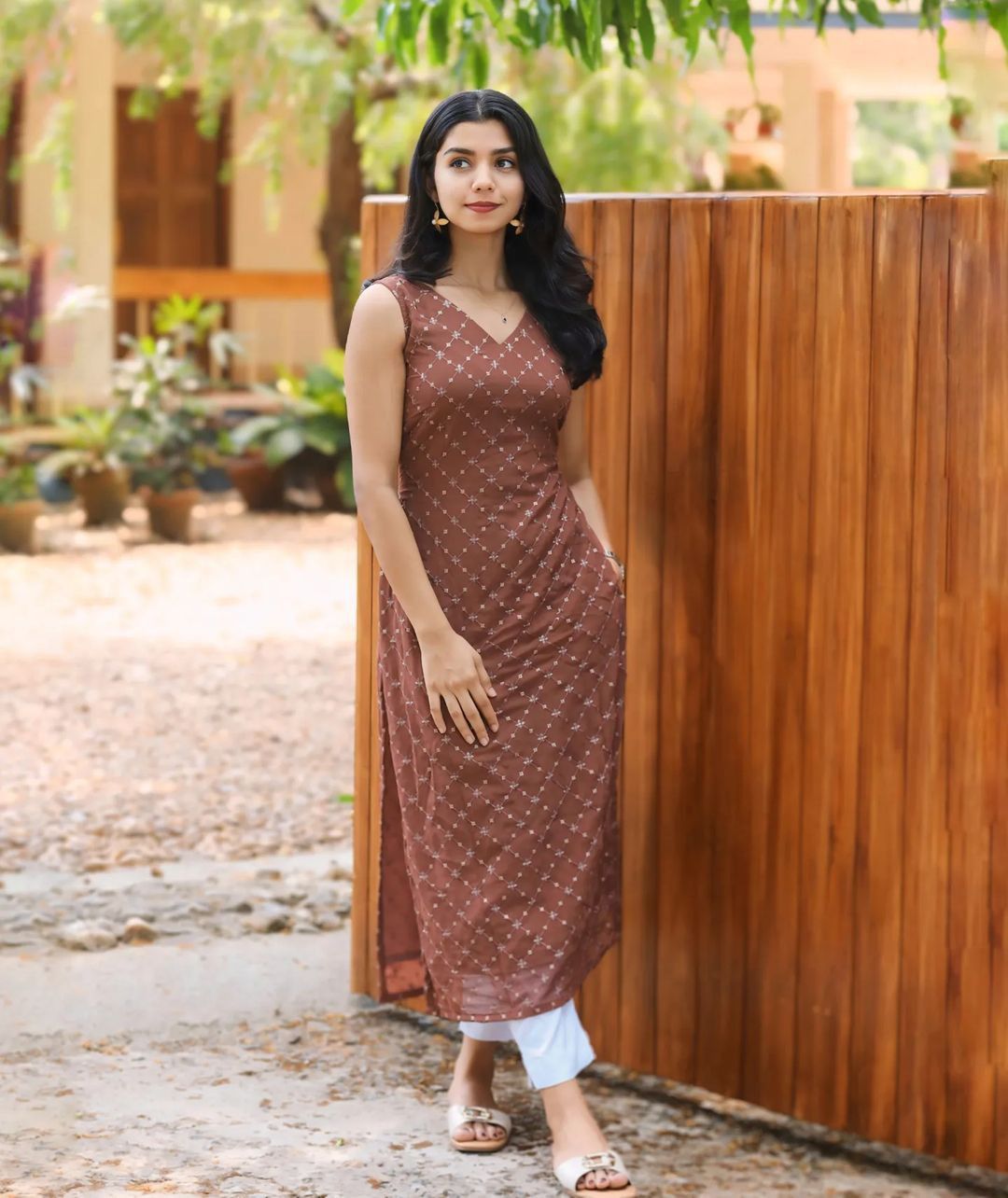
- **Fabric Physics:** The source garment appears to be a lightweight Cotton or Rayon blend with a matte finish. It possesses low specularity (it should not shine). The physics simulation must treat this as a semi-structured fabric that yields readily to gravity but holds a straight vertical silhouette rather than clinging tightly to the skin like spandex.
- **Key Features:** The specific geometric white embroidery (diamond/grid pattern) is the defining texture and must be preserved without distortion. The V-neckline structure is crucial and distinct from the target's current strapless cut. The sleeveless armhole binding and the relaxed fit through the torso are essential to maintain the "Kurti" aesthetic.
PHASE 2: FIT & DRAPE SIMULATION
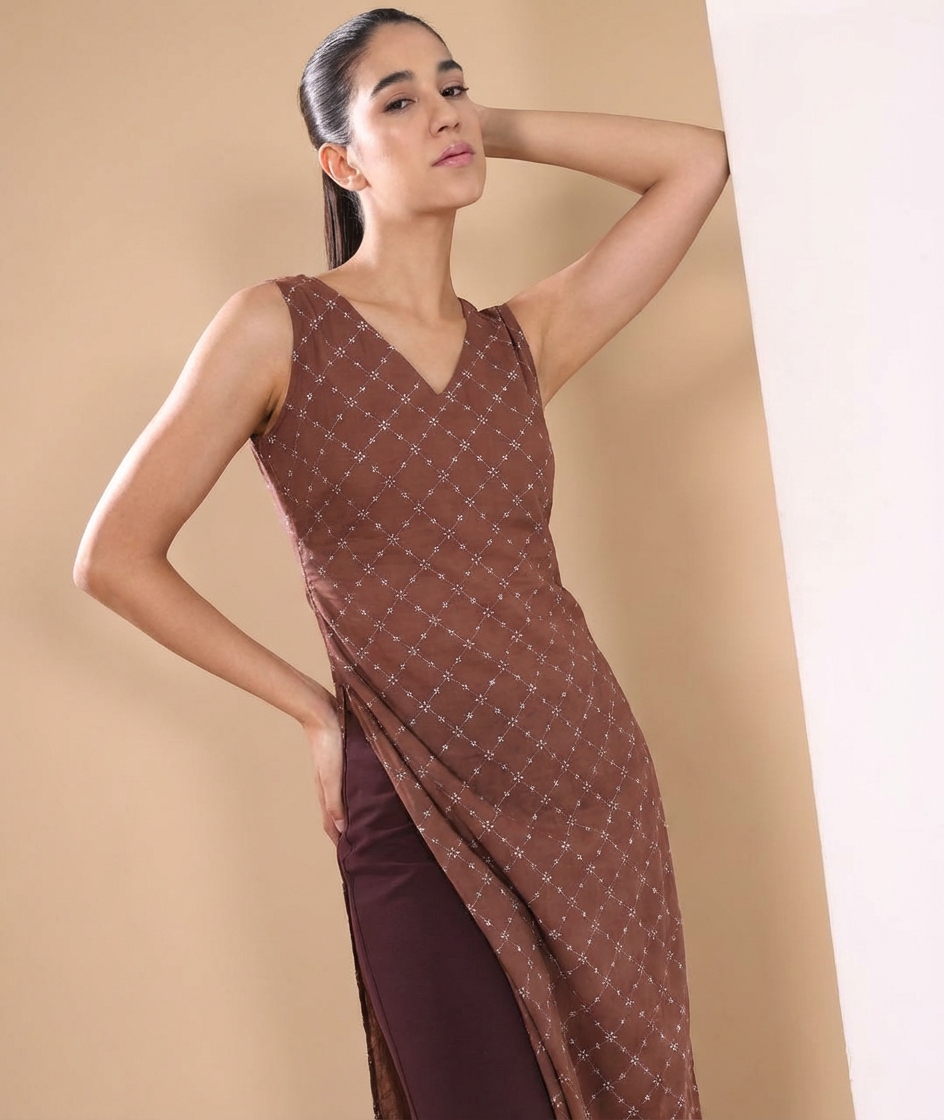
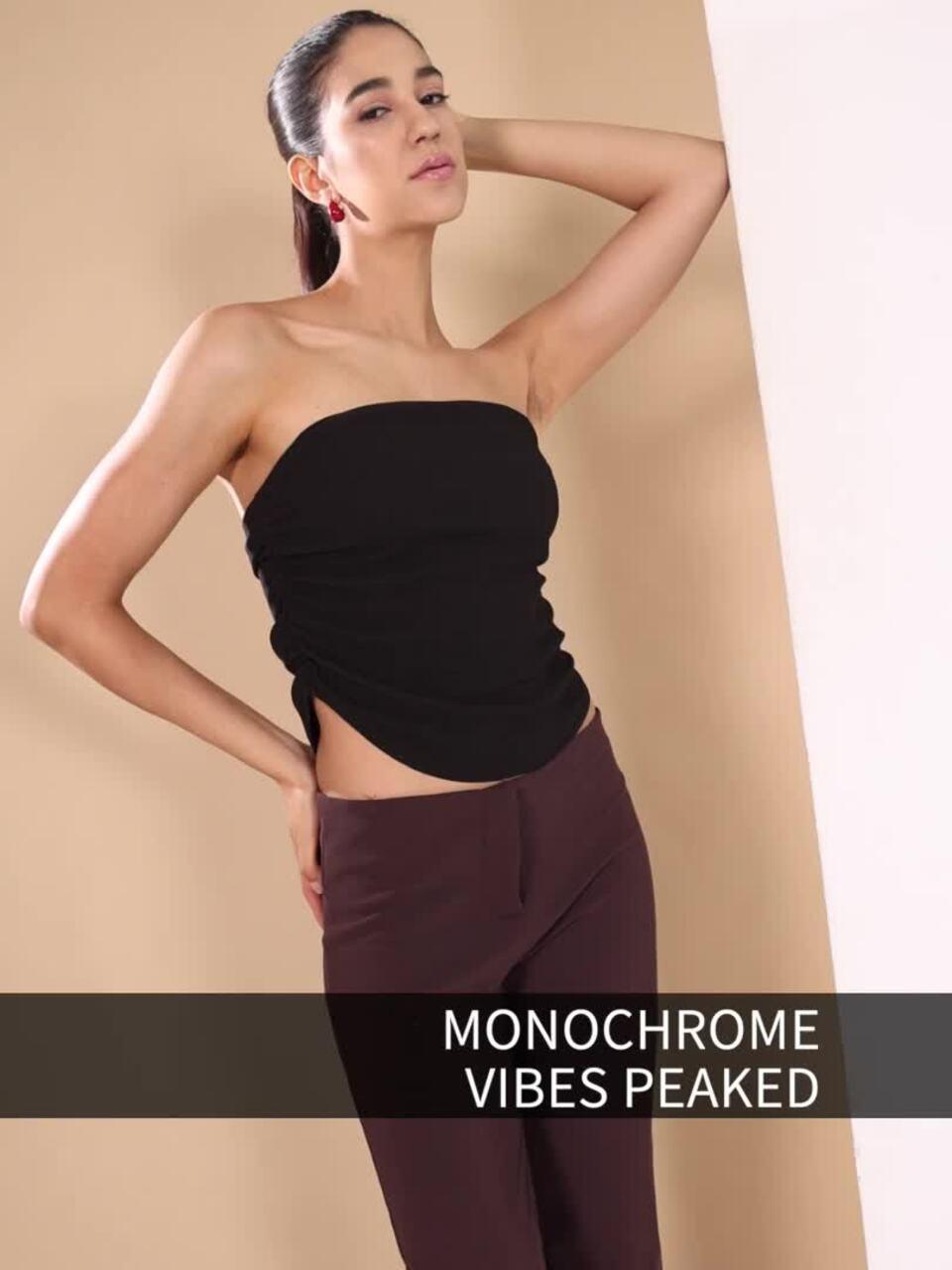
- **Body Mapping:** Due to the User's raised left arm (hand behind head), the left armhole of the Kurti must lift slightly, creating tension lines radiating from the armpit across the upper chest. On the right side, where the arm is bent with the hand on the hip/waist, the fabric must compress and fold naturally around the waistline. The garment is a long tunic; therefore, it should extend past the User's current waistline, covering the top portion of the maroon trousers visible in the User image.
- **Occlusion Handling:** The User's right hand (fingers and palm) resting on the hip is a critical occlusion layer. The Kurti fabric must be rendered *behind* this hand. The fabric should bunch slightly around the contact point of the hand, showing interaction pressure. The hair is slicked back, so no hair occlusion handling is required on the shoulders.
PHASE 3: ENVIRONMENT & LIGHTING
- **Light Match:** The User environment utilizes soft, diffused studio lighting originating from the front-left, casting soft shadows to the right against the beige wall. The new brown garment must adopt this lighting profile, generating self-shadowing inside the fabric folds (ambient occlusion) particularly under the bust and around the bunched waist area at the right hand.
- **Color Calibration:** The source image has outdoor, natural lighting which may cast a cooler or greener tint. The target environment is warm and beige. The brown hue of the Kurti must be color-graded to a warmer, neutral tone to blend seamlessly with the User's studio environment, ensuring the white embroidery remains crisp and does not yellow.
PHASE 4: IDENTITY PROTECTION
- **Facial Lock:** The User's entire head, including the slicked-back hairstyle, facial features, and neck structure, must be frozen and pixel-preserved. The skin tone on the exposed arms and upper chest (décolletage) must remain exactly as is.
- **Body Integrity:** Strictly forbidden to alter the User's shoulder width, arm volume, or waist circumference. The garment must drape *over* the existing body volume; the simulation must not warp the User's anatomy to fit the clothes. The "Monochrome Vibes Peaked" overlay should be treated as a foreground layer or removed if it interferes with the garment visualization.