Thinking Process
PHASE 1: VISUAL DECONSTRUCTION
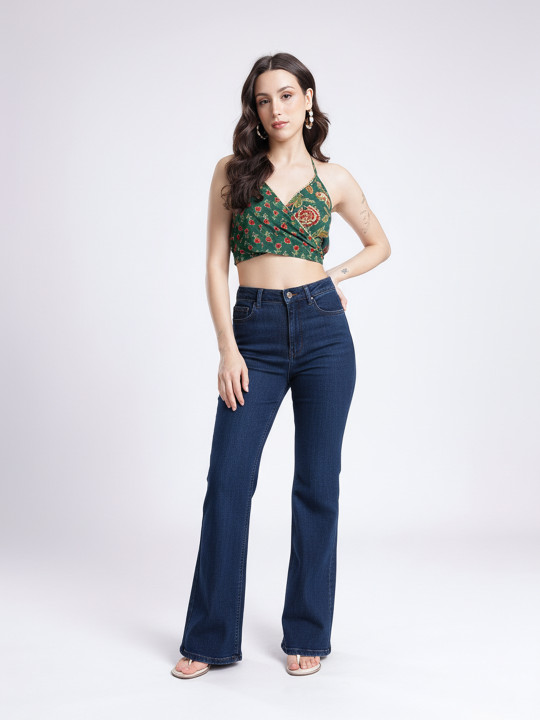
- **Fabric Physics:** The source garment is a lightweight, woven textile (likely cotton or viscose blend) with a matte finish. It possesses low specularity (does not shine) and medium stiffness, holding the structure of the wrap-bodice without drooping, yet conforming tightly to the torso.
- **Key Features:** The distinct red-on-green floral block print pattern must be preserved without distortion. The "surplice" (wrap-style) V-neckline, thin spaghetti straps (halter or shoulder), and the cropped hemline sitting just below the bust/ribcage are critical design elements to transfer.
PHASE 2: FIT & DRAPE SIMULATION
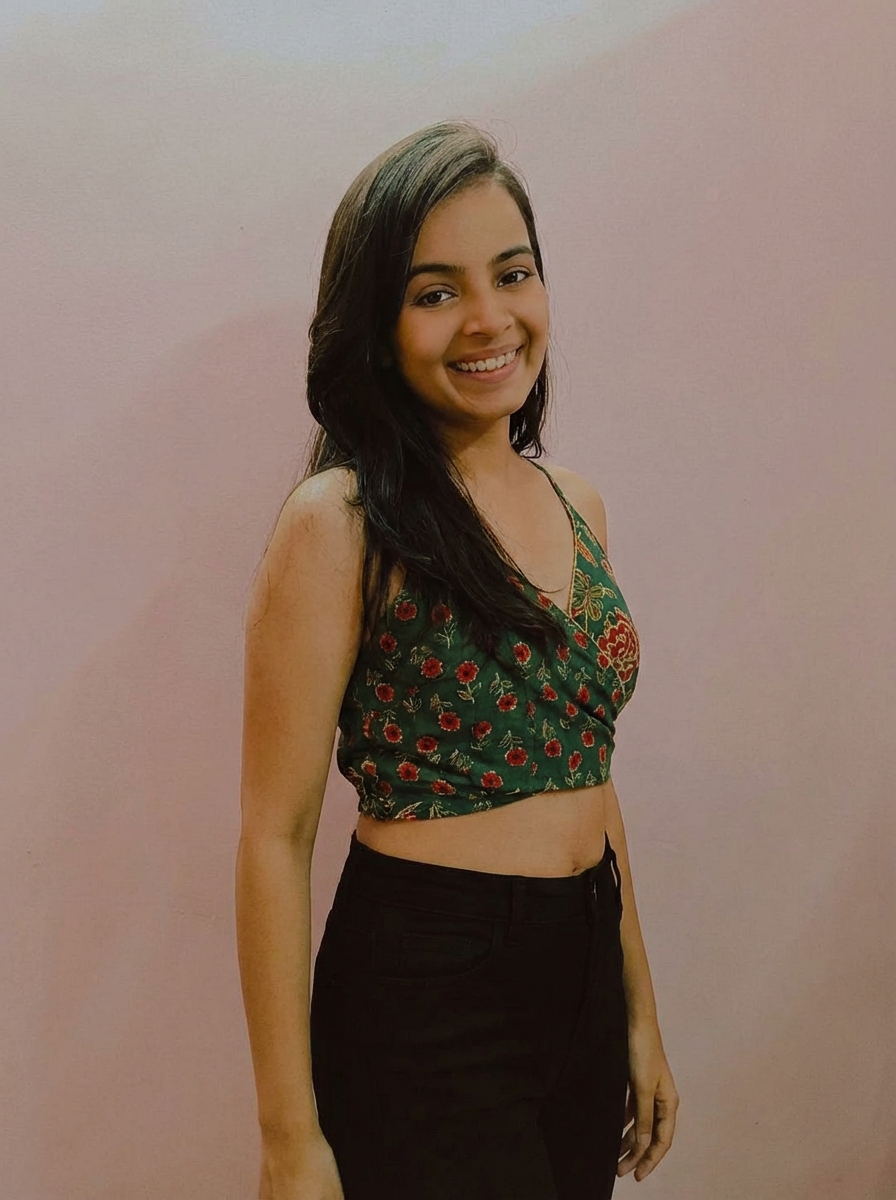
- **Body Mapping:** The source is a frontal view, while the target is a side/three-quarter profile. The simulation must generate the side profile of the garment, ensuring the wrap creates a diagonal tension line across the chest. Since the source is a crop top and the target currently wears a full-length shirt, the simulation must generate realistic skin texture for the user's exposed midriff/stomach area to fill the gap between the new hemline and the pants.
- **Occlusion Handling:** The user's long dark hair falls significantly over the shoulders and upper back. This hair data must be segmented and layered *over* the new garment's straps and back. The user's right upper arm presses against the side of the torso; the fabric must appear compressed between the arm and ribs, not superimposed on top of the arm.
PHASE 3: ENVIRONMENT & LIGHTING
- **Light Match:** The user image features warm, soft, diffused indoor lighting with shadows casting slightly behind the subject on the wall. The bright, cool studio lighting of the source garment must be adjusted to a warmer color temperature (increasing yellow/red values) to match the ambient room tone. Shadows must be generated under the bust line and in the fold where the wrap crosses.
- **Color Calibration:** The stark greens of the source image must be slightly desaturated and dimmed to match the lower-exposure, grainier quality of the target image (User Image), ensuring the fabric doesn't look "pasted on."
PHASE 4: IDENTITY PROTECTION
- **Facial Lock:** Absolute pixel preservation required for the user's face, specifically the eye shape, smile lines, teeth, and jawline contour. The hairline where it meets the forehead must remain distinct.
- **Body Integrity:** The user's arm thickness, shoulder width, and posture must remain unaltered. **Strict Prohibition:** Do not slim the waist or torso; the generated midriff skin must match the user's visible skin tone and implied body composition derived from the arm and neck.