Thinking Process
PHASE 1: VISUAL DECONSTRUCTION
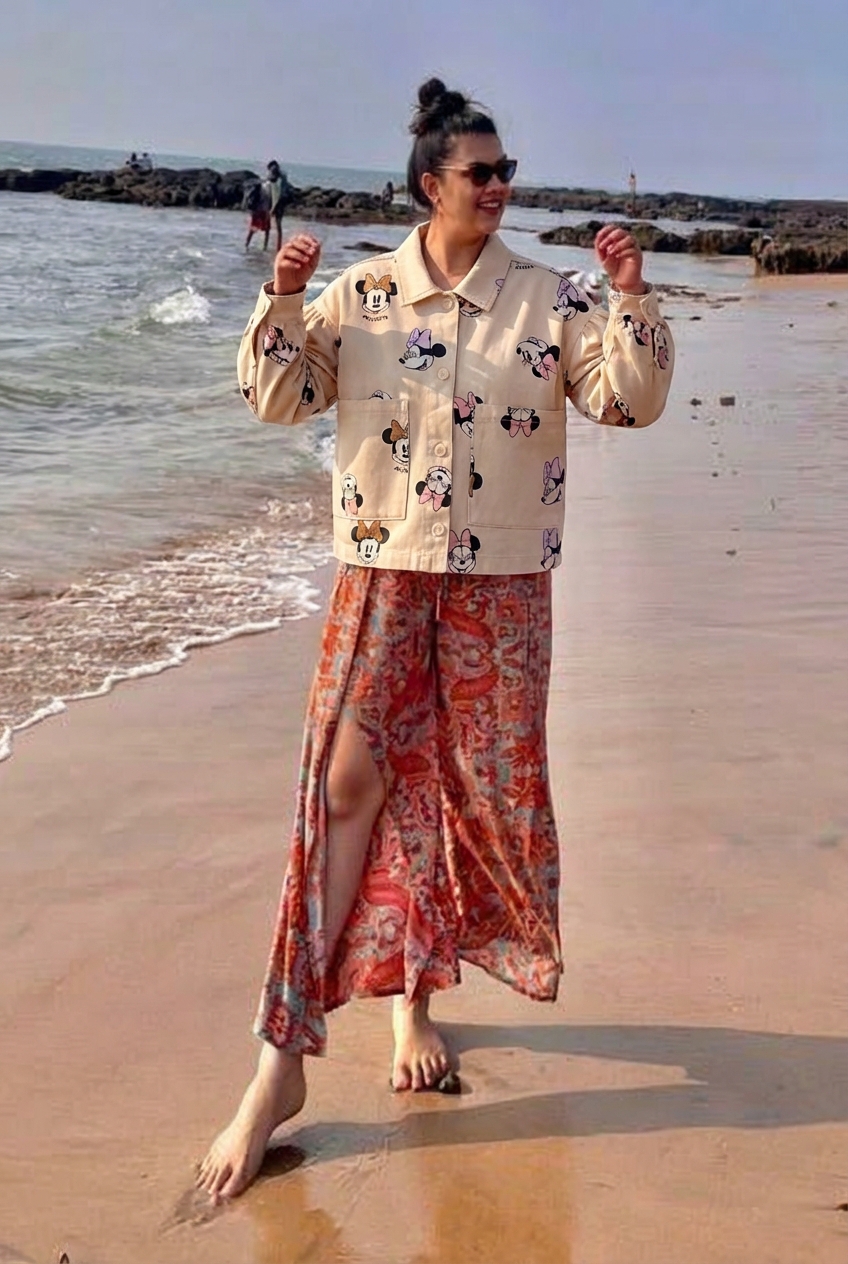
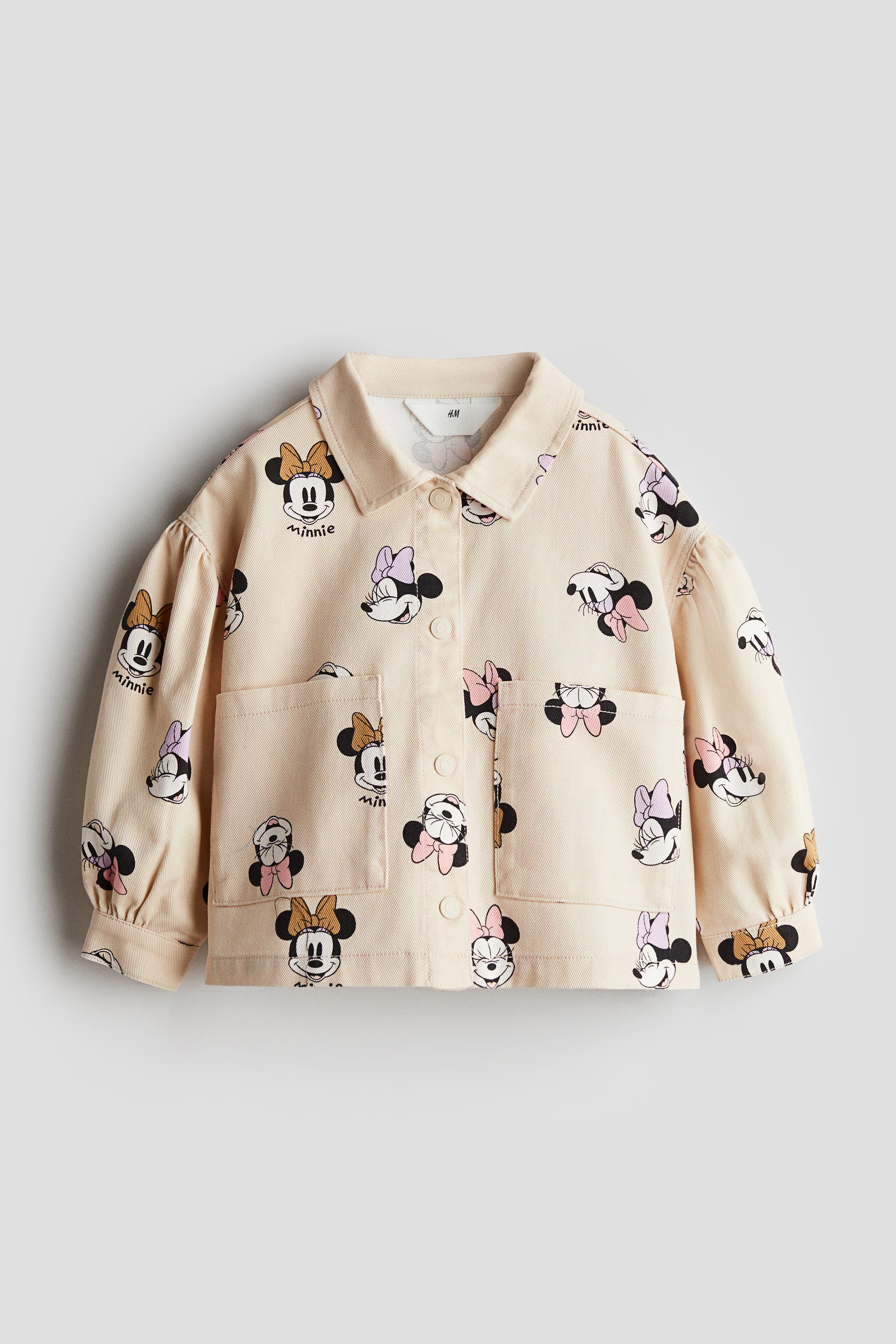
- **Fabric Physics:** The source garment appears to be a structured heavyweight cotton twill or light denim canvas. It possesses high structural integrity with minimal elasticity. Light reflection should be matte with low specularity, but texture mapping must reveal the weave under the harsh sunlight. It will not cling to the body like the current spandex crop top; instead, it will hold its own volume, particularly at the gathered shoulders and pockets.
- **Key Features:**
- **Print:** The Minnie Mouse all-over print must warp consistent with volumetric folding, not flat projection.
- **Construction:** Large patch pockets on the front (adds localized thickness/rigidity), slight puff/gathering at the shoulder seams, and elasticated or buttoned cuffs.
- **Hardware:** Matte beige buttons down the center placket must cast distinct micro-shadows.
- **Collar:** A structured spread collar that must replace the current spaghetti straps.
PHASE 2: FIT & DRAPE SIMULATION
- **Body Mapping:**
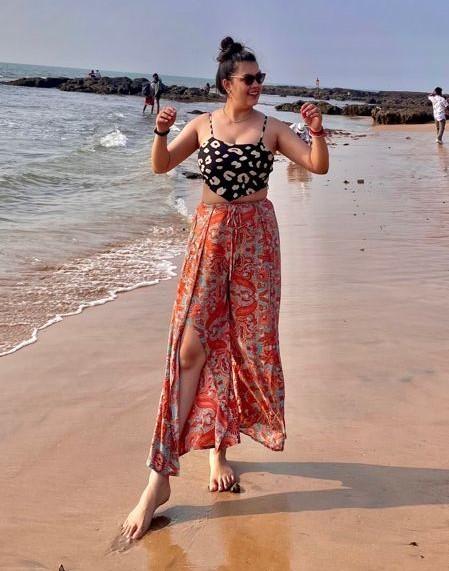
- **Torso:** Due to the material stiffness, the jacket will drape straight down from the bust line rather than tapering at the waist, creating a boxier silhouette than the user's current fit. It will fully cover the exposed midriff.
- **Arms:** Since the user's arms are bent at approximately 90 degrees and raised, the rigid fabric will bunch significantly at the inner elbows (antecubital fossa). The sleeves will retract slightly, exposing the wrists.
- **Shoulders:** The "puff" shoulder detail requires the garment mesh to rise slightly above the user's natural shoulder line.
- **Occlusion Handling:**
- **Hands:** The user's hands are free of the body, so occlusion is minimal, but the sleeve cuffs must terminate *before* the wrist/bangles to avoid visual clipping.
- **Hair:** The high bun is fully non-occluding. The jacket collar goes *around* the neck, sitting below the jawline.
- **Lower Body:** The jacket hem will overlap the top section of the wide-leg trousers. The trousers must be masked out where the jacket hangs over them.
PHASE 3: ENVIRONMENT & LIGHTING
- **Light Match:**
- **Source:** Strong, direct natural sunlight coming from the upper right (User's left side).
- **Simulation:** The generated jacket must have high-contrast shading. The user's left side (viewer's right) of the jacket must be brightly illuminated, while the user's right side (viewer's left) must fall into deep shadow.
- **Shadow Casting:** The bent arms must cast hard-edged shadows onto the torso/pockets of the jacket, consistent with the shadow the user is currently casting on the sand.
- **Color Calibration:** The neutral beige/cream of the source jacket must pick up the warm, ambient bounce light from the sand. The white balance should be shifted slightly warmer (yellow/orange tint) to match the "golden hour" or midday sun vibe of the target image, avoiding a sterile studio look.
PHASE 4: IDENTITY PROTECTION
- **Facial Lock:** The user's face, sunglasses, ears, and hairstyle (bun) must remain pixel-perfectly frozen. The neck area above the collar line must also remain untouched.
- **Body Integrity:** The user's arm volume and standing pose must not be altered. Do not slim the waist artificially; the boxy fit of the jacket will naturally widen the silhouette compared to the crop top, and this volume change must be respected to maintain photorealism. The visible parts of the orange trousers (below the new hemline) must remain unchanged.