Thinking Process
PHASE 1: VISUAL DECONSTRUCTION
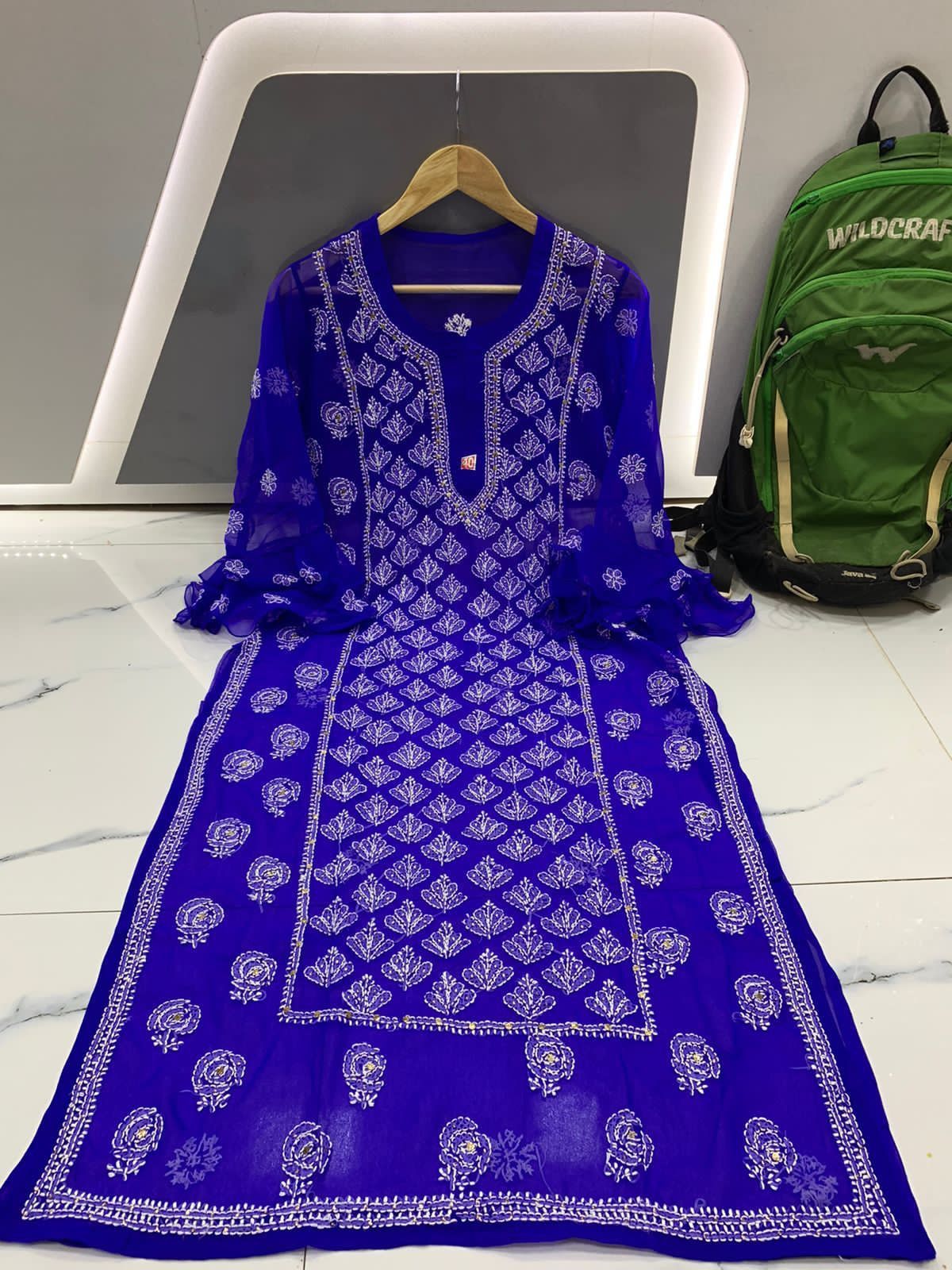
- **Fabric Physics:** The source garment is a semi-sheer Georgette or Chiffon material. It requires a high-flow fluid simulation with low stiffness settings. The material possesses slight transparency; skin tones on the arms must be visible through the fabric (subsurface scattering/alpha blending). The white embroidery (Chikankari) adds localized weight and texture, creating a matte finish contrast against the slight sheen of the blue base fabric.
- **Key Features:** The distinct V-neckline with embroidery border must be preserved. The ruffled/bell-bottom cuffs on the sleeves are a critical design element and must not be flattened. The intricate white thread work patterns covering the front bodice and the specific border piping along the side slits and hem must be mapped accurately without distortion.
PHASE 2: FIT & DRAPE SIMULATION
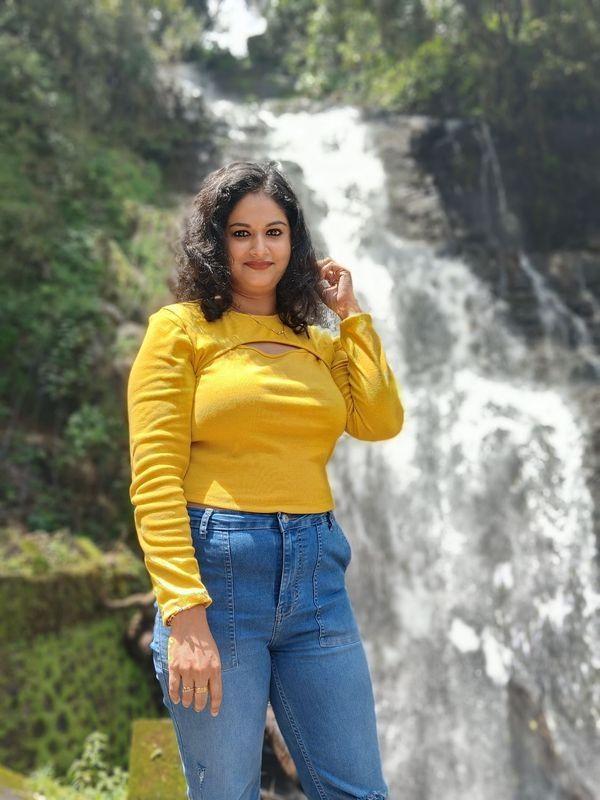
- **Body Mapping:** Unlike the current tight yellow knit top, the target Kurti is a tunic meant to hang loosely. The simulation must relax the fit around the waist and hips, allowing the fabric to fall vertically from the bust line rather than contouring tightly to the midriff. The fabric should drape over the top of the jeans, obscuring the waistband.
- **Occlusion Handling:**
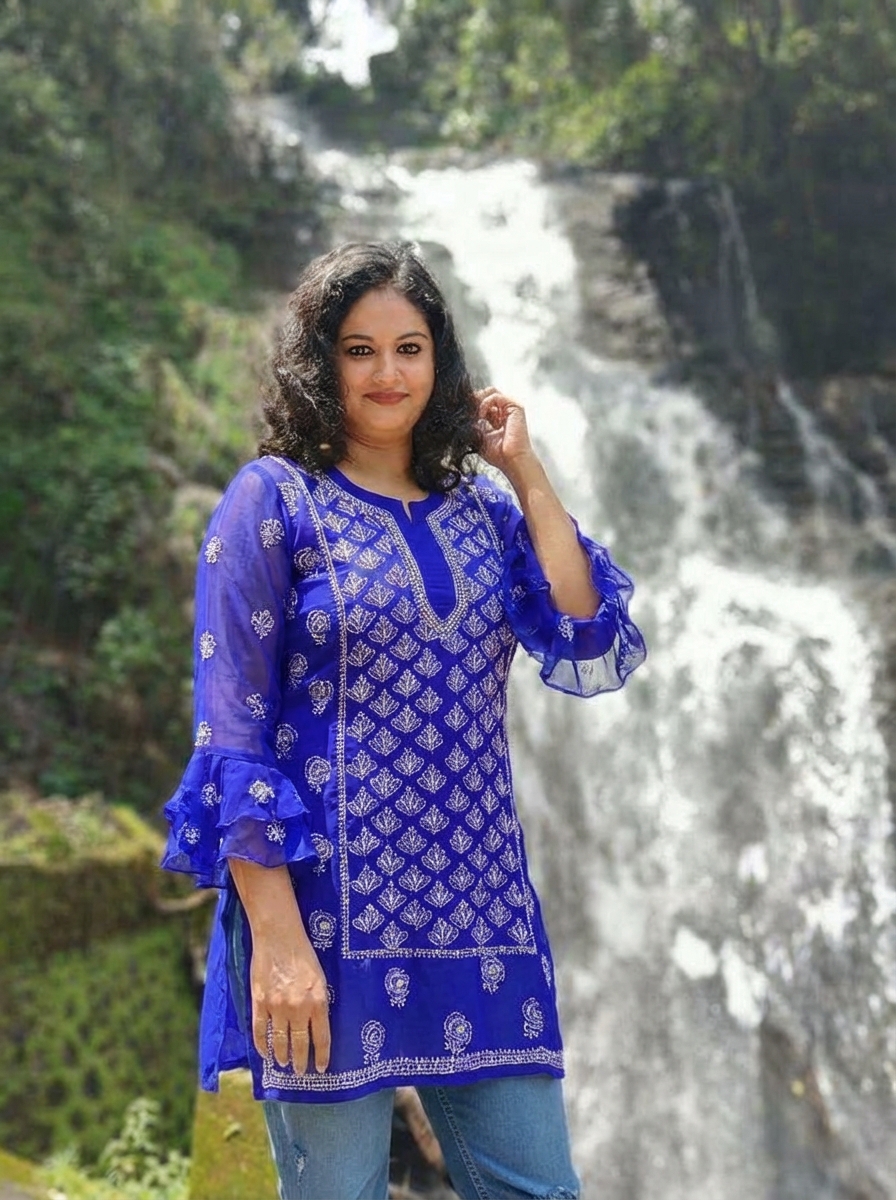
- **Hair:** The user's dark, curly hair falling on the shoulders constitutes a complex occlusion. It must be segmented and layered *over* the shoulder seams of the new Kurti.
- **Left Arm:** As the left arm is raised to touch the head, the flared sleeve should obey gravity, sliding slightly down towards the elbow and bunching naturally, rather than sticking to the wrist.
- **Hands:** The user's fingers/rings on the right hand must remain visible if the sleeve length extends that far; however, given the pose, the sleeve will likely end just above the wrist.
PHASE 3: ENVIRONMENT & LIGHTING
- **Light Match:** The target environment is soft, natural outdoor daylight with significant backlight from the waterfall. The source garment is lit by overhead indoor studio strips. We must remove the harsh specular highlights from the source and apply a diffuse lighting model. The garment requires soft contact shadows where the fabric folds and ambient occlusion near the underarms.
- **Color Calibration:** The source "Royal Blue" is highly saturated. To match the outdoor, slightly desaturated, and misty environment of the user image, the blue vibrance needs to be slightly toned down. The white embroidery should pick up a subtle cool cast from the waterfall/daylight rather than remaining stark, studio white.
PHASE 4: IDENTITY PROTECTION
- **Facial Lock:** The user's facial structure, skin texture, makeup, and neck area must remain completely frozen. The hairline and the specific volume/curl pattern of the hair are critical identity markers and must not be altered.
- **Body Integrity:** Strict prohibition on body reshaping. The user's shoulder width, arm volume, and bust-to-hip ratio must be maintained. While the garment changes from tight to loose, the underlying collision mesh representing the user's body must remain true to her original size. Do not slim the figure to fit the garment.