Thinking Process
PHASE 1: VISUAL DECONSTRUCTION
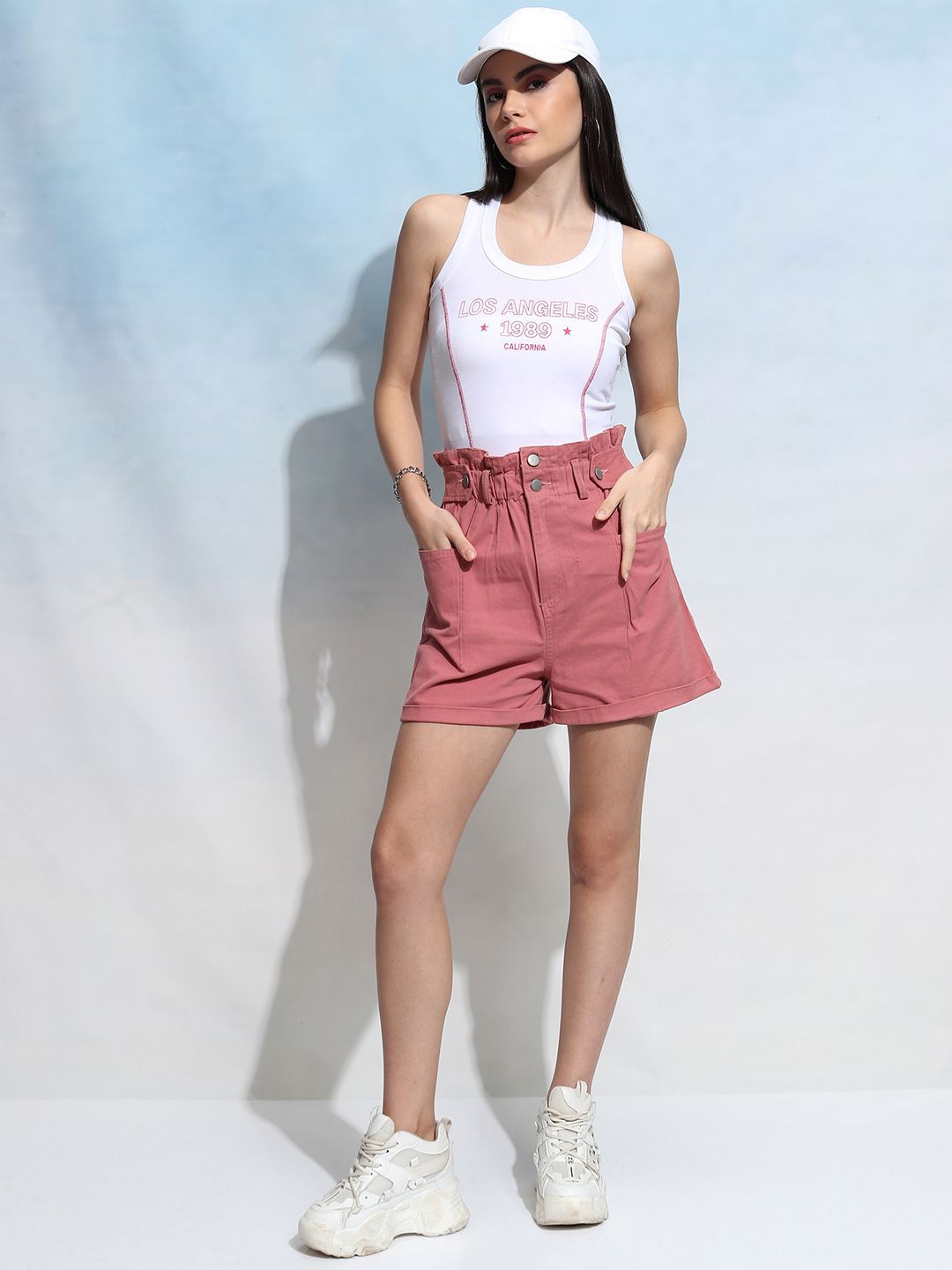
- **Fabric Physics:** The source garment is a fitted cotton-jersey blend or rib-knit bodysuit. It possesses high elasticity and low specular reflection (matte finish). Unlike the user's current thick crochet knit, this fabric has zero structural stiffness and will behave as a "second skin," contouring tightly to the torso rather than draping loosely.
- **Key Features:** The central "LOS ANGELES 1989" pink typography and the curved pink contrast piping/stitching along the torso sides are critical. The scoop neckline geometry and the sleeveless cut must be preserved. The hemline is currently tucked in the source; a natural waist-length hem needs to be generated unless simulated as tucked into the user's trousers.
PHASE 2: FIT & DRAPE SIMULATION
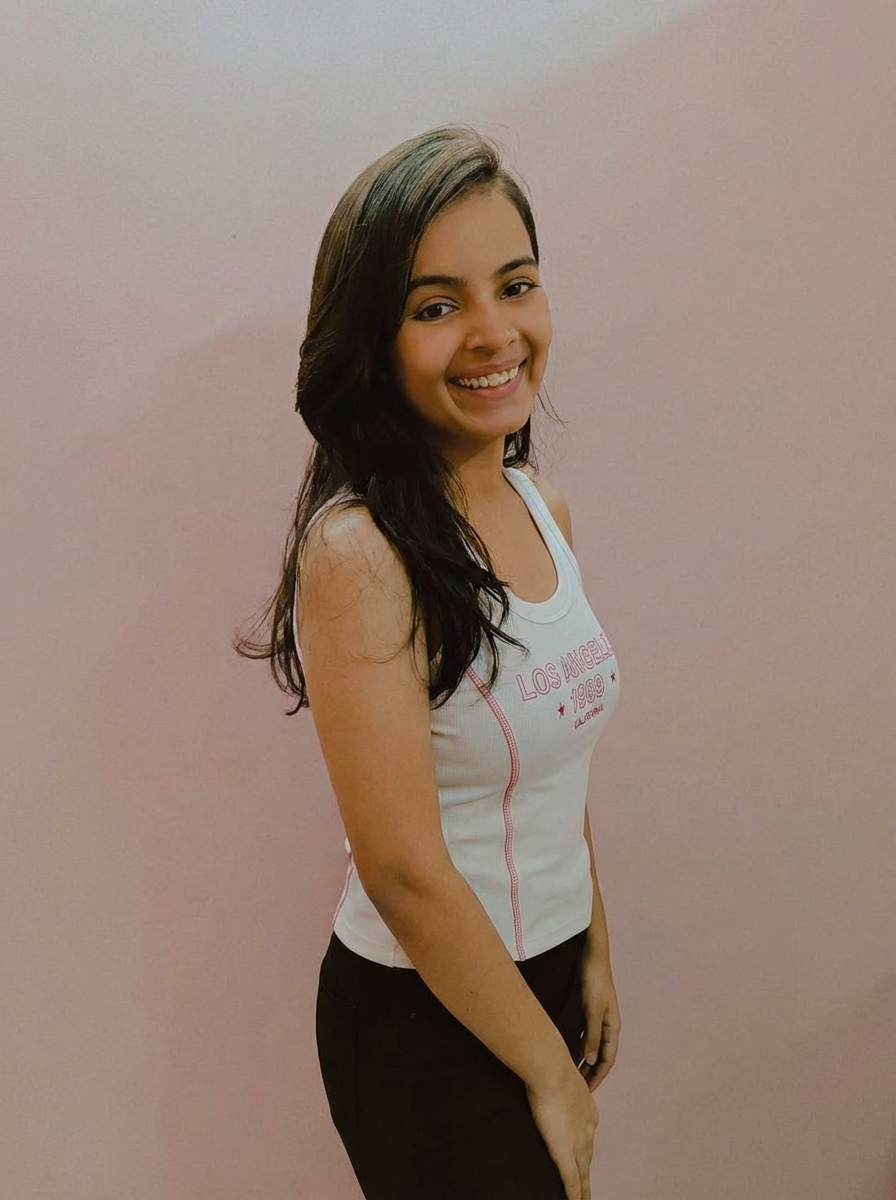
- **Body Mapping:** Due to the user's 3/4 profile pose, the graphic text on the chest must undergo perspective warping to wrap around the curvature of the bust, rather than appearing flat. The armholes must be generated higher and tighter than the current loose sleeves. The fabric will not "hang" but rather stretch slightly across the chest and relaxed abdomen area.
- **Occlusion Handling:** This is a critical friction point. The user's long, dark hair cascades over both shoulders and down the back. The hair mask must be segmented with high precision and layered *over* the straps and upper back of the new tank top. The user's right arm (visible in foreground) must obscure the side seam of the new garment.
PHASE 3: ENVIRONMENT & LIGHTING
- **Light Match:** The user image has warm, soft, indoor ambient lighting (likely incandescent, approx 3000K), casting soft shadows to the user's right. The source image has cool, high-key studio lighting. The bright white of the source tank top must be color-graded to a warmer, slightly creamy off-white to match the target environment's white balance.
- **Color Calibration:** The pink text and stitching must be desaturated slightly and warmed to avoid looking neon or fluorescent in the softer user environment. Shadows must be cast on the garment's side (under the armpit area) to match the depth of the user's current photo.
PHASE 4: IDENTITY PROTECTION
- **Facial Lock:** The user's entire head, facial expression (smile), and specific hair volume/texture are frozen pixels. No style transfer should bleed onto the neck or jawline.
- **Body Integrity:** While the new garment is thinner than the current thick knit top (meaning the silhouette will naturally be slightly closer to the skin), the underlying biometric volume of the user's arms and waist must remain unaltered. No digital slimming or skin smoothing is permitted on the exposed arms or neck.