Thinking Process
PHASE 1: VISUAL DECONSTRUCTION
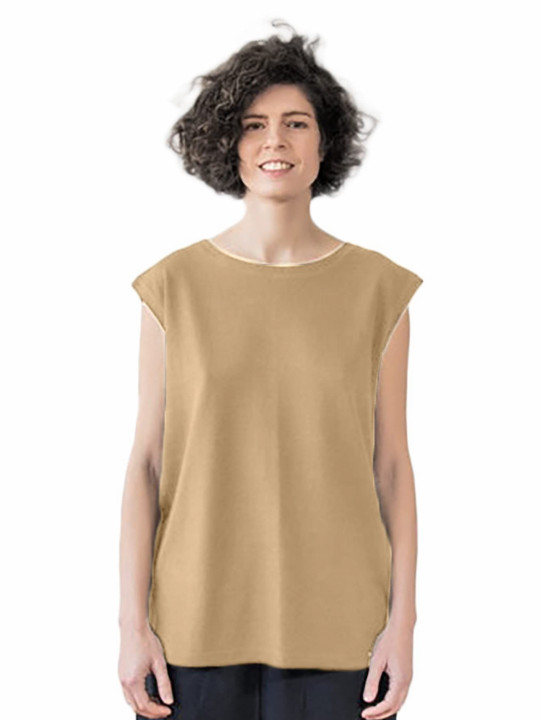
- **Fabric Physics:** The source garment appears to be a matte, medium-weight textile (likely a cotton-jersey or linen blend). It possesses low specularity (no shine) and soft structural rigidity. Simulation must avoid the fluid, glossy physics of silk; instead, it should exhibit a "dry" texture that holds a slight shape away from the body rather than clinging.
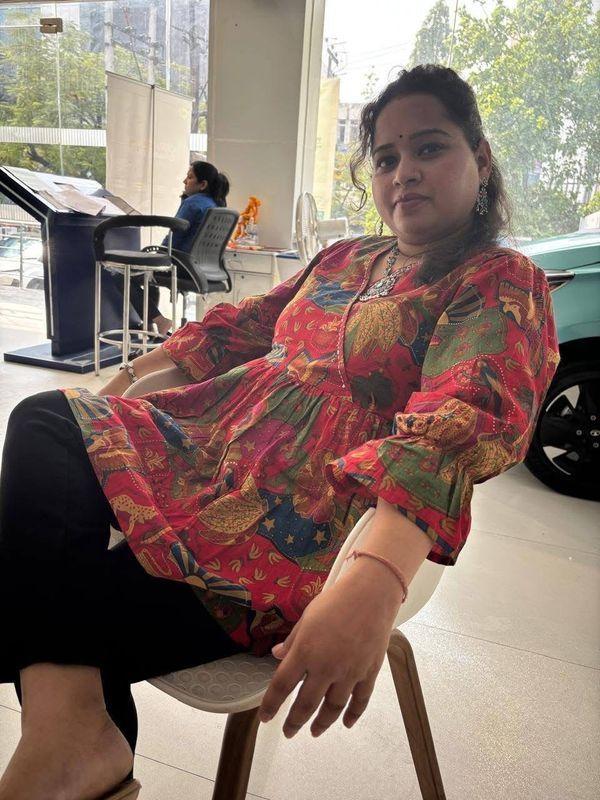
- **Key Features:** The wide boat/round neckline with visible binding must be preserved. The sleeveless (cap-sleeve) silhouette is critical. The subtle side-seaming and the straight, relaxed hemline must be maintained, replacing the current empire-waist structure of the user's garment.
PHASE 2: FIT & DRAPE SIMULATION
- **Body Mapping:**
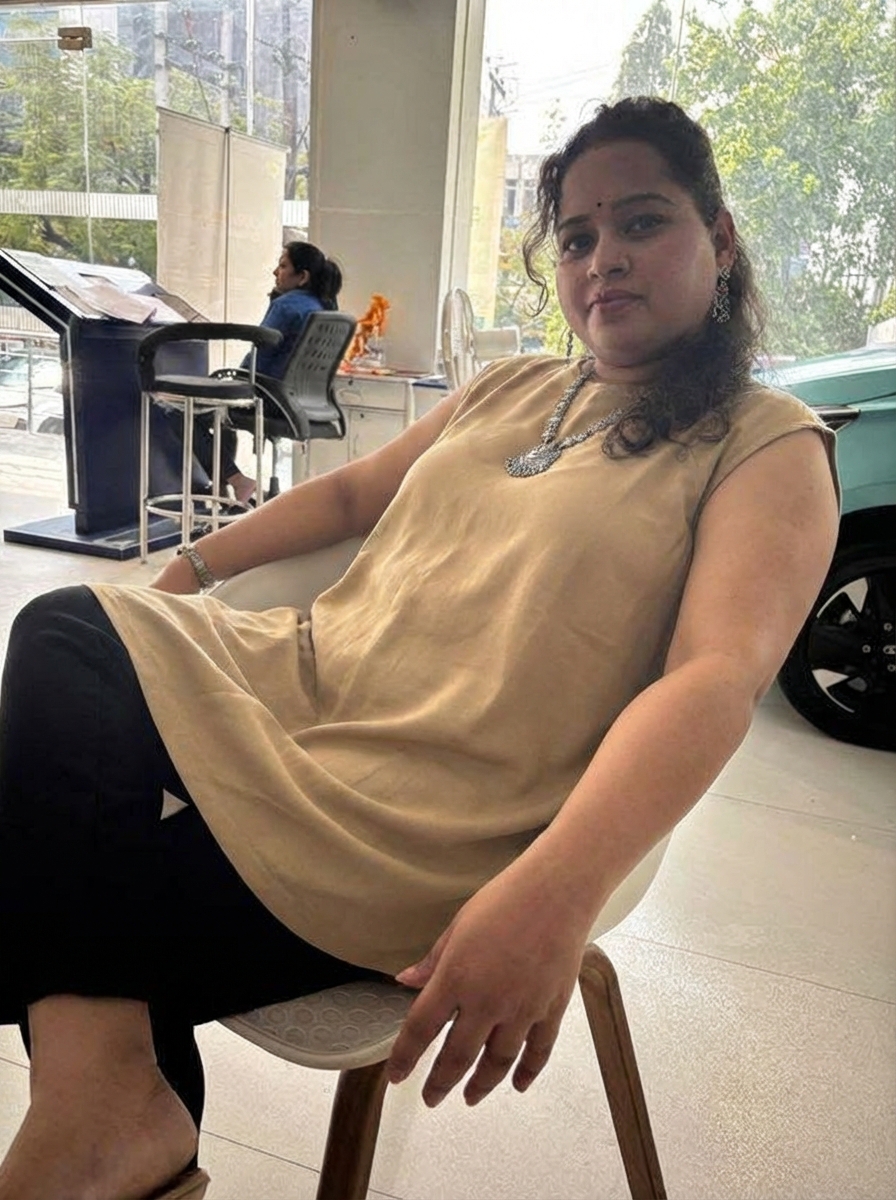
- **Seated Physics:** Unlike the standing source image, the user is seated and leaning back. The garment logic must change from a vertical drape to a "pooled" drape. The fabric will bunch slightly at the lower abdomen/lap area where the torso meets the legs.
- **Arm Inpainting:** **CRITICAL:** The source is sleeveless while the user currently wears long sleeves. The simulation must generate accurate, anatomically correct bare arms for the user, matching the skin tone of the face and feet, replacing the existing patterned fabric sleeves.
- **Shoulder Alignment:** The user's shoulders are angled backward. The garment's shoulder seams must rotate posteriorly to match this relaxed posture.
- **Occlusion Handling:**
- **Hair Layering:** The user's dark, curly hair falling over the shoulders and clavicle area must be segmented and layered *strictly over* the new beige top.
- **Necklace:** The silver necklace must be detected and composited on top of the new fabric, or partially obscured if the new neckline sits higher, but strictly maintaining depth priority.
- **Right Hand:** The user's right hand rests near the thigh/seat edge. If the new garment's hem reaches this low, the hand must occlude the fabric, not be covered by it.
PHASE 3: ENVIRONMENT & LIGHTING
- **Light Match:** The user is in a high-dynamic-range environment (showroom) with strong back/side lighting coming from the window behind. The new garment cannot look flatly lit. It requires a lighting map that casts the chest in relative shadow compared to the bright shoulders, mimicking the backlit scenario.
- **Color Calibration:** The source beige/camel tone is studio-lit (neutral/cool). It must be warmed and slightly desaturated to match the ambient indoor temperature of the showroom. The brightness levels must be lowered to sit naturally within the dynamic range of the user's photo.
PHASE 4: IDENTITY PROTECTION
- **Facial Lock:** Absolute freeze on the facial region (eyes, nose, mouth, chin) and the hairline. The user's expression and head tilt must remain pixel-identical.
- **Body Integrity:** Strict prohibition on slimming or "idealizing" the torso. The volume of the user's body in the seated position must be preserved. The newly generated arms must match the volume of the original sleeved arms, preventing any uncanny thinning of the limbs.