Thinking Process
PHASE 1: VISUAL DECONSTRUCTION
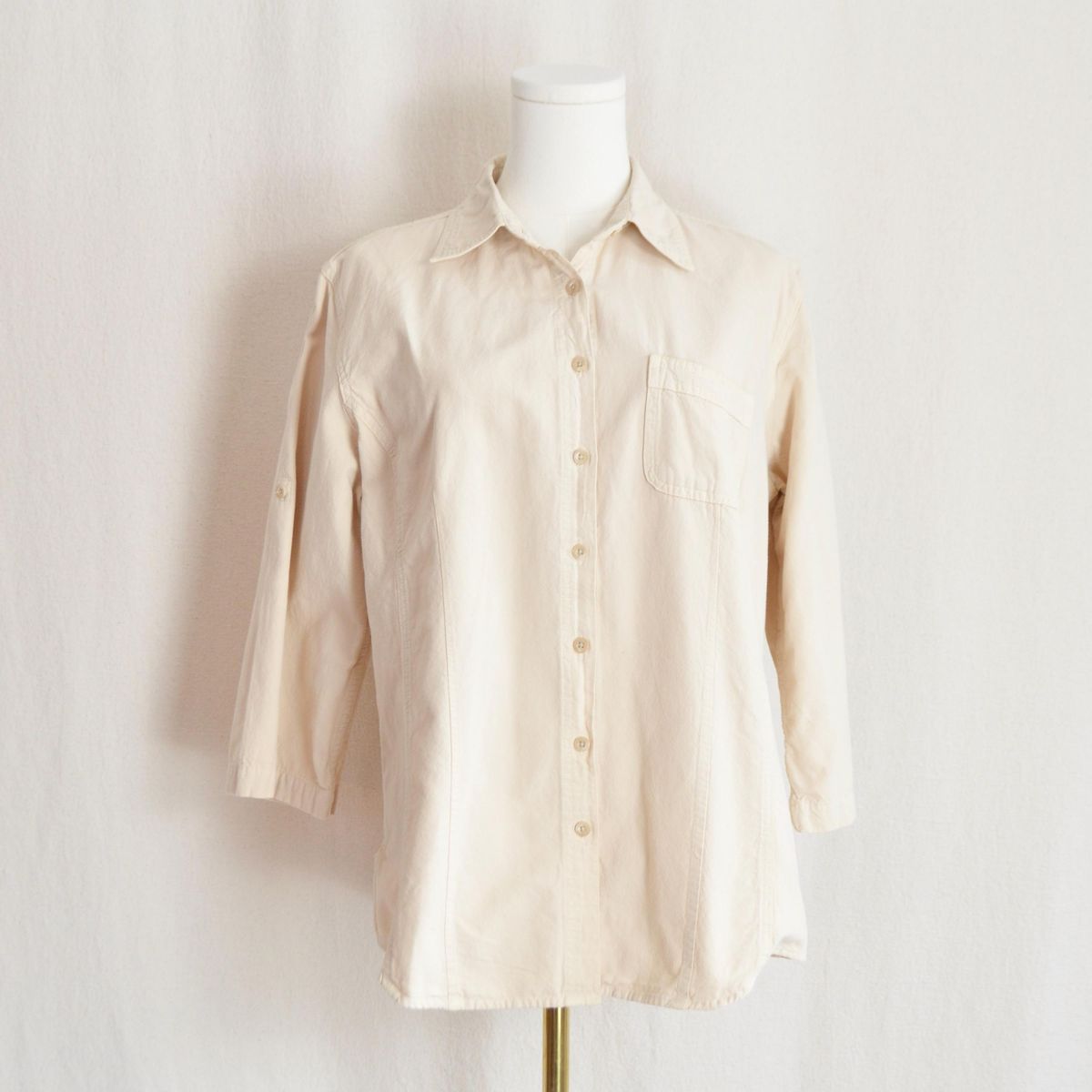
- **Fabric Physics:** The source garment appears to be a mid-weight cotton or linen blend with a matte finish. It possesses moderate structural stiffness (evident in the collar and placket) but allows for soft, rolling folds rather than sharp creases. It should diffuse light evenly with very low specular highlights (no shine).
- **Key Features:** The spread collar, full-length front button placket with matching beige buttons, and the single patch pocket on the wearer's left breast must be preserved. Vertical princess seaming running down the front panels and the 3/4 length sleeve hem (which appears slightly cuffed or rolled) are critical design elements to maintain.
PHASE 2: FIT & DRAPE SIMULATION
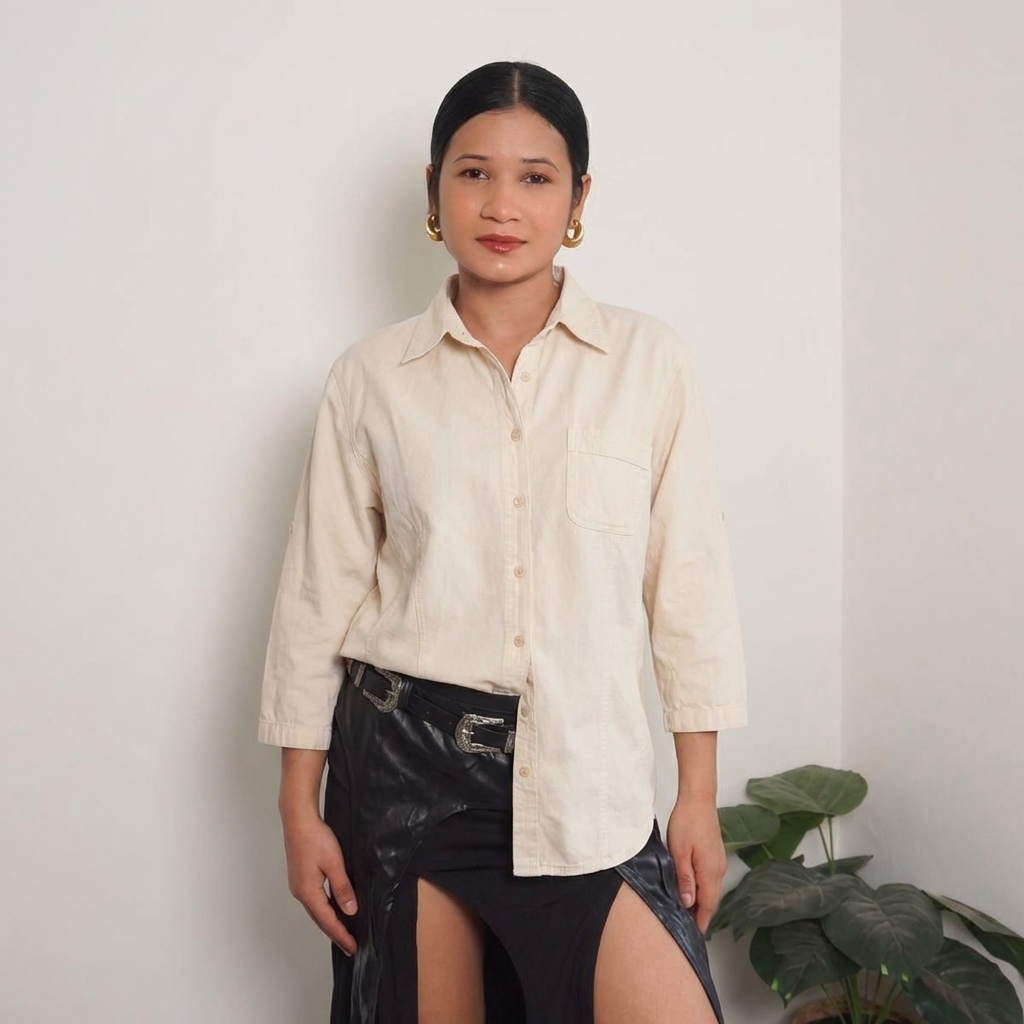
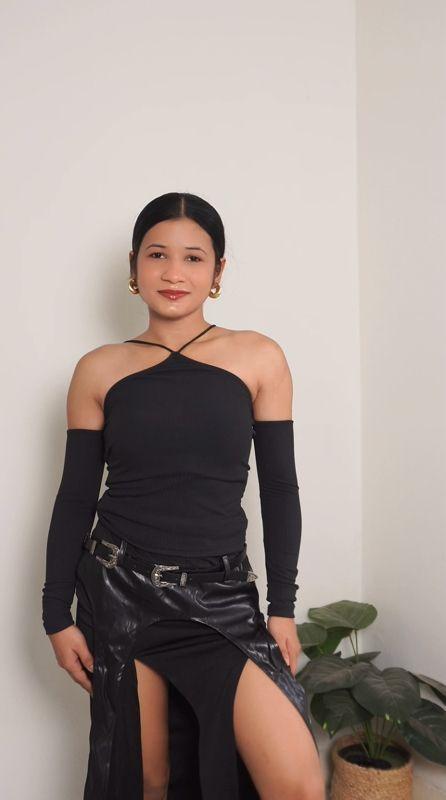
- **Body Mapping:** The source shirt is a relaxed/regular fit, contrasting with the user's current tight-fitting halter top. The simulation must generate volume around the waist and torso, allowing the fabric to hang straight down from the bust apex, creating a slight "air gap" between the skin and cloth. The 3/4 sleeves should flare slightly at the elbow rather than clinging to the arm, replacing the user's current tight black arm warmers.
- **Occlusion Handling:** The user's long black skirt and double-belt setup at the waist will be partially occluded by the shirt's hemline, which falls below the hips. The user's slicked-back hair is clear of the shoulder line, but the large gold hoop earrings must be layered *over* the collar area if the collar stands high. The user's hands are visible at the bottom of the frame and must remain in front of the garment if the shirt length reaches that low.
PHASE 3: ENVIRONMENT & LIGHTING
- **Light Match:** The target environment features soft, diffuse studio lighting originating from the front-left, casting soft shadows to the user's right against the white wall. The generated shirt must cast self-shadows (in the folds/axilla) consistent with this direction. The shadow cast by the shirt onto the wall must match the density and blur radius of the user's current shadow.
- **Color Calibration:** The source image has a slightly warmer, yellowish white balance compared to the cooler, neutral white balance of the user image. Desaturate the warm yellow tones of the shirt slightly to match the neutral clean white lighting of the user's room, ensuring the cream color looks natural and not chemically tinted.
PHASE 4: IDENTITY PROTECTION
- **Facial Lock:** Absolute freeze required on the user's facial geometry, skin texture, makeup, and slicked-back hairstyle. The jawline and neck above the clavicle notch must remain unaltered.
- **Body Integrity:** Strict prohibition on warping the user's shoulder width or arm length. The user's visible skin tone on the legs (slit area) and forearms (exposed by 3/4 sleeves) must retain original pixel data. Do not slim the torso; fit the loose shirt around the user's existing volumetric dimensions.