Thinking Process
PHASE 1: VISUAL DECONSTRUCTION
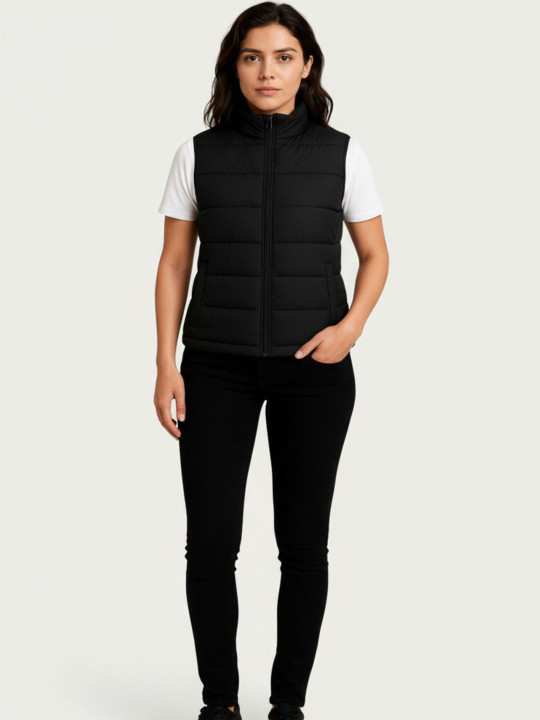
- **Fabric Physics:** The source garment is a quilted puffer vest, likely made of a nylon or polyester shell with synthetic or down fill. It possesses a semi-gloss, anisotropic texture that creates distinct specular highlights on the highest points of the "baffles" (the puffy sections). The simulation must account for "loft" (air trapped inside), meaning the fabric does not drape fluidly but maintains a rigid, inflated structure that resists folding.
- **Key Features:** The horizontal baffle stitching (quilting lines) must remain parallel but deform with body curvature. The high mock-neck collar is a structural element that must stand upright, unlike the flat collar of the user's current shirt. The central zipper mechanism and the finished, elasticized armholes are critical details. The visual weight is heavy/bulky, contrasting with the user's current lightweight fabric.
PHASE 2: FIT & DRAPE SIMULATION
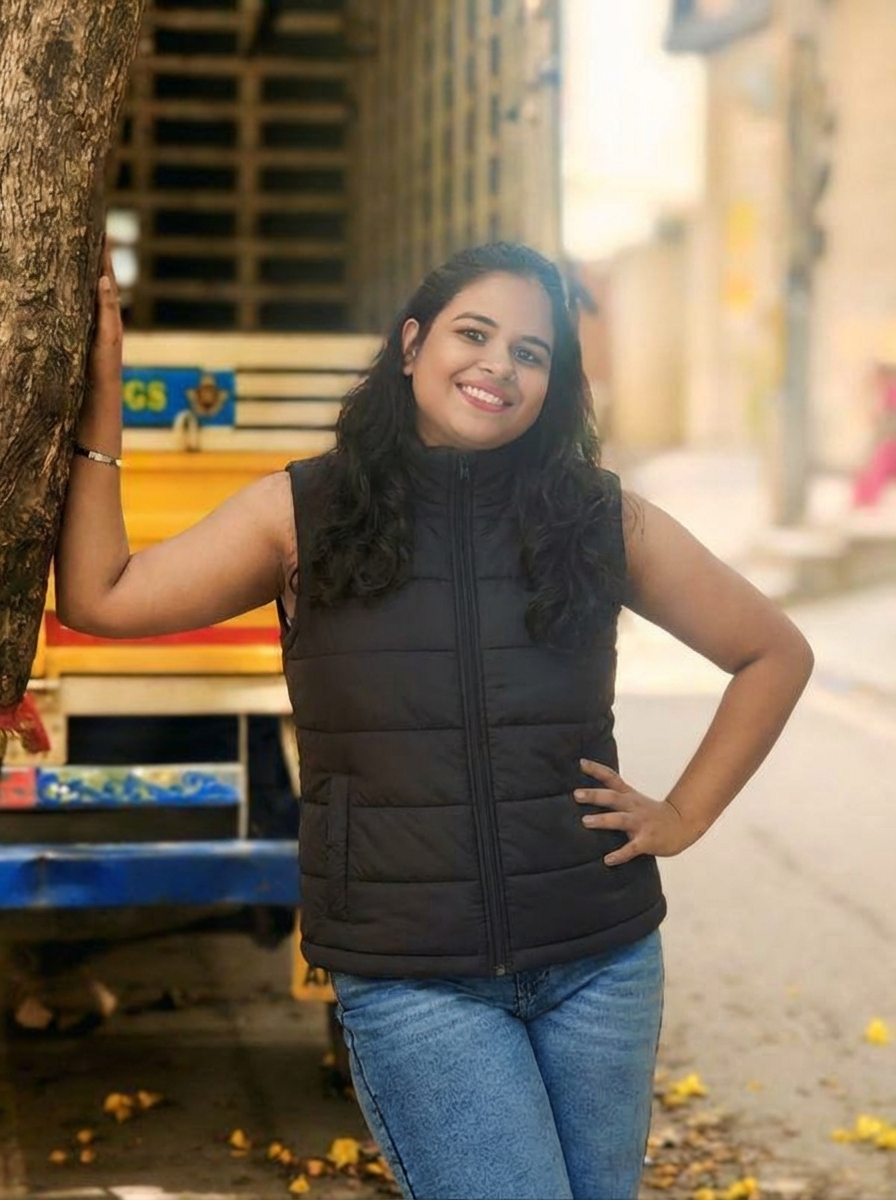
- **Body Mapping:** Due to the user's pose (leaning left shoulder against a tree, right hand on hip), the vest must deform asymmetrically. The left shoulder of the vest must rise significantly to match the elevated shoulder blade. The right side of the hemline should lift slightly and bunch outward due to the hand placement on the hip. Unlike the current loose shirt, the vest is a structural shell; it will not tuck into the jeans but sit on top of the waistline.
- **Occlusion Handling:**
1. **Hair:** The user's dark, wavy hair falls over both shoulders and the chest. This is a critical occlusion layer that must be segmented and composited *over* the new vest to avoid a "cut-out" look.
2. **Tree:** The left side of the torso is in contact with the tree bark. The vest creates a collision volume here; the fabric should appear slightly compressed against the hard surface of the tree.
3. **Arms:** Since the source is a sleeveless vest and the target has sleeves, the simulation must account for the transition at the armholes (generating skin texture or a base layer for the user's arms).
PHASE 3: ENVIRONMENT & LIGHTING
- **Light Match:** The target scene is an outdoor setting with diffuse, warm daylight coming primarily from the front-right. The black surface of the vest must stop reflecting the cool, white studio lights of the source image. Instead, the specular highlights on the nylon baffles should pick up the warm, yellowish hues of the surrounding street and the ambient light of the outdoor environment.
- **Color Calibration:** The absolute black of the source vest needs to be lifted slightly to a dark charcoal/warm black to match the dynamic range of the outdoor photo. Deep shadows within the quilting channels must be preserved to maintain the 3D "puffy" effect, but the overall black level must align with the contrast of the user's jeans.
PHASE 4: IDENTITY PROTECTION
- **Facial Lock:** The user's entire head, including facial expression, jawline definition, and the specific fall of her hair, must remain completely frozen. The neck area needs careful blending where the high collar of the vest replaces the open collar of the current shirt.
- **Body Integrity:** The user's curvy silhouette must be respected. While the puffer vest adds volume (making the torso look wider due to the garment's thickness), the underlying skeletal mesh and the width of the hips/jeans must not be warped or slimmed. The hands (specifically the right hand on the hip) must preserve their current skin tone and shape.