Thinking Process
PHASE 1: VISUAL DECONSTRUCTION
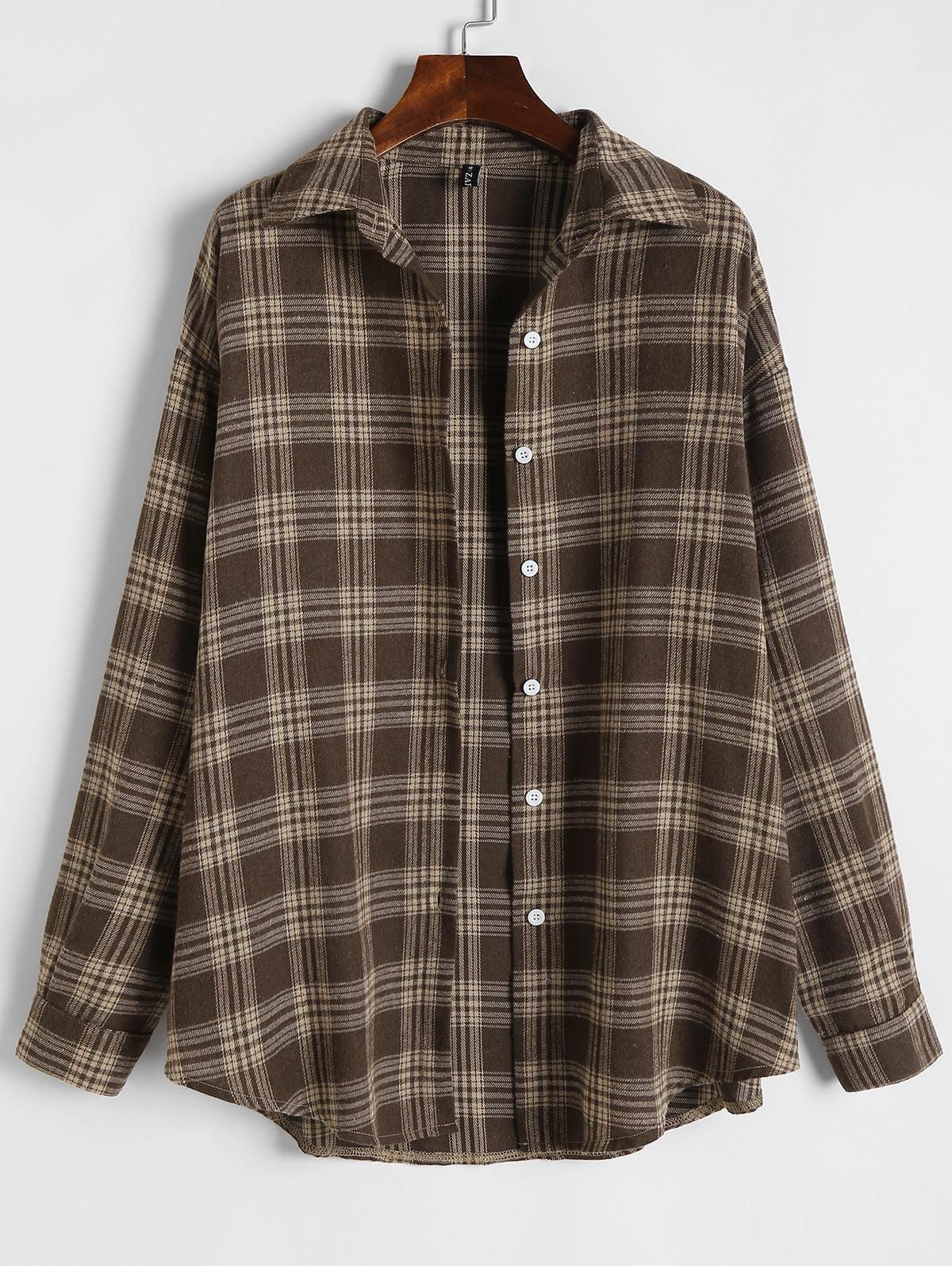
- **Fabric Physics:** The source garment is a flannel or heavy brushed cotton blend. It possesses a low-luster, matte finish and should not reflect light specularly like synthetic fibers. The physics engine must simulate a medium-weight fabric that holds its shape slightly (stiffness 0.6) rather than draping like a fluid silk; it should fold with soft, thick creases rather than sharp, micro-wrinkles.
- **Key Features:** The tartan/plaid pattern alignment is critical and must wrap volumetrically around the torso. The structured collar, the contrast white buttons down the placket, the reinforced cuffs, and the curved bottom hemline must be preserved. The texture map must retain the "fuzziness" of brushed cotton.
PHASE 2: FIT & DRAPE SIMULATION
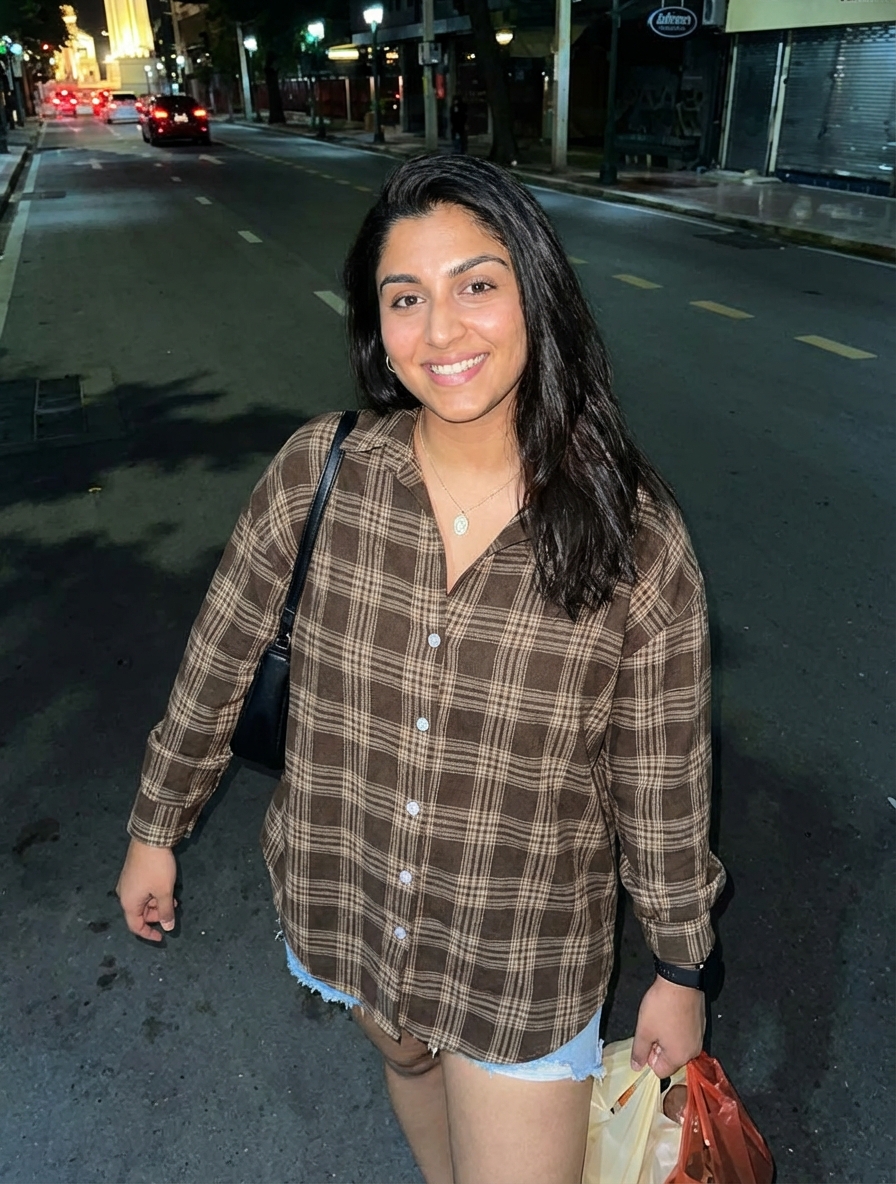
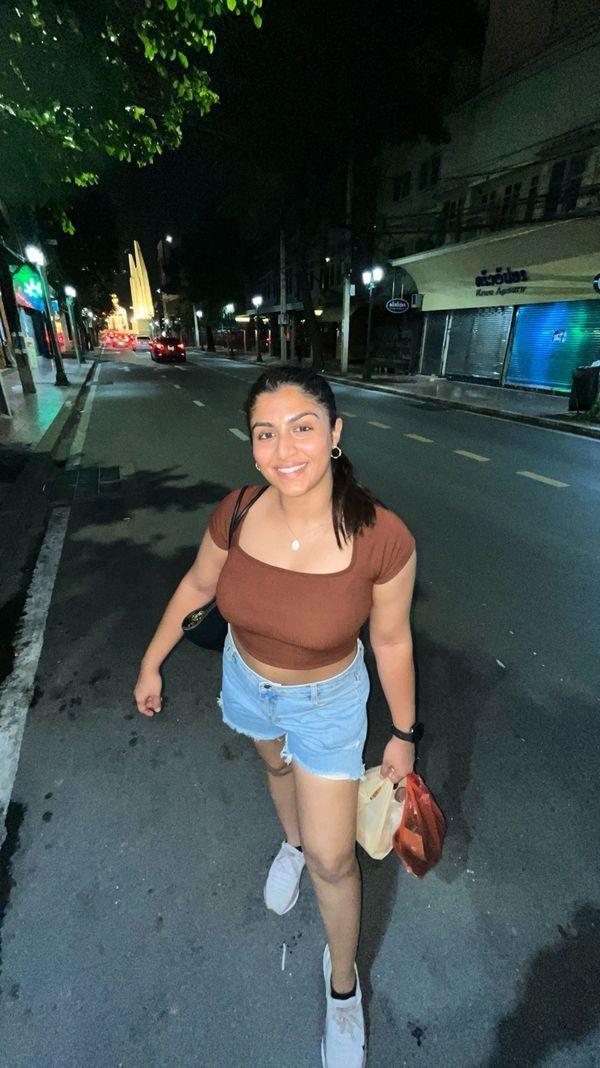
- **Body Mapping:** Unlike the user's current tight crop top, the flannel is an oversized/relaxed fit. The simulation must generate a volume gap between the user's skin and the fabric. The hem should extend past the waistline, likely covering the top portion of the denim shorts. On the user's right arm (holding the purse), the sleeve should bunch slightly at the elbow crease. On the left arm (holding bags), gravity will pull the sleeve straight, with accumulation at the wrist cuff.
- **Occlusion Handling:**
1. **Purse Strap:** The black strap on the user's right shoulder MUST be segmented and layered *over* the new garment. The fabric physics must simulate compression where the strap presses into the flannel shoulder.
2. **Hair:** The user's long dark hair flows over the left shoulder; this must mask out the collar and chest area of the shirt.
3. **Necklace:** The pendant should overlay the skin in the open neck area of the shirt.
4. **Hands/Watch:** The left wrist watch and plastic bags must remain the top-most layer, truncating the sleeve drape.
PHASE 3: ENVIRONMENT & LIGHTING
- **Light Match:** The target image uses a strong, frontal camera flash (hard lighting) in a nighttime setting. The garment needs high-contrast rendering: bright, cool-toned highlights on the center mass (chest/stomach) and rapid fall-off into deep shadows on the sides (flanks/underarms). A drop shadow must be cast by the shirt onto the user's thighs/shorts.
- **Color Calibration:** The source garment is warm-lit. It must be color-graded to match the cooler, flash-lit skin tone of the user. The brown tones of the plaid need to be desaturated slightly and shifted toward blue/cyan to integrate with the night street ambience.
PHASE 4: IDENTITY PROTECTION
- **Facial Lock:** Absolute pixel preservation of the face from the chin up, including the jawline, smile, and neck structure. The hairline and the specific volume of the hair must remain frozen.
- **Body Integrity:** The user's shoulder width, arm circumference, and hip width must dictate the garment's collider mesh. Strict prohibition on "slimming" or altering the user's BMI; the shirt must fit *her* existing geometry, not replace it with a generic model shape.