Thinking Process
PHASE 1: VISUAL DECONSTRUCTION
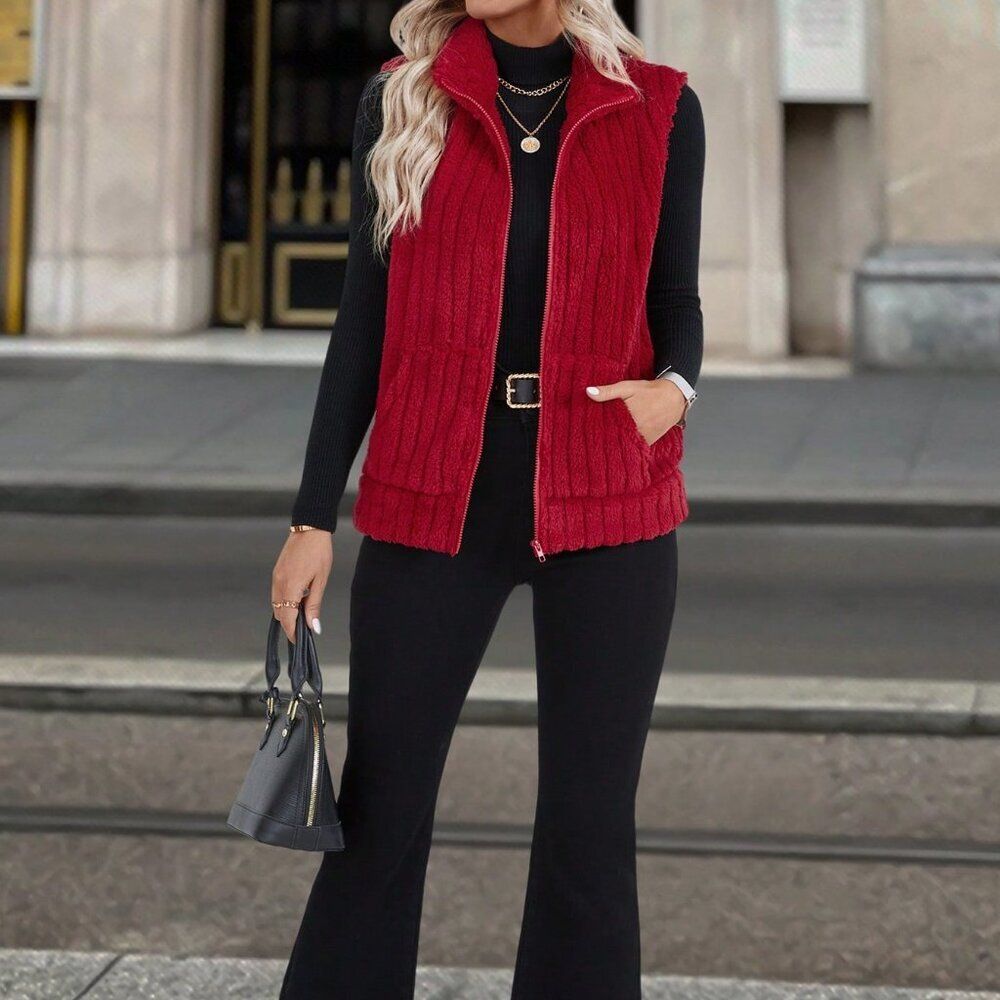
- **Fabric Physics:** The source garment is a high-pile, textured fleece or faux-fur puffer vest with vertical quilting. It possesses high volume and thickness (high bending stiffness). Unlike the user's current tight-fitting cotton/spandex blend, this material will not cling to the body’s contours. It has a matte finish with low specularity, but the texture requires subsurface scattering simulation to capture the "fuzziness" and depth of the red fibers.
- **Key Features:**
- Vertical ribbed/quilted patterning across the entire torso.
- A structured, high stand-up collar that must maintain its shape and not collapse onto the neck.
- Central zipper mechanism (currently open in source, likely to be rendered open or semi-zipped).
- Side pocket welts.
- The specific "fleece" texture must be preserved to distinguish it from smooth nylon puffers.
PHASE 2: FIT & DRAPE SIMULATION
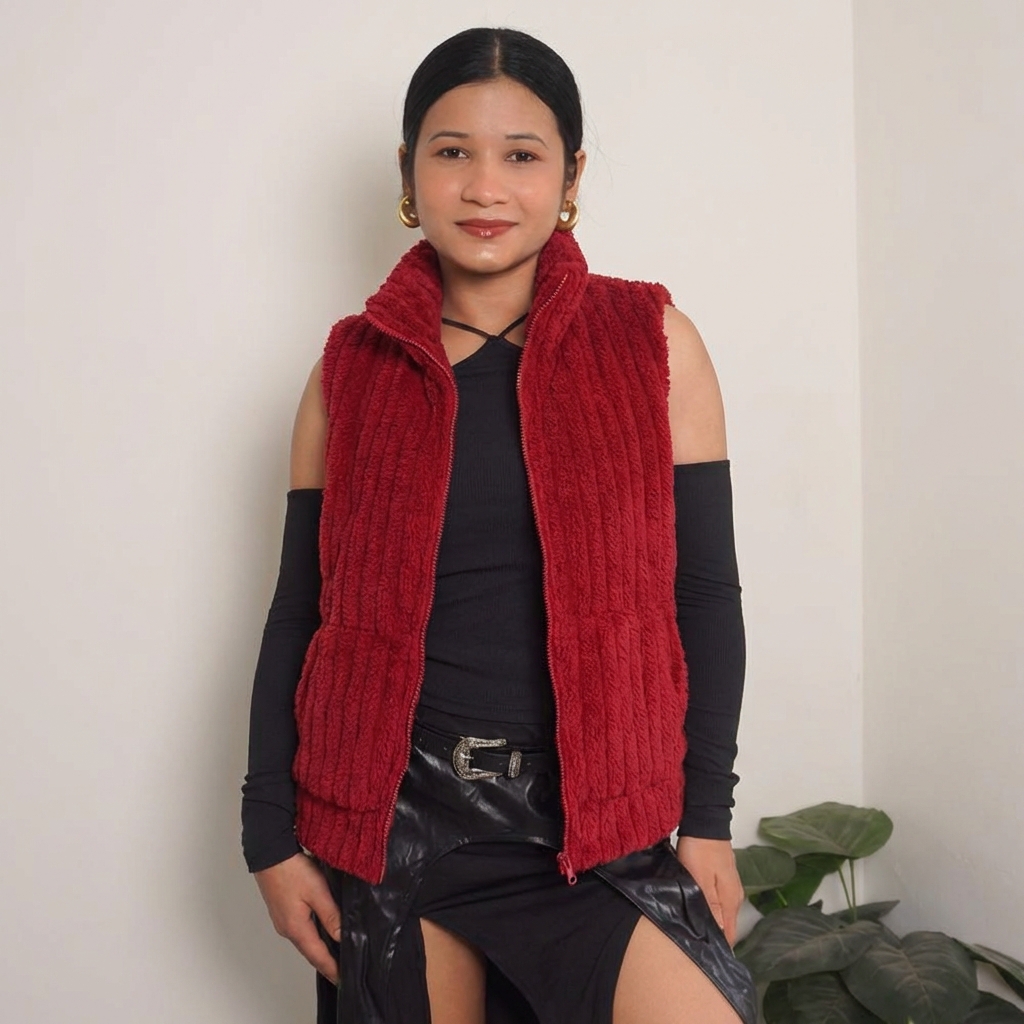
- **Body Mapping:** The vest will replace the current tight halter top. Due to the vest's bulk, it will sit wider on the shoulders than the current garment. The fit should be somewhat boxy; it must hang vertically from the shoulder line, bridging over the waist curve rather than cinching in. The hemline should fall just below the natural waist, likely overlapping the top belt of the leather skirt.
- **Occlusion Handling:**
- **Hair:** The user's hair is pulled back, presenting a clear neck and shoulder line; minimal occlusion management is required here, but the high collar of the vest must be composited *behind* the jawline and ears.
- **Arms/Hands:** The user's arms are down at her sides. Since the new garment is sleeveless, the simulation must generate accurate armhole shadows on the user's existing skin/black sleeves.
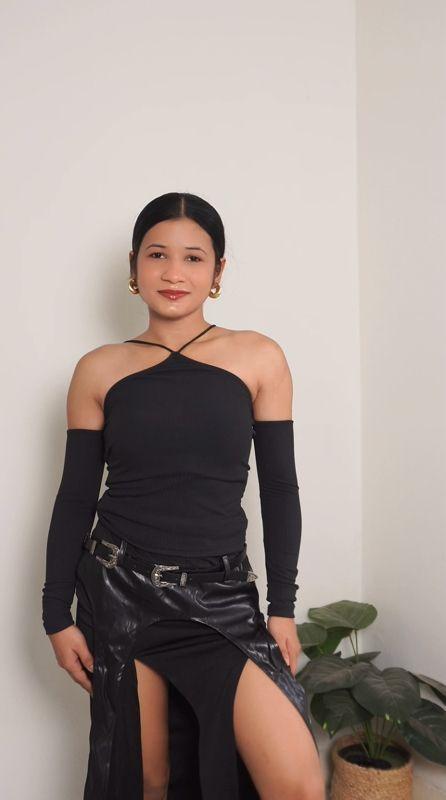
- **Current Outfit:** The user's current "detached sleeves" and halter straps must be digitally removed or masked out so they do not protrude visibly from underneath the vest.
PHASE 3: ENVIRONMENT & LIGHTING
- **Light Match:** The user is in a soft-lit indoor environment with a white wall background. The lighting is diffuse, coming primarily from the front-left, casting soft shadows to the user's right. The source image has high-contrast outdoor lighting. The transferred vest must have its lighting "flattened" (albedo extraction) and then re-shaded to match the soft indoor ambient occlusion of the target image. Shadows from the vest collar must fall softly onto the user's neck.
- **Color Calibration:** The source red is vibrant and sun-lit. It must be slightly desaturated and warmed to match the indoor color temperature of the user's photo to prevent the "cut-and-paste" sticker effect. The red reflection on the user's skin (color bleeding) should be minimal but present near the armpits and neck.
PHASE 4: IDENTITY PROTECTION
- **Facial Lock:** The entire head (hairline, ears, face, jawline) is a strict freeze zone. The neck area requires careful blending where the new collar sits, but the facial structure must remain pixel-perfect.
- **Body Integrity:** The user's pose (slight hip tilt, leg forward) must be preserved. While the vest adds volume to the upper body, the underlying skeletal structure and the width of the hips/legs must not be altered. Do not slim the arms or change the skin tone of the visible body parts.