Thinking Process
PHASE 1: VISUAL DECONSTRUCTION
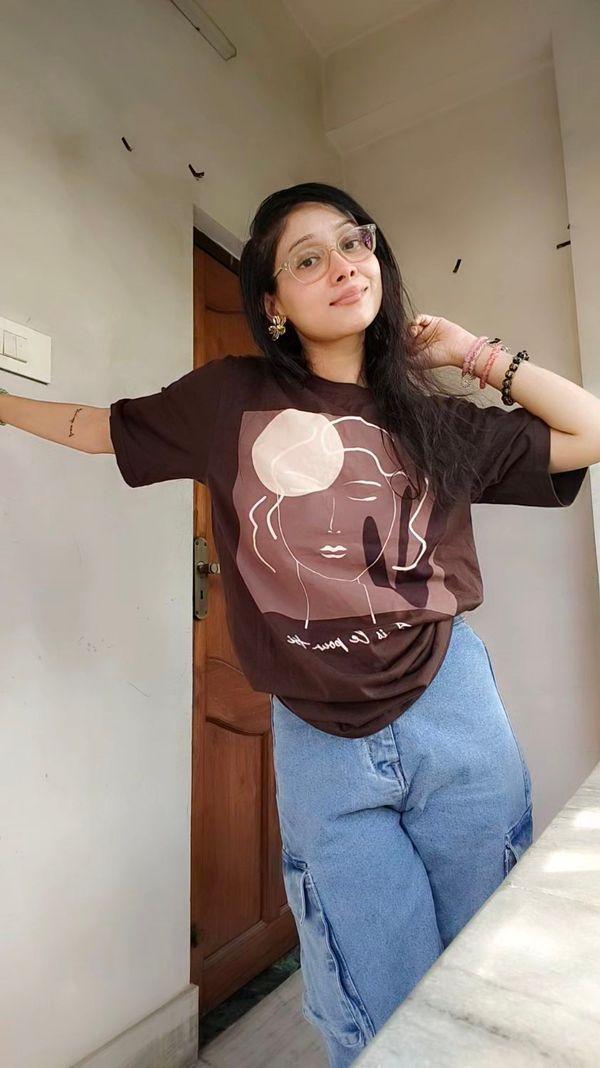
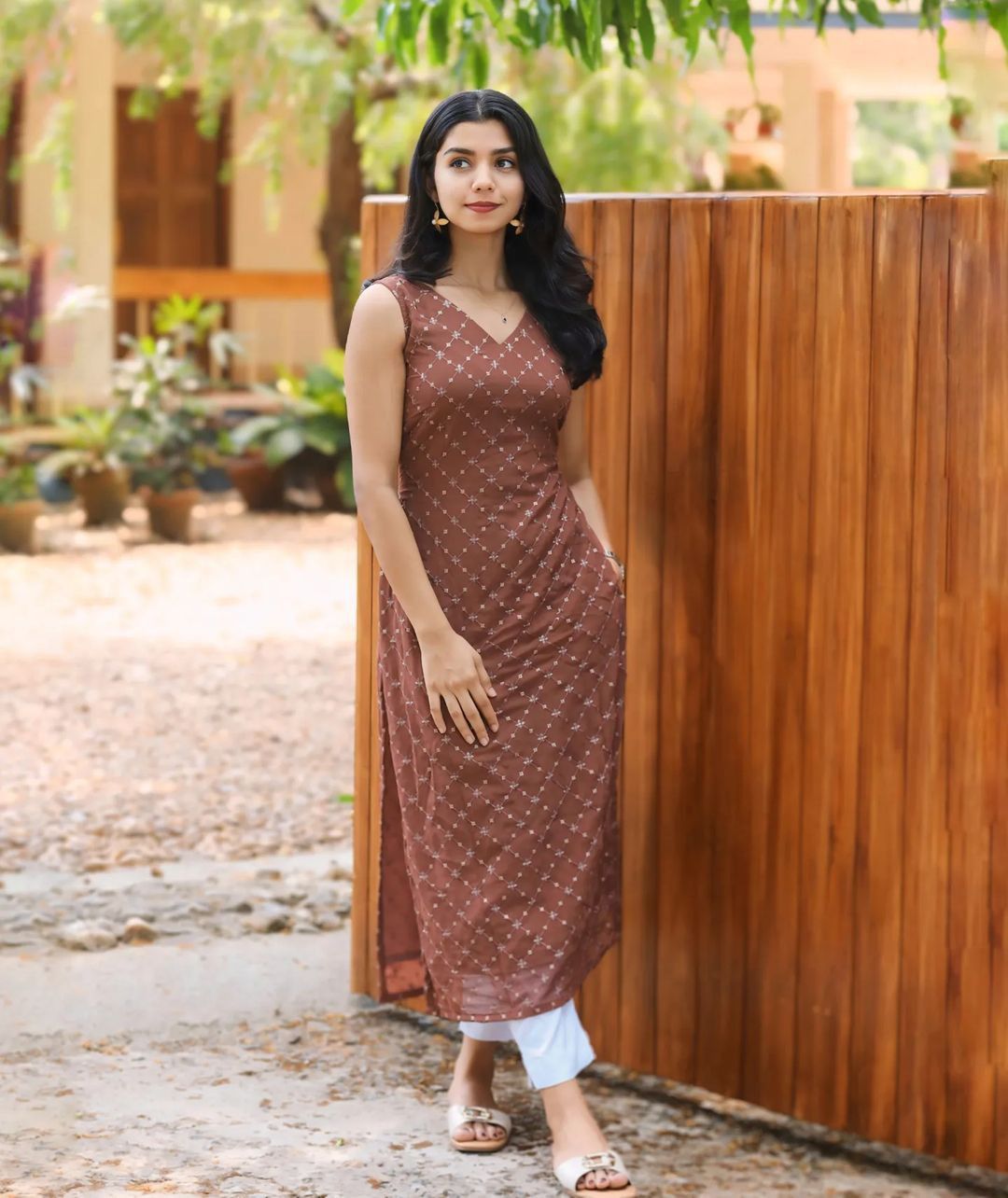
- **Fabric Physics:** The source garment is a sleeveless Kurti, appearing to be a medium-weight cotton or cotton-synthetic blend. It has a matte finish with zero specularity (non-reflective). The physics simulation must treat this as a semi-structured fabric—it holds its shape better than the user's current jersey knit t-shirt but will drape vertically due to gravity. It is not elastic; it relies on the cut for fit.
- **Key Features:** The white geometric/diamond embroidery pattern is the primary texture map and must not be blurred or distorted. The V-neckline is a critical structural element. The garment has side slits (visible near the thigh in the source) which affects how the hem moves. The sleeveless armholes must be clean-cut, replacing the current t-shirt sleeves.
PHASE 2: FIT & DRAPE SIMULATION
- **Body Mapping:**
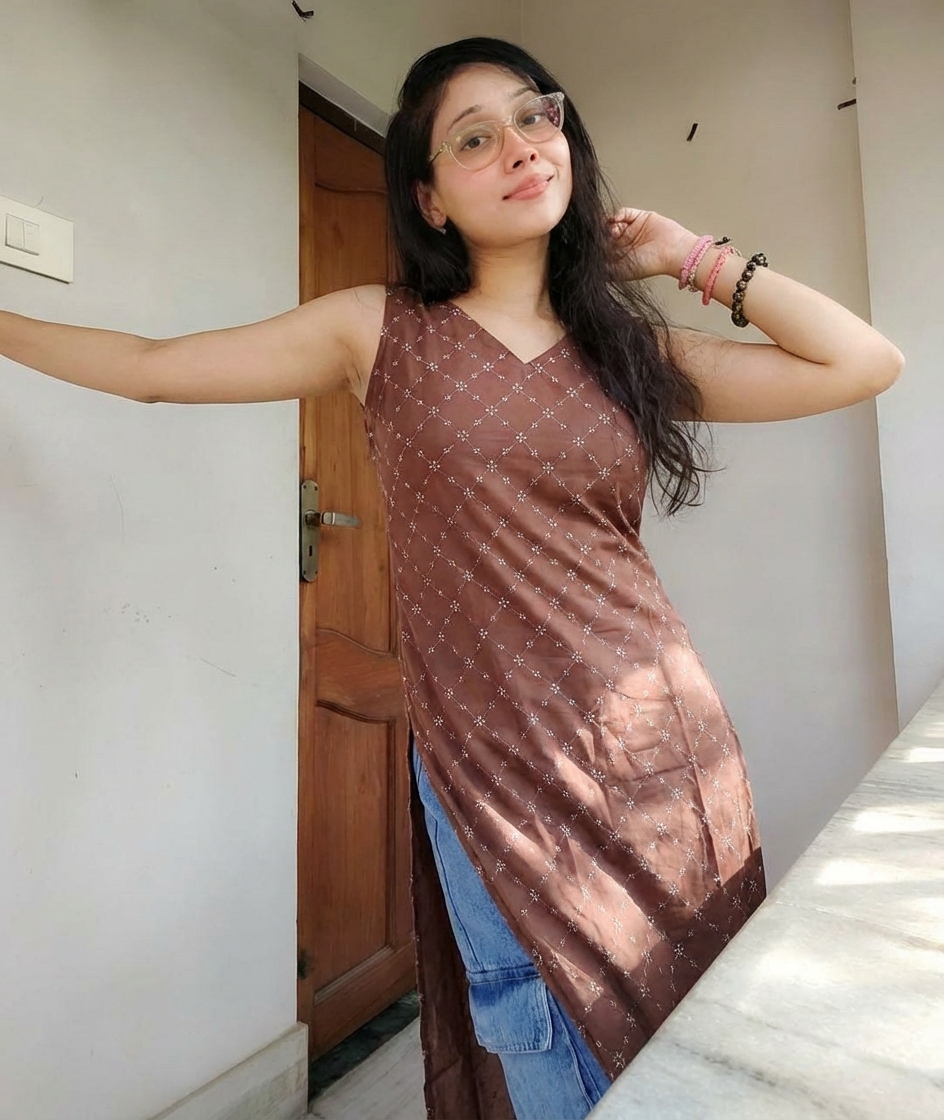
- **Right Arm (Extended):** The garment needs to hang vertically from the right shoulder. Tension lines should appear diagonally from the right armpit across the chest toward the opposite hip due to the stretch.
- **Left Arm (Raised):** The entire left side of the Kurti must lift significantly. The armhole on this side will sit higher and bunch slightly at the apex of the shoulder. The hemline should be uneven, higher on the user's left side due to the raised arm.
- **Length:** The Kurti is a tunic length. It must drape *over* the waist of the jeans, obscuring the belt loops and pockets currently visible.
- **Occlusion Handling:**
- **Hair:** The user has long dark hair cascading over both shoulders and the chest. A hard segmentation mask is required here; the Kurti must be rendered *underneath* these hair strands.
- **Hands/Accessories:** The bracelets on the left wrist must remain on the top layer. The fingers near the hair/neck must not merge with the collar texture.
PHASE 3: ENVIRONMENT & LIGHTING
- **Light Match:** The user is in an indoor environment with soft, diffuse lighting coming from the upper-left (relative to the camera). The source image is outdoors with flatter lighting. The new garment must accept a shadow cast by the user's raised left arm onto the upper chest area. The shading on the right side of the torso (near the wall) must darken to match the ambient occlusion of the room.
- **Color Calibration:** The source brown is warm (sunlit). The target room has cooler, neutral tones (white walls, marble floor). The Kurti's brown hue needs to be slightly desaturated and cooled to match the white balance of the user's skin and the room's shadows.
PHASE 4: IDENTITY PROTECTION
- **Facial Lock:** The user's face, specifically the glasses, eyes, nose, and jawline, must be frozen. The hairline and the specific volume of the hair must remain untouched.
- **Body Integrity:** DO NOT slim the waist or alter the user's stance.
- **Generative Requirement:** Since the user is wearing a t-shirt (sleeves) and the target garment is sleeveless, the system must generatively inpaint the user's bare shoulders and upper arms using the skin tone sampled from her face and forearms. This skin generation must be anatomically accurate to the raised arm pose.