Thinking Process
PHASE 1: VISUAL DECONSTRUCTION
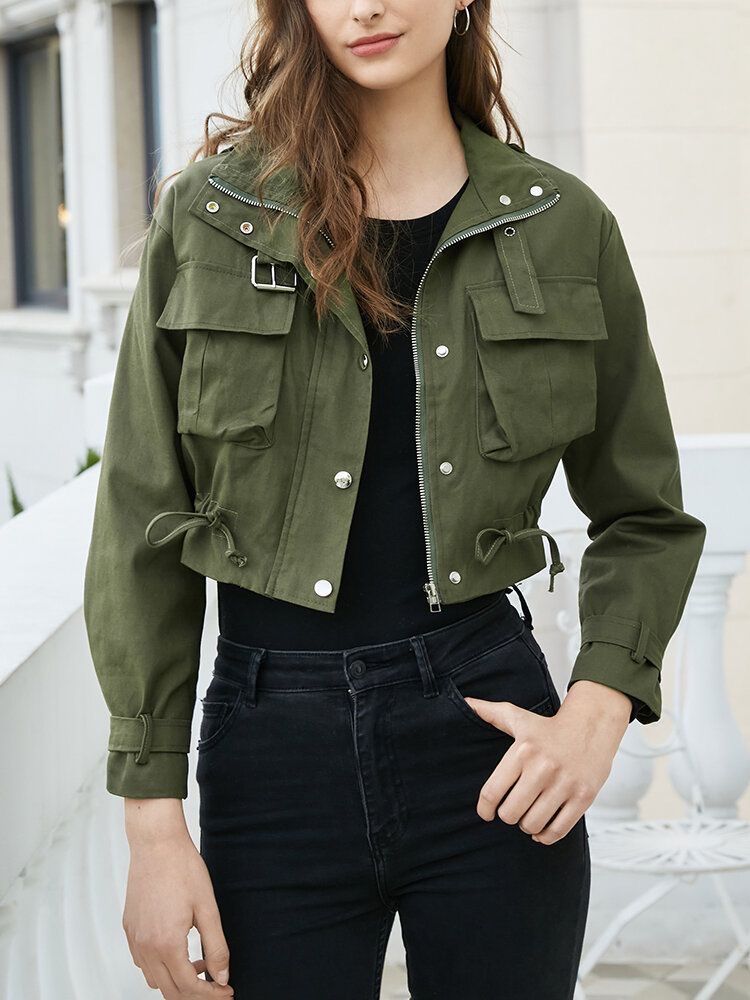
- **Fabric Physics:** The source garment is a heavy cotton twill or canvas material. It possesses high structural rigidity (stiffness) and does not drape like a knit or silk. It has a matte finish with low specular reflection, except for the hardware. The fabric should maintain a "boxy" silhouette and resist conforming tightly to the body curves.
- **Key Features:**
- Silver metallic hardware (zipper teeth, snap buttons, buckle glides) must retain high reflectivity.
- Four 3D "bellows" pockets with flap closures (must maintain volumetric depth, not look flat).
- Drawstring toggles at the cropped hemline.
- Strap-and-buckle details at the wrist cuffs.
- Notched lapel/collar structure that stands slightly away from the neck.
PHASE 2: FIT & DRAPE SIMULATION
- **Body Mapping:**
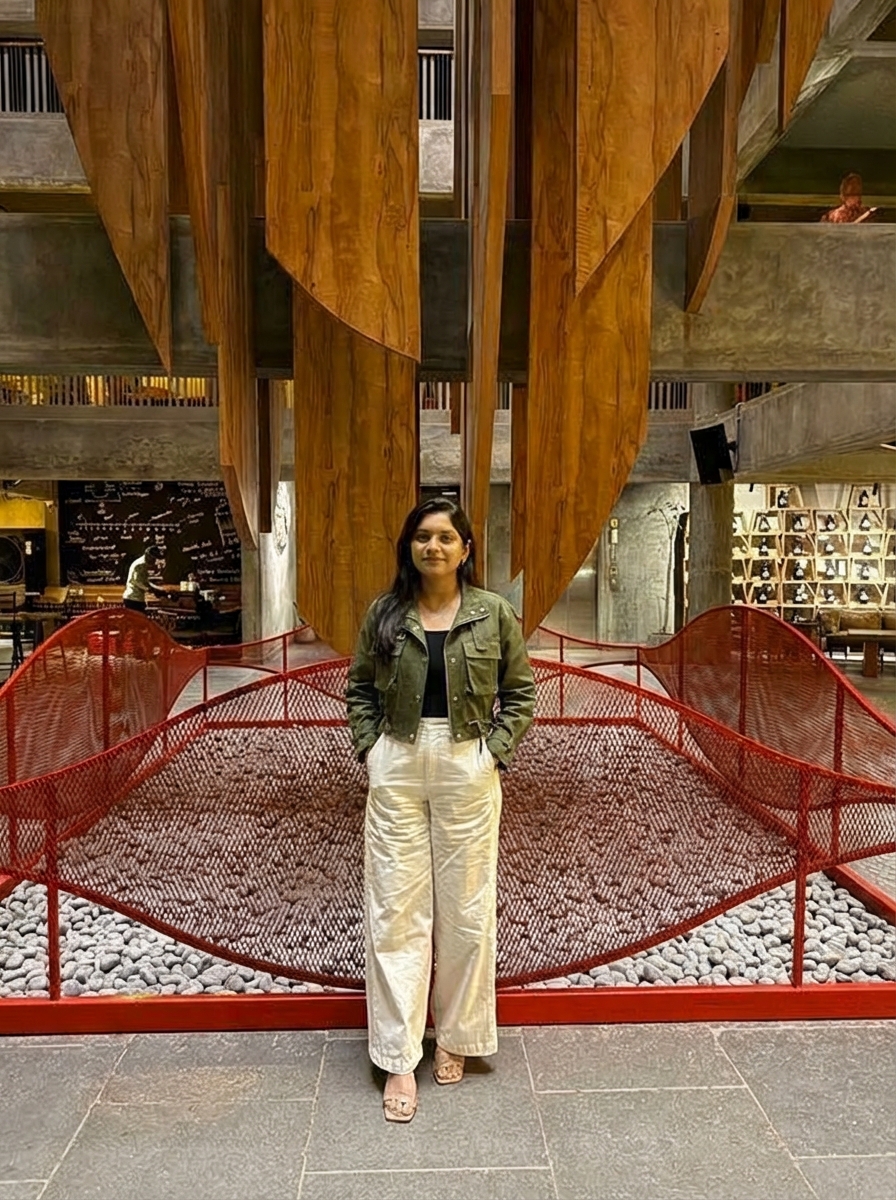
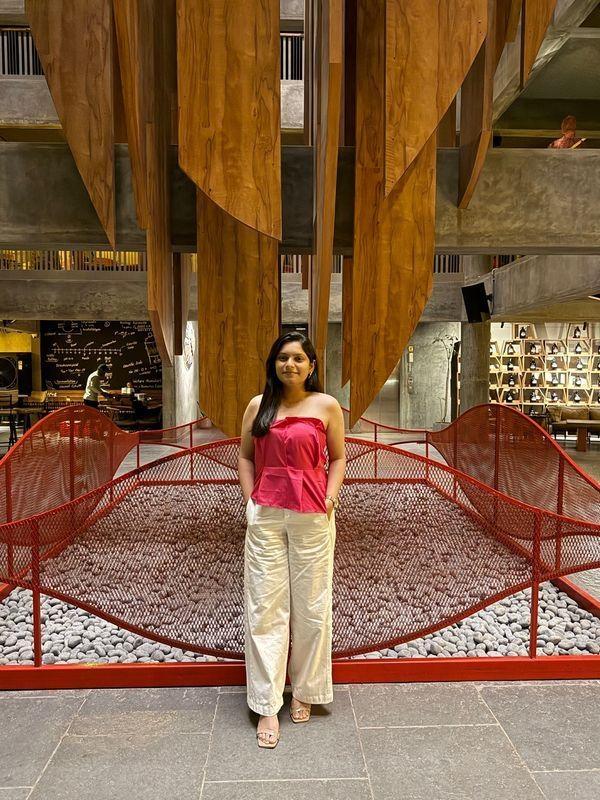
- **Shoulders & Arms:** The user's arms are relaxed by her sides. The jacket sleeves are structured and relatively loose; they should hang straight down with minimal wrinkling, only bunching slightly at the wrist where the cuff meets the hand. The shoulders must align precisely with the user's natural shoulder line, replacing the bare skin of the current tube top.
- **Torso & Hem:** This is a cropped jacket. The hemline should hit near the natural waist, likely overlapping the top waistband of the user's white trousers. It should not be elongated to cover the hips. The jacket should appear to sit on top of the torso with volume, rather than being painted onto the skin.
- **Occlusion Handling:**
- **Hair:** The user has long, dark hair resting on her shoulders and upper chest. This is the primary occlusion layer. The hair mask must be generated with high precision and composited *over* the new jacket collar and shoulders.
- **Hands:** The user's hands are visible. Depending on sleeve length scaling, the jacket cuffs may partially obscure the wrists, but the hands themselves must remain in front of the garment.
PHASE 3: ENVIRONMENT & LIGHTING
- **Light Match:** The user is in an indoor environment with large wooden structures, suggesting warm, diffused overhead lighting. There are no harsh directional shadows. The jacket's shading must be softened to match this ambient occlusion. Shadows should fall gently downwards from the pocket flaps and hem.
- **Color Calibration:** The source image has cooler, daylight-balanced lighting. The olive green of the jacket must be color-graded to be slightly warmer (yellow-tinted) to integrate cohesively with the brown/sepia tones of the wooden background in the target image. The silver hardware should reflect the warm room tones, not cool white studio light.
PHASE 4: IDENTITY PROTECTION
- **Facial Lock:** Absolute freeze on the user's face (eyes, nose, mouth, jawline) and the skin texture of the neck above the jacket collar. The user's hairstyle must not be altered or blurred.
- **Body Integrity:** Strict prohibition on body sculpting. The user's waist width and arm thickness must remain consistent with the original image. The wide-leg trousers must remain untouched; the jacket needs to composite cleanly over the existing waistband without warping the trouser fabric.