
Thinking Process
PHASE 1: VISUAL DECONSTRUCTION
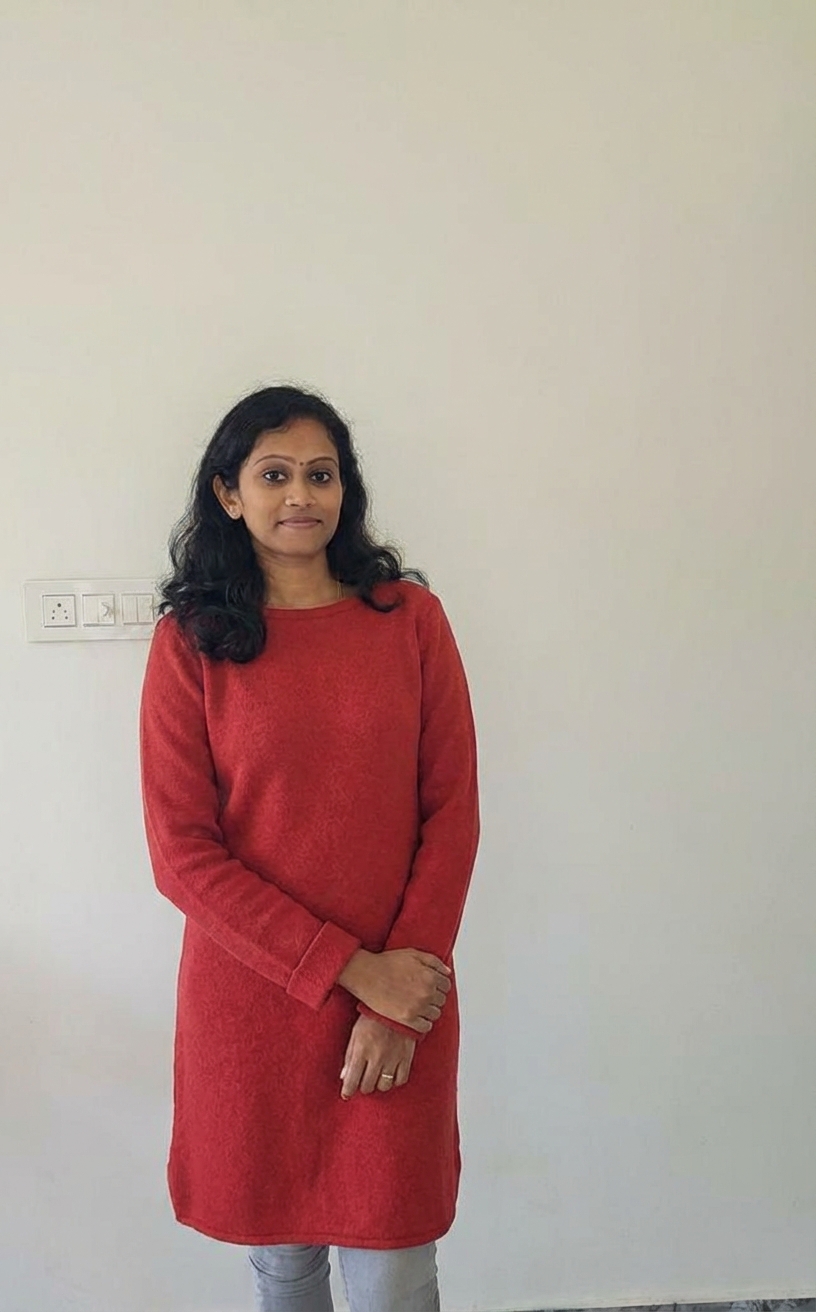
- **Fabric Physics:** The source garment is a medium-weight knit (wool or synthetic blend) with a matte finish. It possesses high friction and low elasticity compared to silk, meaning it will not cling tightly but will drape with substantial weight. Light reflection should be diffuse with soft fall-off; there is no specularity or shine.
- **Key Features:** The garment is a long-sleeved tunic/sweater dress with a distinct rolled or ribbed neckline (boat/crew style) and similar rolled detailing on the hem and cuffs. The length extends significantly below the hips. The solid red color must be preserved without losing the subtle knit texture/grain visible in the source.
PHASE 2: FIT & DRAPE SIMULATION
- **Body Mapping:**
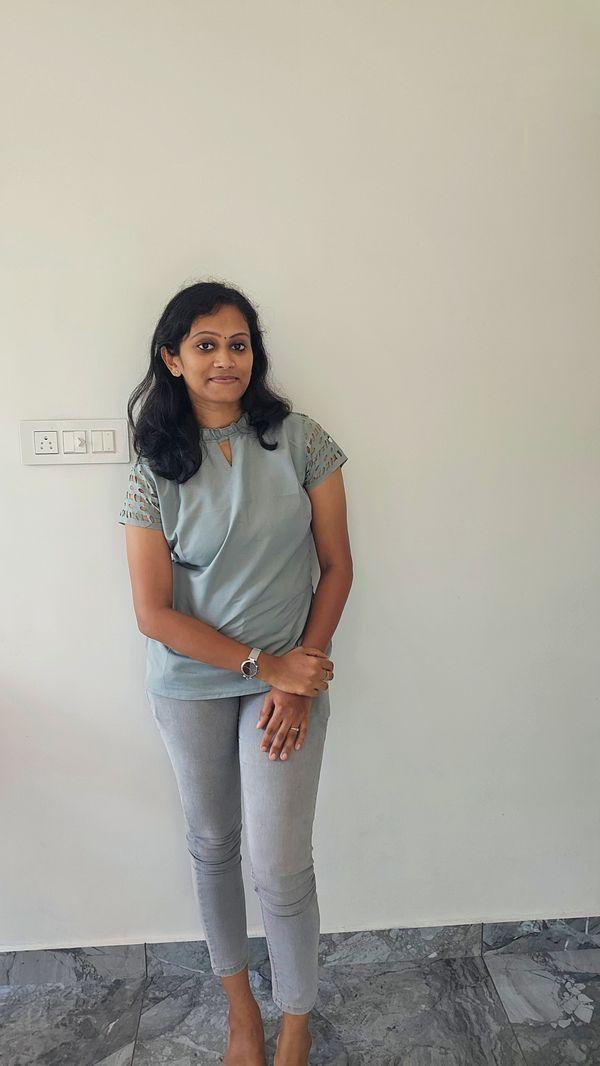
- **Sleeve Extrapolation:** The user is currently wearing short sleeves, but the source is long-sleeved. The simulation must generate realistic fabric folds along the full length of the user's arms, tapering at the wrists.
- **Torso & Hips:** The source garment is longer than the user's current top. It must drape past the waist, covering the upper portion of the grey jeans. The fabric should hang relatively straight due to gravity but bulge slightly where it rests on the user's clasped hands at the waist.
- **Shoulder Fit:** The drop-shoulder seam of the source garment needs to align naturally with the user's shoulder width, appearing relaxed rather than tailored.
- **Occlusion Handling:**
- **Hair Layering:** The user's dark, wavy hair falls over both shoulders and the upper chest. The red fabric must be rendered strictly *underneath* these hair locks.
- **Hand Interaction:** The user's hands are clasped at the waist. The tunic length means the fabric will likely flow behind the hands, or bunch slightly above them. The wristwatch on the left wrist acts as a collision object; the sleeve cuff should either rest above the watch or cover it, depending on the sleeve length simulation.
PHASE 3: ENVIRONMENT & LIGHTING
- **Light Match:** The user is in a room with soft, diffuse natural light coming from the front-left (viewer's perspective), casting a soft shadow on the wall to the user's right. The new red garment must generate self-shadowing on its right side (viewer's right) and cast a corresponding shadow on the wall that matches the new, wider silhouette of the tunic.
- **Color Calibration:** The source image has bright studio lighting. To integrate into the user's environment, the saturation of the red must be slightly reduced, and the color temperature cooled slightly to match the ambient, neutral daylight of the room.
PHASE 4: IDENTITY PROTECTION
- **Facial Lock:** The user's entire head, including eyes, nose, mouth, jawline, and neck (above the collar line), must remain pixel-perfectly frozen.
- **Body Integrity:** The user's natural shoulder width, arm thickness, and hip width must be preserved. The simulation is strictly forbidden from slimming the waist or altering the user's stance. The grey jeans (below the new hemline) and feet must remain untouched.