
Thinking Process
PHASE 1: VISUAL DECONSTRUCTION
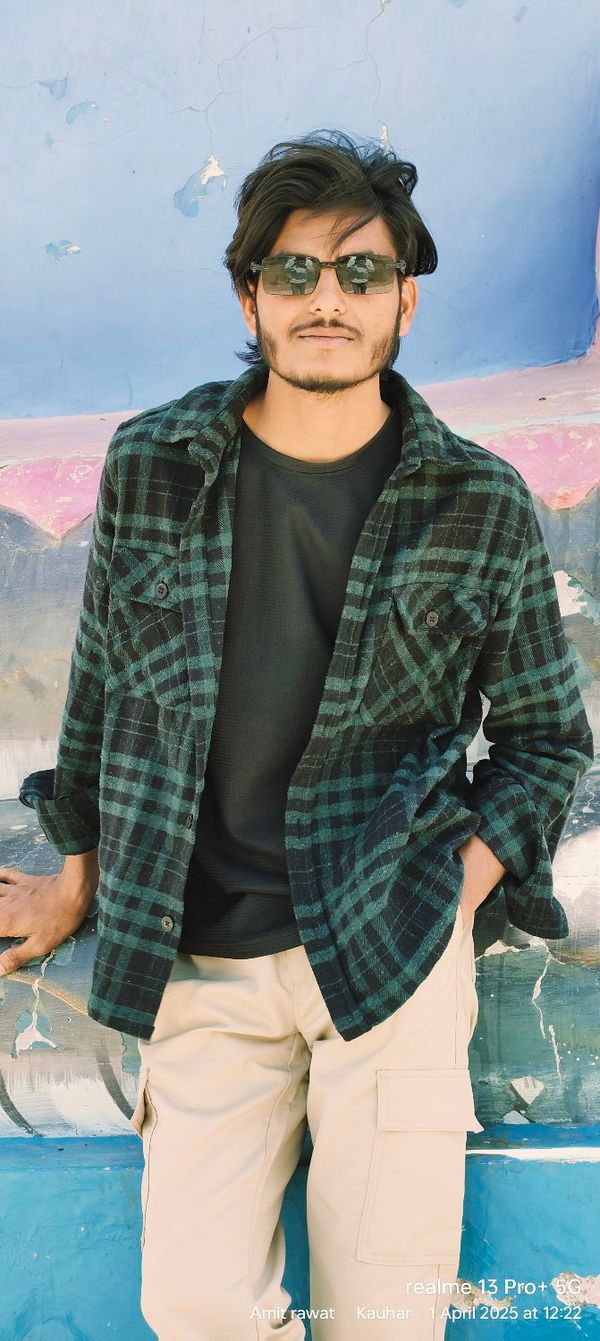
- **Fabric Physics:** The source garment is a flannel overshirt (likely brushed cotton or wool blend) worn over a basic cotton t-shirt. The simulation must render a matte, non-reflective surface with a "fuzzy" micro-texture characteristic of flannel. It has medium weight—heavier than a t-shirt but lighter than a denim jacket. The inner black t-shirt should exhibit standard cotton jersey physics (more pliable, prone to micro-folds).
- **Key Features:** The plaid pattern (tartan) alignment must remain consistent across seams. Key elements to preserve include the dual breast pockets with button flaps, the open-front styling (showing the inner tee), the collar structure, and the rolled/buttoned cuffs. The layered look (shirt over tee) is a non-negotiable structural component.
PHASE 2: FIT & DRAPE SIMULATION
- **Body Mapping:** The user is in a selfie pose with the right arm extended (holding the camera). The right shoulder will be slightly elevated and rotated forward. The flannel shirt must accommodate this by pulling slightly tight across the upper right back and bunching slightly at the right armpit. The left arm is relaxed; the sleeve should hang straight with gravity. As the shirt is open, the front panels must hang vertically, following the user's chest contour without clinging, exposing the black t-shirt in the center torso region.
- **Occlusion Handling:** The user's beard is substantial and hangs over his current collar. The new flannel collar and t-shirt neckline must be rendered *underneath* the beard. Any intersection between the chin hair and the fabric requires masking to keep the hair on top. The user's left hand (visible at the bottom right of the image) must layer *over* the hem of the shirt if the shirt extends that low.
PHASE 3: ENVIRONMENT & LIGHTING
- **Light Match:** The User Image features indoor, artificial lighting with a warm/yellow tint and soft, diffuse shadows. The Cloth Image features harsh, cool outdoor daylight. The simulation must completely strip the harsh directional sunlight and blue ambient fill from the flannel. It must re-light the garment with a soft, warm overhead source to match the user's room, generating soft ambient occlusion in the folds rather than hard cast shadows.
- **Color Calibration:** The source green is vibrant and cool-toned. To integrate into the user's environment, the green and black values must be color-graded towards warmer tones (yellow/orange shift) to match the ambient room temperature. The black t-shirt must be lifted from "crushed black" to a dark grey-black to match the contrast levels of the user's hair and beard.
PHASE 4: IDENTITY PROTECTION
- **Facial Lock:** The user's entire head region—specifically the hairline, eyes, nose, skin texture, and the shape of the beard—must be frozen and pixel-preserved. The neck area above the new t-shirt line must remain untouched.
- **Body Integrity:** The user has a broad build. The Virtual Try-On must strictly adhere to the user's shoulder width and chest volume. Do not apply "slimming" or "athletic fit" warping. The loose fit of the flannel should add natural volume on top of his existing frame, not replace his body shape.
