Thinking Process
PHASE 1: VISUAL DECONSTRUCTION
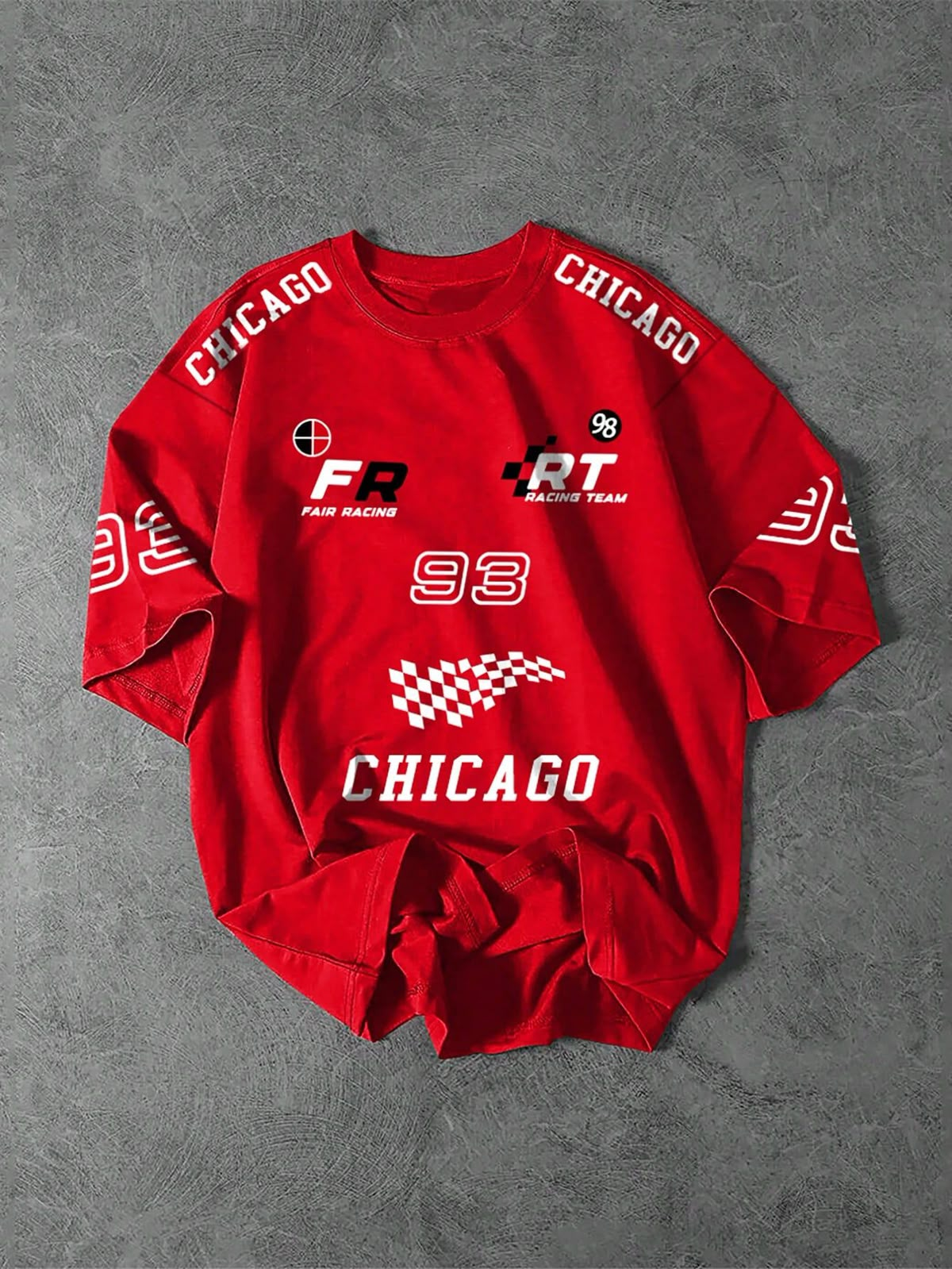
- **Fabric Physics:** The source garment is a heavyweight cotton jersey. It possesses a medium-weight drape with low sheen/matte finish. Unlike the user's current tight-fitting shirt, this material has structural stiffness that creates angular folds rather than clinging to musculature. Light absorption should be uniform with soft fall-off on folds.
- **Key Features:**
- **Graphics:** The "CHICAGO" text spanning the shoulder seams, "FR Fair Racing" logo on the right chest (viewer's left), and the checkerboard pattern on the lower abdomen are critical.
- **Structural Details:** Crew neck ribbed collar, drop-shoulder seams (oversized construction), and double-stitched hem lines.
- **Color:** Deep, saturated "Racing Red" which needs to maintain vibrancy without glowing artificially.
PHASE 2: FIT & DRAPE SIMULATION
- **Body Mapping:**
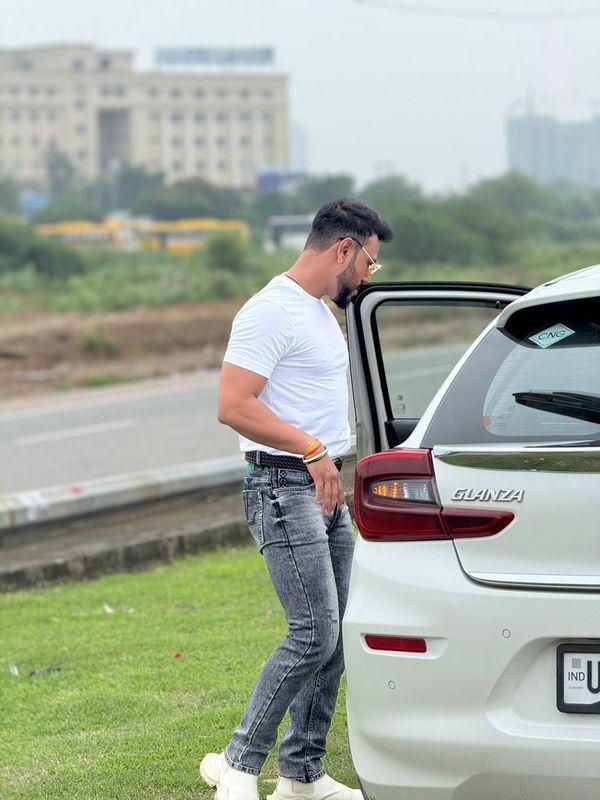
- **Volume Adjustment:** The target user is wearing a muscle-fit tee. The source is an oversized fit. The simulation must expand the silhouette around the torso and deltoids to reflect a loose hang, detaching the fabric from the user's obliques and lats.
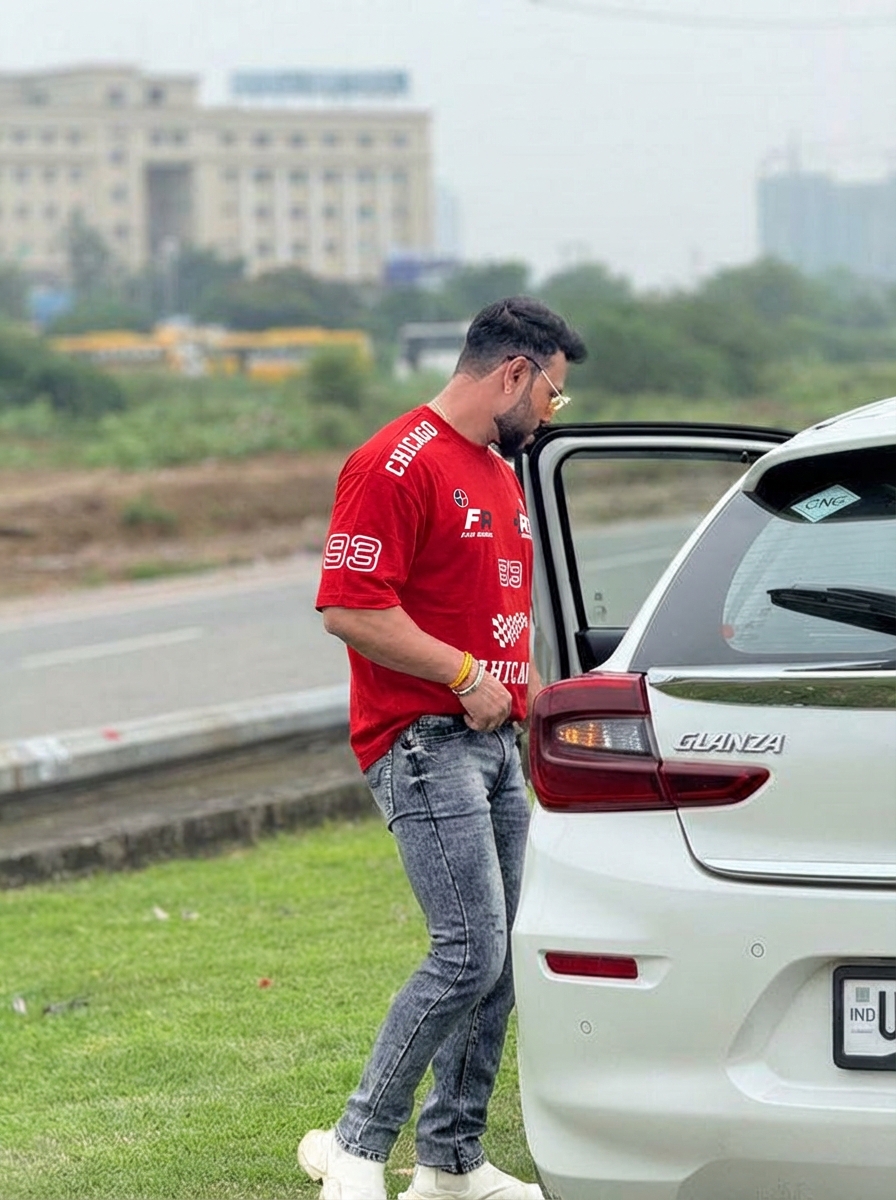
- **Pose Dynamics:** As the user is turning his torso away from the camera, the "CHICAGO" text on the left shoulder must warp naturally over the acromion (shoulder bone). Gravity will pull the excess fabric straight down from the chest, creating vertical drape lines rather than horizontal stretch marks.
- **Occlusion Handling:**
- **Left Arm:** The user's left arm is slightly bent. The sleeve of the new garment is longer and wider; it may overlap the biceps more than the current shirt.
- **Accessories:** The yellow and dark bracelets on the left wrist must remain visible. If the oversized sleeve reaches the elbow, it must drape *behind* the forearm/wrist interaction, not clip through it.
- **Car Door:** The user is in close proximity to the open car door frame. Ensure the shirt does not bleed into the white car paint or the black rubber seal of the door.
PHASE 3: ENVIRONMENT & LIGHTING
- **Light Match:** The user image features soft, diffuse outdoor daylight (overcast/hazy) with no harsh directional shadows. The lighting on the new red shirt must be flattened compared to the studio flash in the source image. Shadows should be soft ambient occlusion, particularly under the armpit and where the shirt tucks/hangs near the belt line.
- **Color Calibration:** The source red is studio-bright. It must be slightly desaturated and cooled to match the outdoor color temperature. The white graphics on the shirt should reflect the slight blue/grey tint of the ambient outdoor light, rather than being pure #FFFFFF white.
PHASE 4: IDENTITY PROTECTION
- **Facial Lock:** The user's side profile, specifically the jawline, beard texture, ear, and sunglasses, must be rigidly frozen. The hairline and fade haircut must remain untouched by the shirt collar generation.
- **Body Integrity:** While the *clothing* silhouette will become bulkier due to the oversized fit, the underlying skeletal structure and muscular definition of the visible arm must not be altered or slimmed. The grey acid-wash jeans and belt area must remain exactly as they are, with the new shirt hem interacting naturally with the belt line (either tucked or untucked, likely untucked based on shirt style).