Thinking Process
PHASE 1: VISUAL DECONSTRUCTION
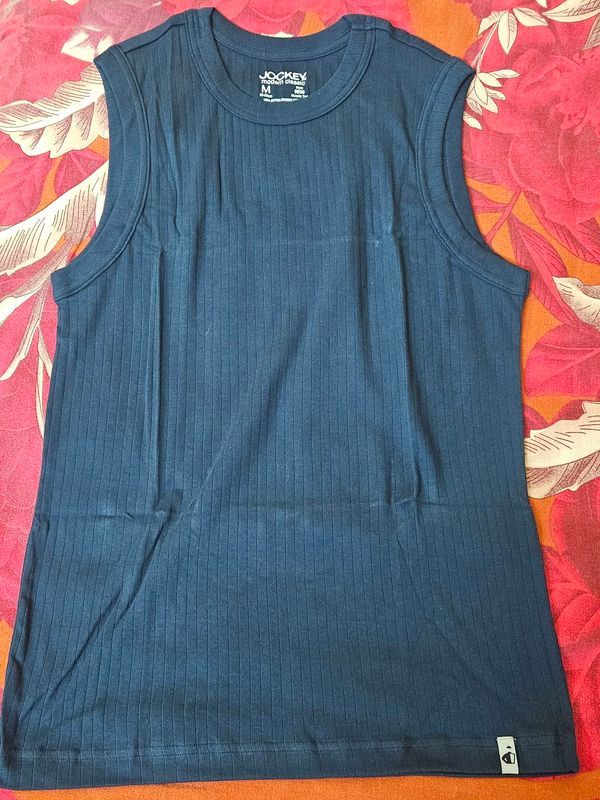
- **Fabric Physics:** The source garment is a ribbed knit cotton blend (likely jersey). It has high elasticity and a matte finish. Unlike the current bulky sweater, this fabric has low bending resistance and should conform tightly to the torso musculature. It absorbs light rather than reflecting it, with subtle highlights only visible on the ridges of the vertical ribbing structure.
- **Key Features:** The vertical rib texture is the defining visual characteristic and must not be smoothed out. The crew neckline binding is thicker than the main body fabric. The small white logo tag at the bottom left hem must be preserved. The deep armhole cuts typical of a sleeveless undershirt/vest must be respected.
PHASE 2: FIT & DRAPE SIMULATION
- **Body Mapping:**
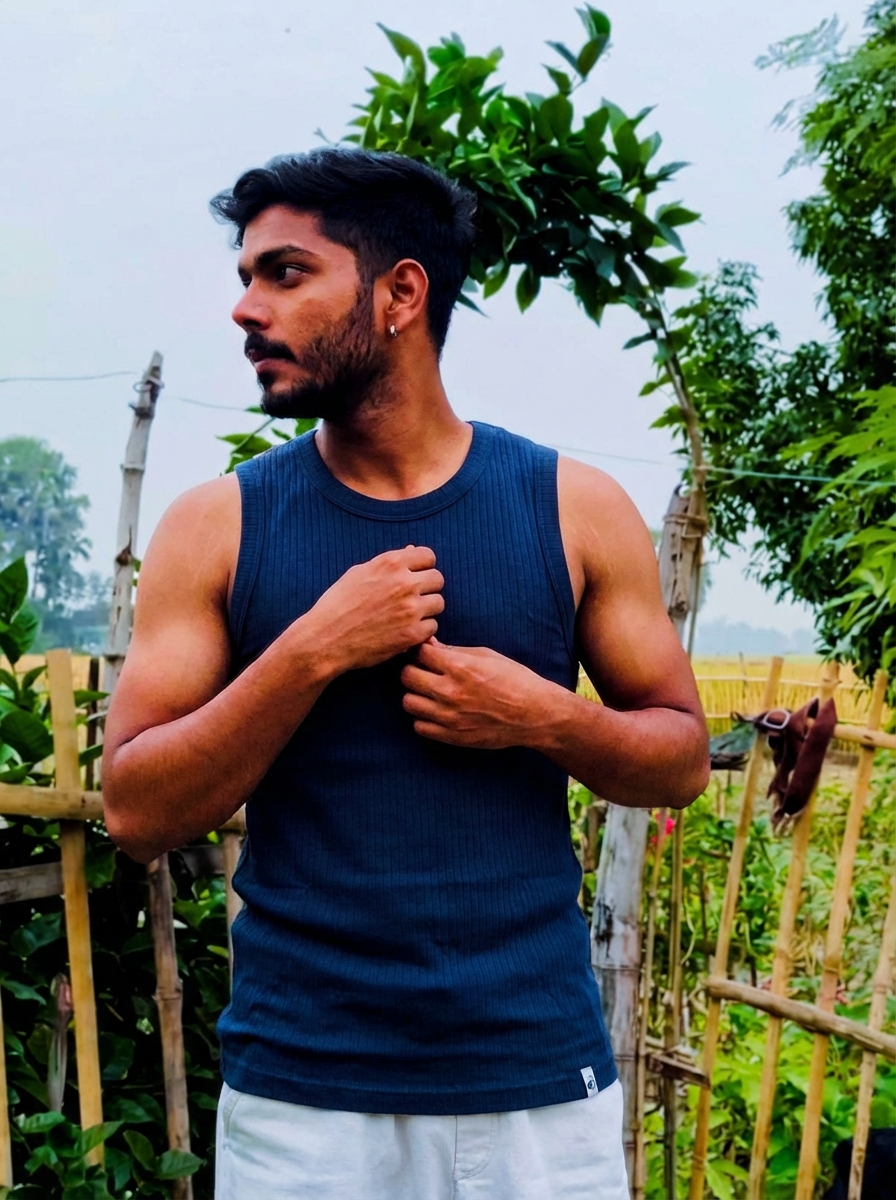
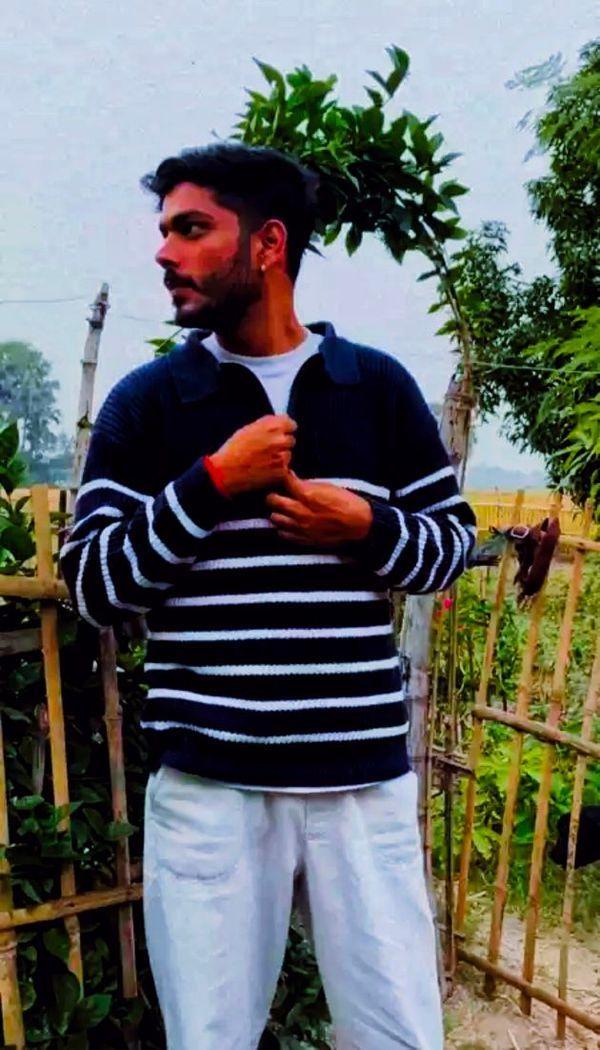
- **Volume Reduction:** The user is currently wearing a thick, loose-knit sweater. The simulation must estimate the skin surface *beneath* this bulk. The target tank top must fit closer to the skin, hugging the pectorals and shoulders, rather than floating at the sweater's current volume.
- **Skin Generation:** Since the source is sleeveless and the user is wearing long sleeves, the simulation must generatively inpaint the user's upper arms (deltoids and biceps) using skin tone sampling from the face and neck.
- **Gravity & Tension:** The fabric should hang relatively straight from the pectorals down to the waist. Tension lines should appear horizontally across the chest where the fabric stretches between the armpits.
- **Occlusion Handling:**
- **Hand Collision:** The user's hands are positioned at the center of the chest, currently manipulating a collar. The new garment must be layered *behind* these hands. The physics simulation must treat the hands as rigid collision objects; the tank top fabric should appear slightly depressed or wrinkled where the knuckles press against the sternum, even though there is no collar to hold.
- **Chin/Beard:** The user's beard profile must be segmented out and layered *over* the high crew neckline of the tank top.
PHASE 3: ENVIRONMENT & LIGHTING
- **Light Match:** The target environment features diffuse, cool-toned outdoor daylight (overcast sky). Lighting is soft and top-down. The new garment must shed the warm, yellowish indoor tint of the source image and adopt a cooler, bluish-natural tone. Shadows should be soft ambient occlusion, particularly under the chin and around the armholes.
- **Color Calibration:** The source garment's deep navy/black levels must be lifted slightly to match the dynamic range of the outdoor photo. The blacks should not clip; the vertical ribbing texture must remain visible through contrast adjustments to match the exposure of the user's white trousers.
PHASE 4: IDENTITY PROTECTION
- **Facial Lock:** The user's entire head region—specifically the profile outline, jawline, beard texture, ear, and hairstyle—must be frozen and masked perfectly.
- **Body Integrity:** While the *clothing* bulk must be reduced to match the thinner fabric, the user's underlying anatomical structure (shoulder width, neck length, and posture) must remain unaltered. Do not artificially slim the skeletal frame.