Thinking Process
PHASE 1: VISUAL DECONSTRUCTION
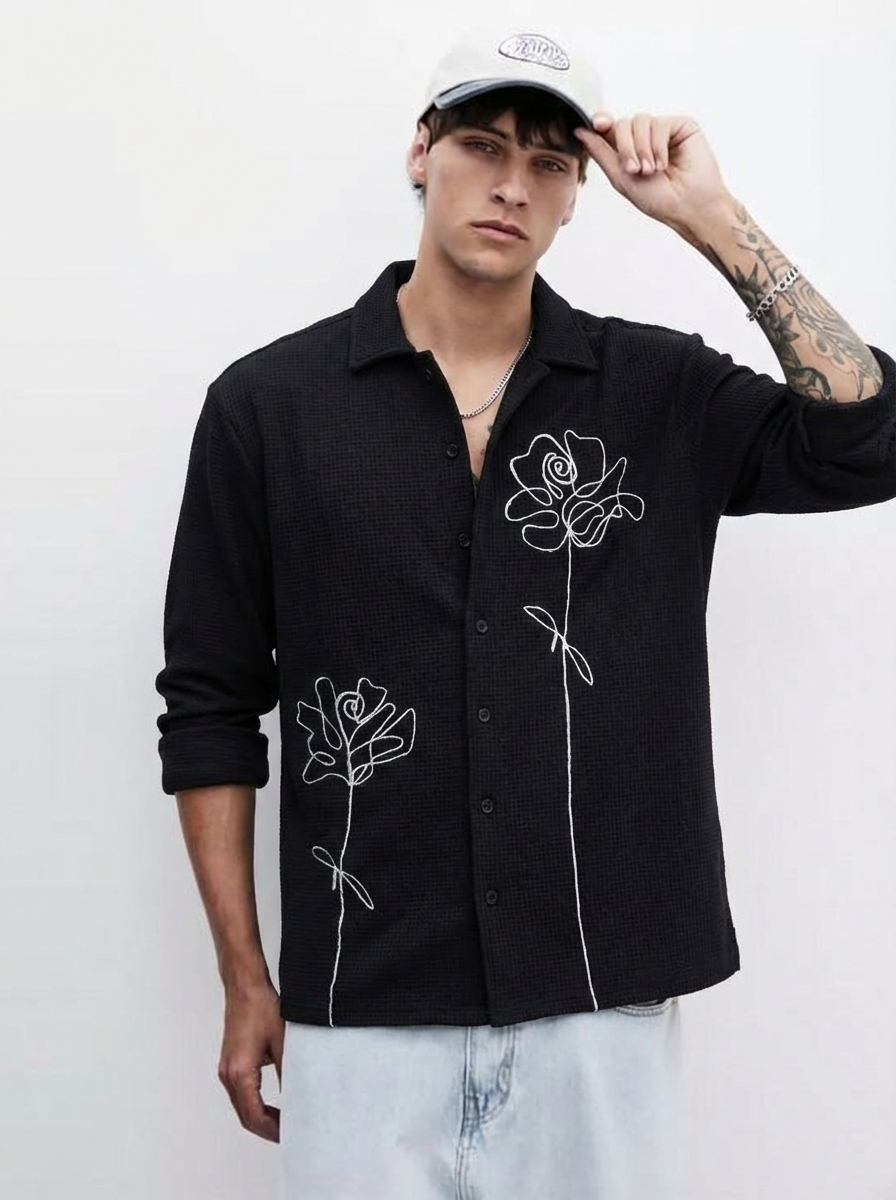
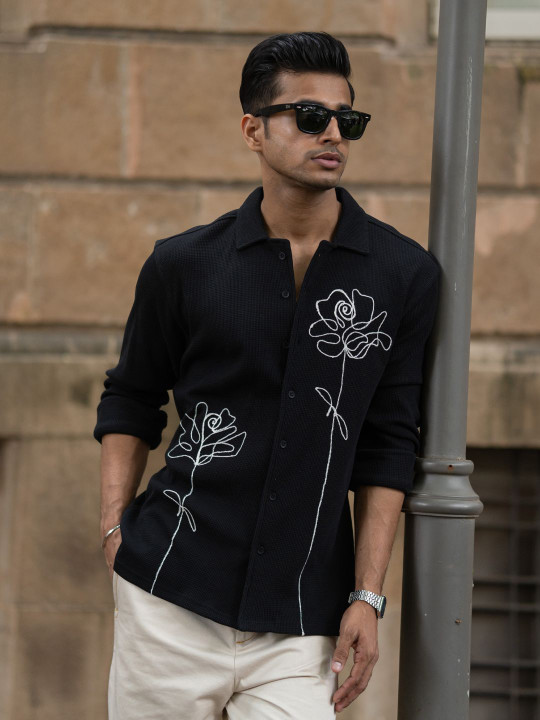
- **Fabric Physics:** The source garment is a textured, waffle-knit or heavy piqué cotton blend. It possesses a "heavy drape" quality, meaning it holds its shape more rigidly than a standard t-shirt and does not cling tightly to the skin. The material has a matte finish that absorbs light, but the textured weave creates micro-shadows and highlights that must be rendered to prevent the black color from looking flat.
- **Key Features:**
1. **White Line Art Embroidery:** The abstract floral/rose designs on the left and right chest must maintain high contrast and vector-like sharpness.
2. **Structural Seams:** The vertical piping/seam lines running down the front torso are structural elements that define the garment's verticality.
3. **Collar & Placket:** The spread collar and button placket give the garment structure around the neck, distinct from the target's current crew neck.
4. **Texture:** The grid-like/waffle texture is essential for realism and must not be smoothed out.
PHASE 2: FIT & DRAPE SIMULATION
- **Body Mapping:**
- **Left Arm (Raised):** The physics engine must simulate tension in the armpit and shoulder area. The sleeve on this arm should slide down slightly towards the elbow due to gravity, creating compression folds at the shoulder and deltoid.
- **Right Arm (Relaxed):** The sleeve should hang straight with minimal folding, following the natural drop of the user's arm.
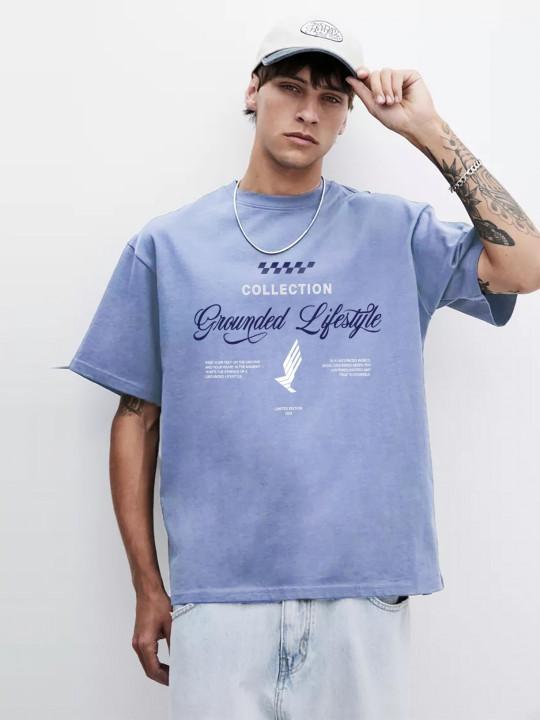
- **Torso:** The garment is a button-down style; it should hang with a boxier fit than the user's current oversized t-shirt, pulling slightly away from the lower back due to the raised arm.
- **Occlusion Handling:**
- **Necklace:** The user's silver chain necklace currently sits on a crew neck. It must either be masked out if the new collar covers it, or re-composited *over* the exposed skin if the new shirt is worn with the top button open.
- **Left Hand:** The user's hand touching the cap is high above the garment line, but the forearm angle is critical for sleeve generation.
- **Chin/Jawline:** The new collar must sit behind the jawline shadows, not over them.
PHASE 3: ENVIRONMENT & LIGHTING
- **Light Match:** The target environment uses high-key, soft studio lighting with a neutral white background. The source lighting is directional and outdoor/warm. The new garment must be neutralized: remove the warm/yellow cast from the source image and apply a cool, diffuse lighting model to match the target's studio flash.
- **Color Calibration:**
- **Black Levels:** The black of the shirt must be lifted slightly (dark grey-black) to match the exposure levels of the target image, ensuring the texture remains visible against the white background.
- **Embroidery White:** The white thread of the roses must match the white point of the user's baseball cap (cool white) rather than the creamier white of the source image.
PHASE 4: IDENTITY PROTECTION
- **Facial Lock:** The user's entire head, including the baseball cap, hair visible under the brim, ears, and neck skin above the collarbone, must be frozen and pixel-preserved.
- **Body Integrity:** The user has a slimmer build than the source model. The simulation must conform the shirt to the user's actual shoulder width and torso volume. Do not broaden the user's shoulders or alter the skin tone of the exposed forearms to match the source model.