Thinking Process
PHASE 1: VISUAL DECONSTRUCTION
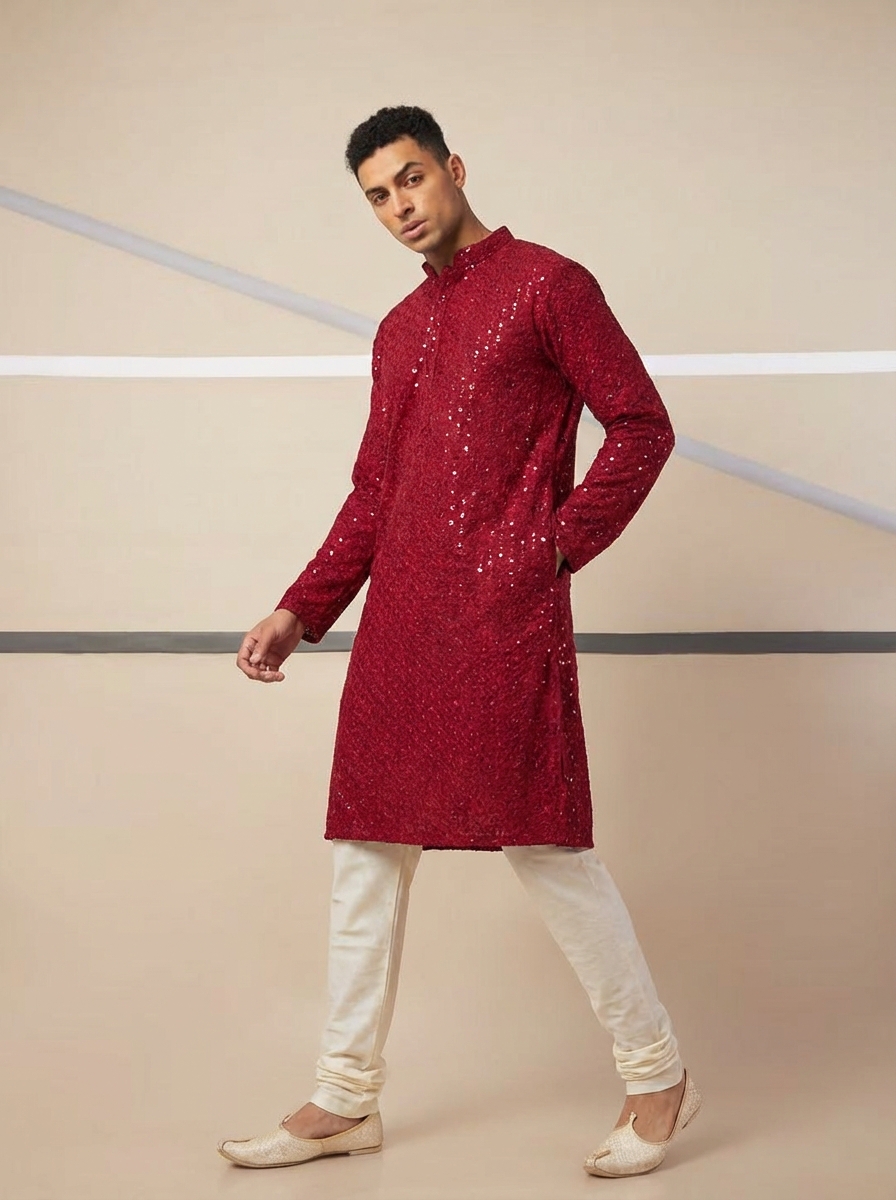
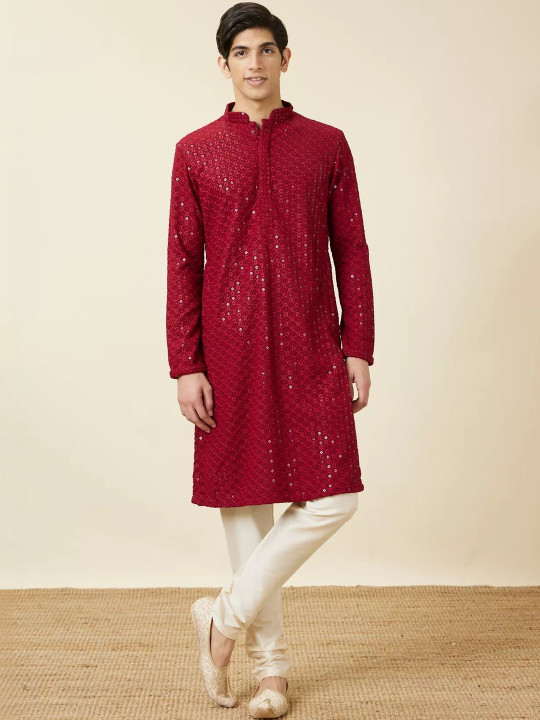
- **Fabric Physics:** The source garment is a heavy, embroidered textile (likely georgette or silk blend) featuring sequin work. Unlike the user's current elastic polyester activewear, this fabric has low elasticity and significant drape weight. The simulation must render specular highlights on the individual sequins to react to light, while the base red fabric should have a soft, matte-to-satin finish, absorbing light rather than reflecting it like plastic.
- **Key Features:** The Mandarin collar (bandhgala) style neck must replace the crew neck. The all-over sequin embroidery pattern must be preserved without blurring. Crucially, the **length** of the garment is a tunic (Kurta); it must extend down to approximately knee-level, unlike the current short t-shirt. The long sleeves and the side slits (chaak) near the hips are essential structural details.
PHASE 2: FIT & DRAPE SIMULATION
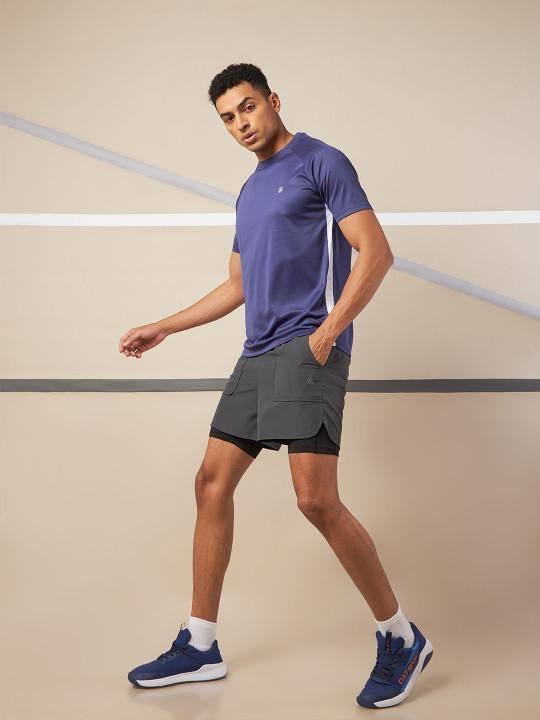
- **Body Mapping:** Due to the user's dynamic lunge pose, the Kurta must not cling to the torso like the current t-shirt.
- **Torso:** The fabric should hang somewhat vertically from the chest/shoulder apex due to gravity, creating a gap between the fabric and the user's lower back/waist area.
- **Legs:** As the Kurta is long, the front hem will drape over the forward (left) thigh, likely breaking/folding where it contacts the upper leg. The back hem will hang freely.
- **Sleeves:** The left arm is bent; the long sleeve must create transverse compression wrinkles at the inner elbow and pull slightly taut across the elbow point.
- **Occlusion Handling:** The user's left hand (thumb in pocket/resting on hip) creates a complex occlusion. The Kurta serves as an outer layer; therefore, the sleeve hem should end at the wrist, and the garment body might drape *over* the top of the wrist or fall behind the hand depending on volumetric looseness. The user's neck above the collar bone must remain visible.
PHASE 3: ENVIRONMENT & LIGHTING
- **Light Match:** The user is in a studio setting with soft lighting coming primarily from the front-left (relative to the camera), evidenced by the shadow behind the right heel. The Kurta needs to cast self-shadows into its own folds (ambient occlusion) and cast a shadow onto the user's visible lower legs (shins/calves). The sequins must catch highlights corresponding to this front-left light source.
- **Color Calibration:** The source image has a warm, slightly yellow-tinted lighting. The target image has a cooler, beige/neutral geometric background. The Crimson Red of the Kurta must be color-graded to remove any yellowish cast from the source photo so it appears naturally illuminated by the user's neutral studio lights.
PHASE 4: IDENTITY PROTECTION
- **Facial Lock:** The user's entire head (hair, eyes, nose, mouth, jawline, and neck structure above the collar) must be strictly frozen.
- **Body Integrity:** Do not alter the user's athletic build. The broad shoulders and arm thickness must dictate the size of the virtual garment. Do not slimming the waist or legs. The user's skin tone on the hands and exposed lower legs must remain unchanged.