Thinking Process
PHASE 1: VISUAL DECONSTRUCTION
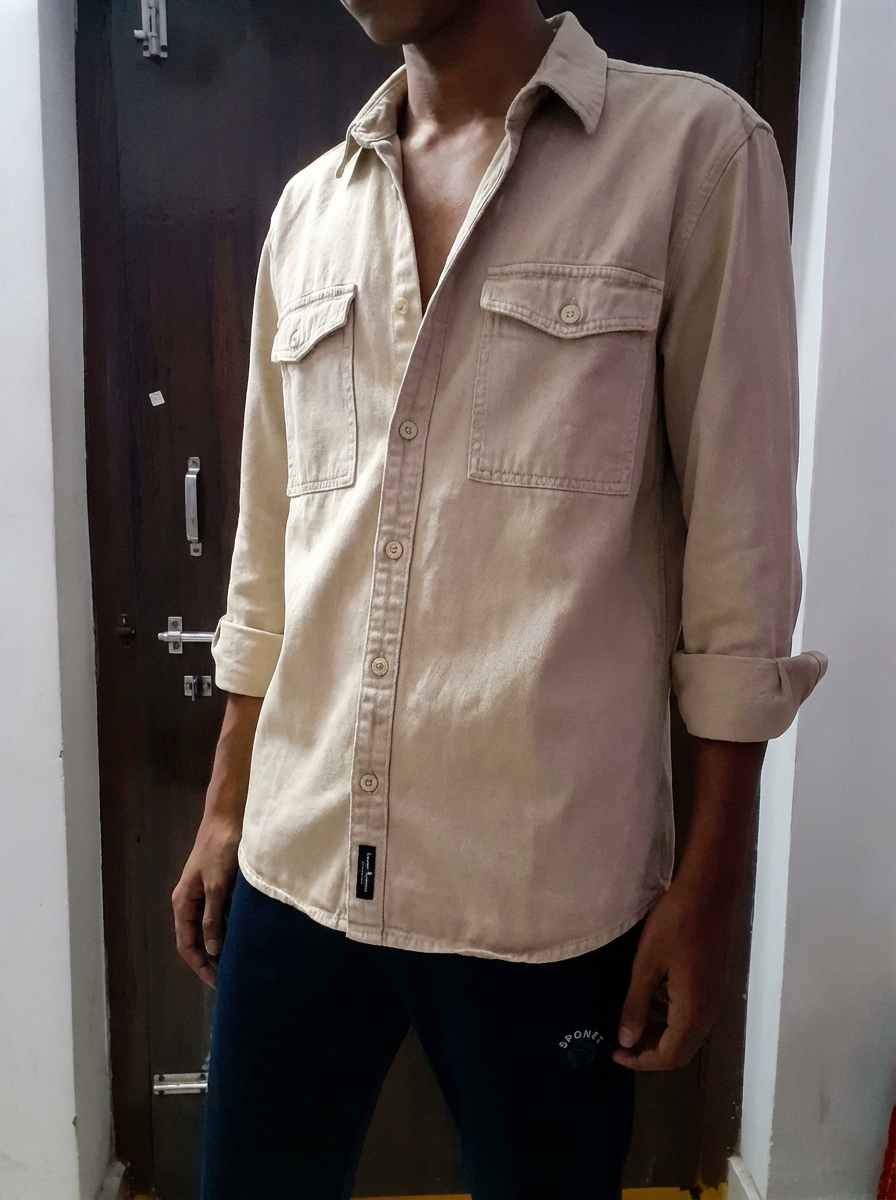
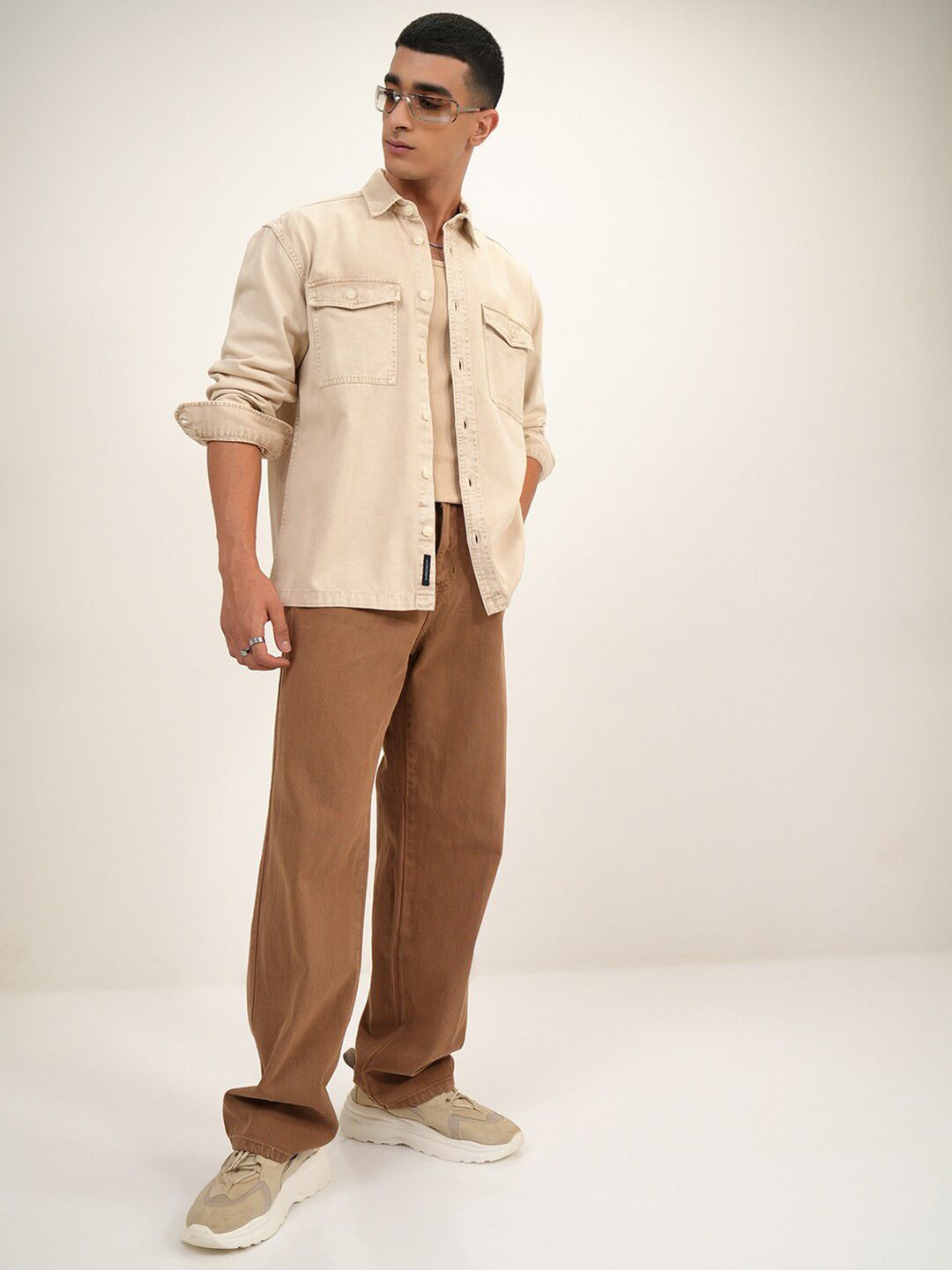
- **Fabric Physics:** The source garment is a heavyweight cotton twill or light denim "shacket" (shirt-jacket). It possesses high structural rigidity compared to the user's current soft jersey t-shirt. It creates hard, distinct folds rather than soft drapery. The surface properties are matte with low specular reflection; it should absorb light rather than shine.
- **Key Features:** The double chest pockets with button flaps must be preserved with their depth information intact. The rolled-up sleeves are a critical geometric detail that must replace the user's short sleeves. The structural collar, the vertical button placket, and the small black logo tag on the lower placket edge must remain visible. The beige/cream color consistency must be maintained despite the lighting change.
PHASE 2: FIT & DRAPE SIMULATION
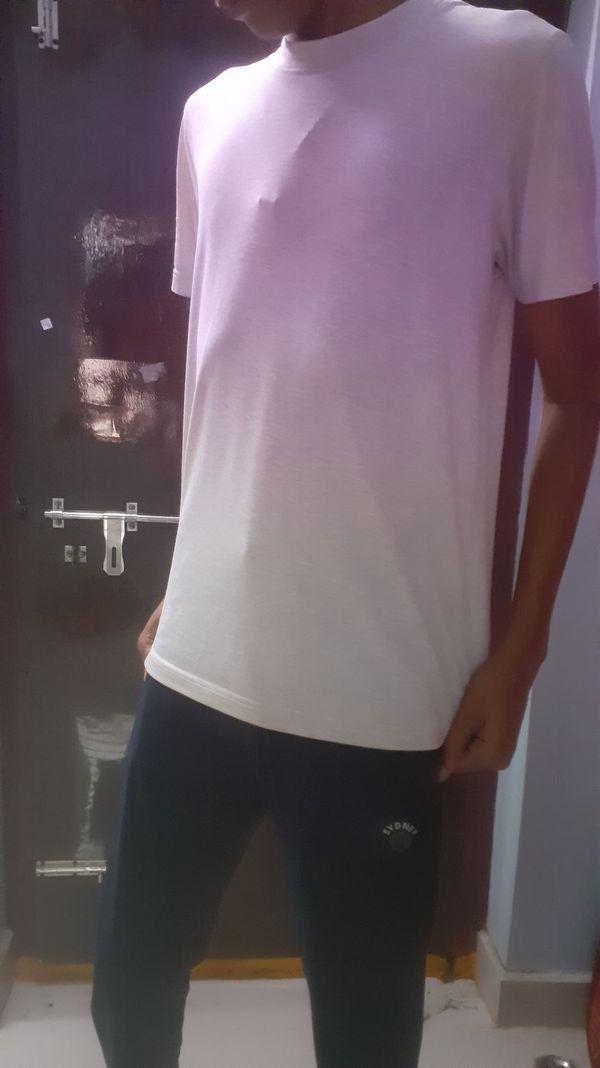
- **Body Mapping:** The user has a lean ectomorph build. The source garment is an overshirt with a relaxed fit. The simulation must show a loose fit on the user's torso, with the shoulder seams dropping slightly below the user's actual shoulder joint. The fabric should hang vertically from the chest, creating a gap between the garment and the user's midsection (unlike the current form-fitting t-shirt). The collar must rise above the user's current crew neck line to sit around the neck base.
- **Occlusion Handling:** The user's hands are positioned near the upper thighs/hips. If the length of the new shirt extends past the waist (which it likely will), the hemline must either drape *behind* the hands or the hands must be segmented and layered *over* the garment to prevent texture clipping. The user's chin and neck area must occlude the back of the new shirt collar.
PHASE 3: ENVIRONMENT & LIGHTING
- **Light Match:** The user environment has a low-key, directional light source coming from the left (screen left), creating a high-contrast scenario. The generated garment must feature strong highlights on the left torso and deep, soft shadows on the right side and under the armpits. The "studio bright" lighting of the source image must be completely neutralized.
- **Color Calibration:** The source beige/cream color must undergo desaturation and exposure reduction to match the user's dim indoor environment. The white balance should shift slightly cooler (towards blue/cyan) to match the ambient room tone, preventing the shirt from looking artificially warm or "glowing" in the dark room.
PHASE 4: IDENTITY PROTECTION
- **Facial Lock:** The user's jawline, visible ear, neck profile, and the specific angle of the head tilt must be frozen. No pixels above the collar line should be altered.
- **Body Integrity:** The user's slim waist and leg width (visible in the dark trousers) must not be warped. The simulation must adapt the cloth to the user's volume, not expand the user's body to fill the cloth. The user's pose (arms straight down) must remain static; the garment mesh must deform to fit the pose, not the skeleton moving to fit the garment.