Thinking Process
PHASE 1: VISUAL DECONSTRUCTION
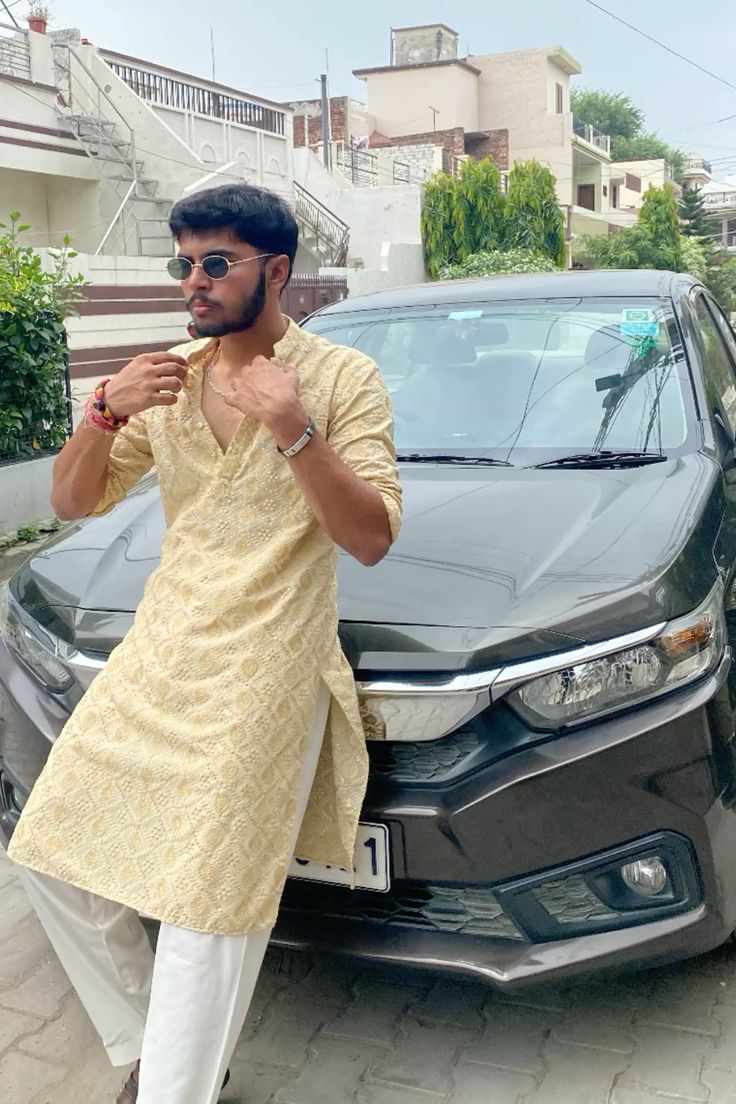
- **Fabric Physics:** The source garment is an embroidered Kurta, likely a cotton-blend or linen with Jacquard-style textured weaving. It possesses a "semi-structured" drape—stiff enough to hold the shape of the mandarin collar and the side slits, but soft enough to hang vertically without rigid angularity. It has a matte finish with specular highlights only occurring on the embroidered thread work.
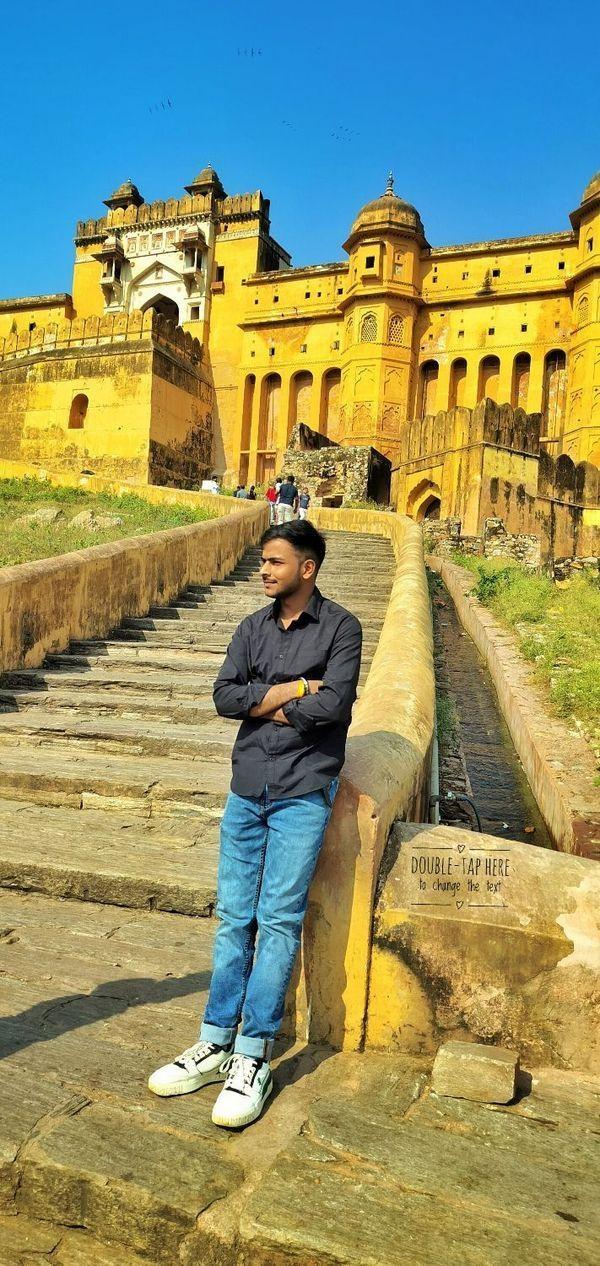
- **Key Features:** The intricate diamond/geometric self-pattern embroidery must remain sharp. Key elements to preserve include the Mandarin collar, the V-shaped neckline slit, the relaxed long sleeves, and crucially, the **extended hemline** (which falls to mid-thigh, unlike the target's current waist-length shirt). The side vents (slits) at the hip are essential for authentic simulation.
PHASE 2: FIT & DRAPE SIMULATION
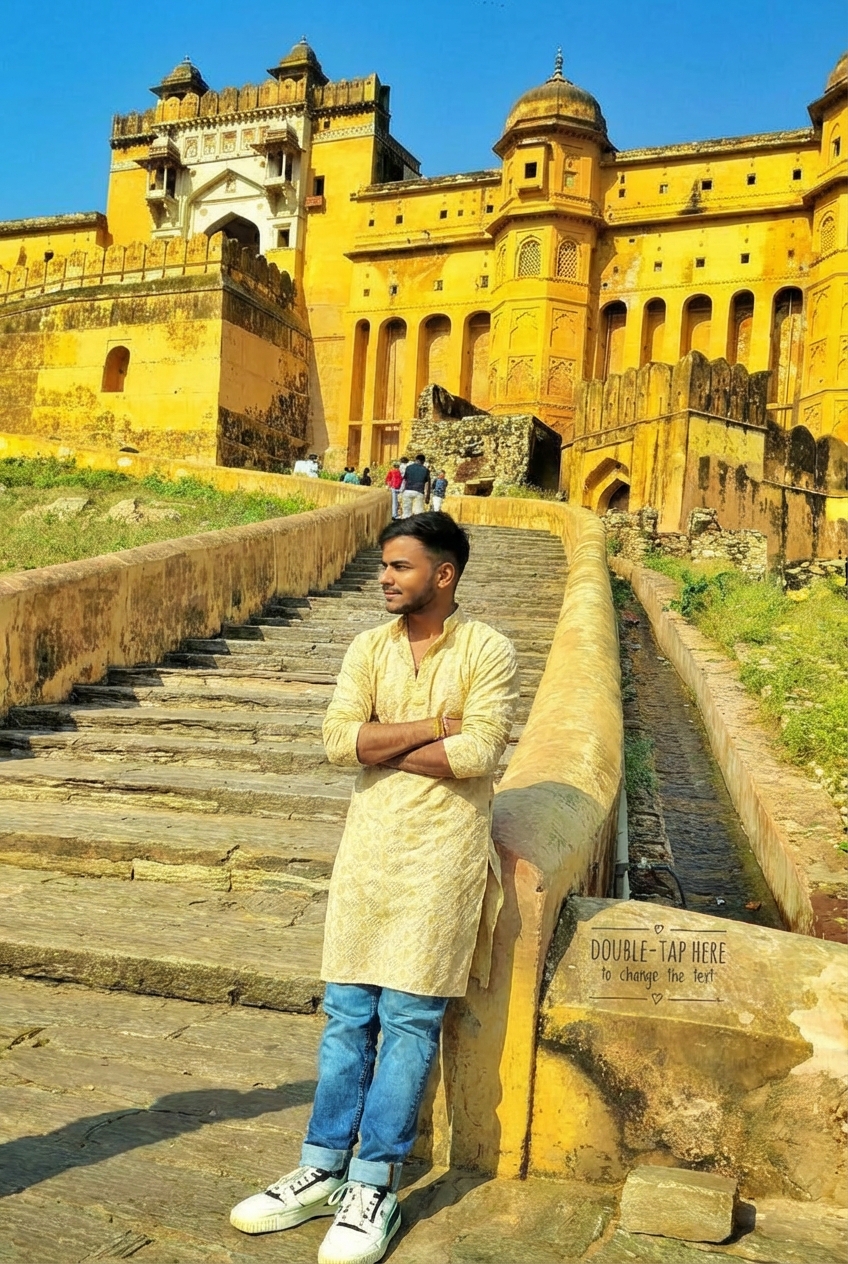
- **Body Mapping:** Due to the user's **crossed-arms pose**, the simulation must generate significant tension wrinkles across the upper back and shoulders. The fabric at the inner elbows must show compression folds (bunching). Unlike the current tucked-in shirt, the Kurta must flow *outward* over the waist and hips, hanging loosely over the upper thighs of the jeans. The silhouette must transition from a fitted shoulder to a relaxed, A-line drop past the waist.
- **Occlusion Handling:** This is a high-complexity occlusion scenario. The user's **hands, wrists, and watch** (left wrist) must be segmented and layered *over* the new garment. The fabric of the Kurta sleeves must replace the black shirt sleeves, but the fold of the crossed arms must visually press into the chest fabric, creating realistic contact shadows where the forearms touch the torso.
PHASE 3: ENVIRONMENT & LIGHTING
- **Light Match:** The target environment features harsh, direct sunlight coming from the upper right, casting hard, defined shadows to the user's left. The new Kurta must adopt this high-contrast lighting map. Shadows must be cast by the crossed arms onto the stomach area of the Kurta. The fabric brightness must be high, but shadows must be deep to match the ambient occlusion of the stone steps.
- **Color Calibration:** The source Kurta is in diffuse, cool lighting. It must be warmed significantly to match the "Golden Hour" or bright mid-day sun of the target image (Amber Fort). The pale yellow must absorb the slight warm cast of the sunlight to blend with the yellow sandstone background without blending *into* it (maintain contrast).
PHASE 4: IDENTITY PROTECTION
- **Facial Lock:** Absolute pixel-lock required for the user's face, neck, and hairstyle (fade haircut). The jawline must remain sharp.
- **Body Integrity:** The user's shoulder width and arm thickness must not be altered. The legs and jeans below the mid-thigh level must remain untouched, but the upper jeans area will be covered by the new garment's length. Do not slim the waist; the Kurta should drape naturally over the user's current build.