Thinking Process
PHASE 1: VISUAL DECONSTRUCTION
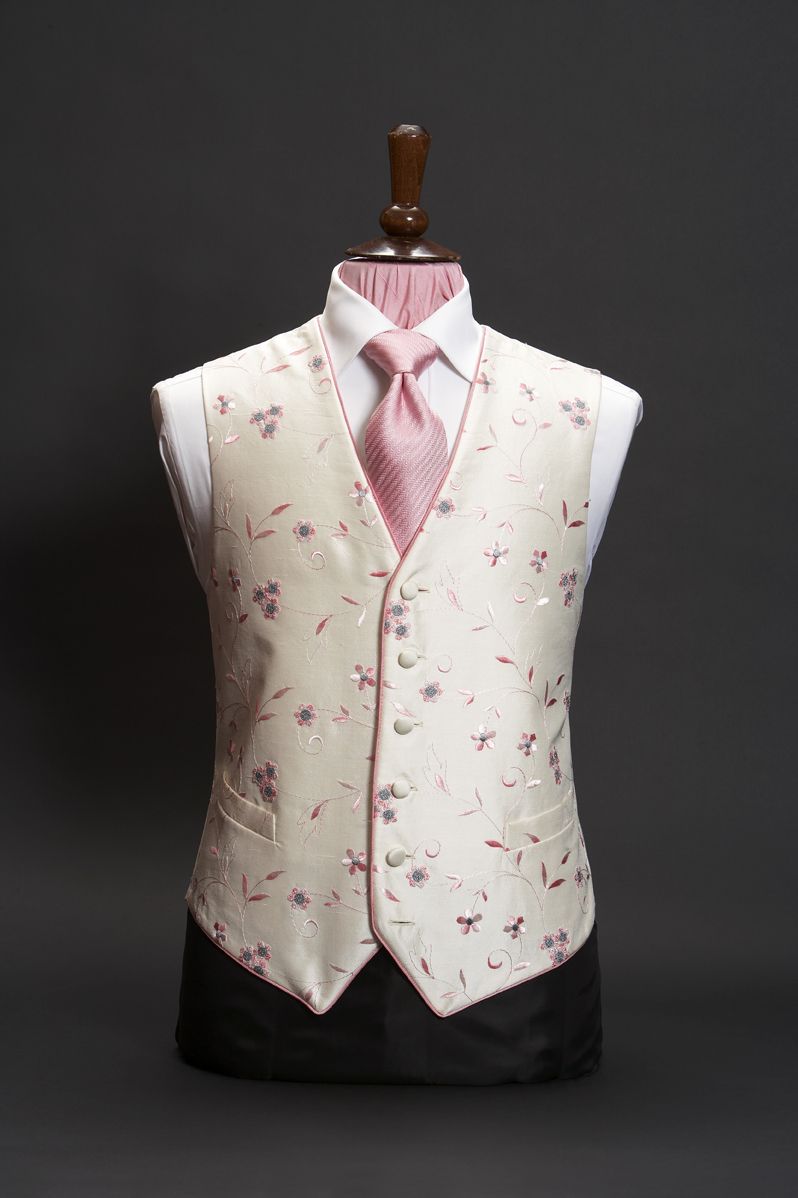
- **Fabric Physics:** The source garment is a formal three-piece set element (waistcoat/vest, tie, shirt). The waistcoat material is a high-sheen satin or silk brocade, requiring anisotropic specular highlights (shimmering differently based on light angle). It is stiff and structured, holding its shape rather than draping loosely. The underlying shirt is crisp, starched cotton. The tie has a woven, textured matte finish contrasting with the vest's sheen.
- **Key Features:** The floral embroidery (pink and silver threading) must retain 3D depth (normal mapping) and not look like a flat print. The five fabric-covered buttons, the pink piping along the lapel/edges, the specific "W" shape of the bottom hem, and the pink textured necktie knot are non-negotiable details.
PHASE 2: FIT & DRAPE SIMULATION
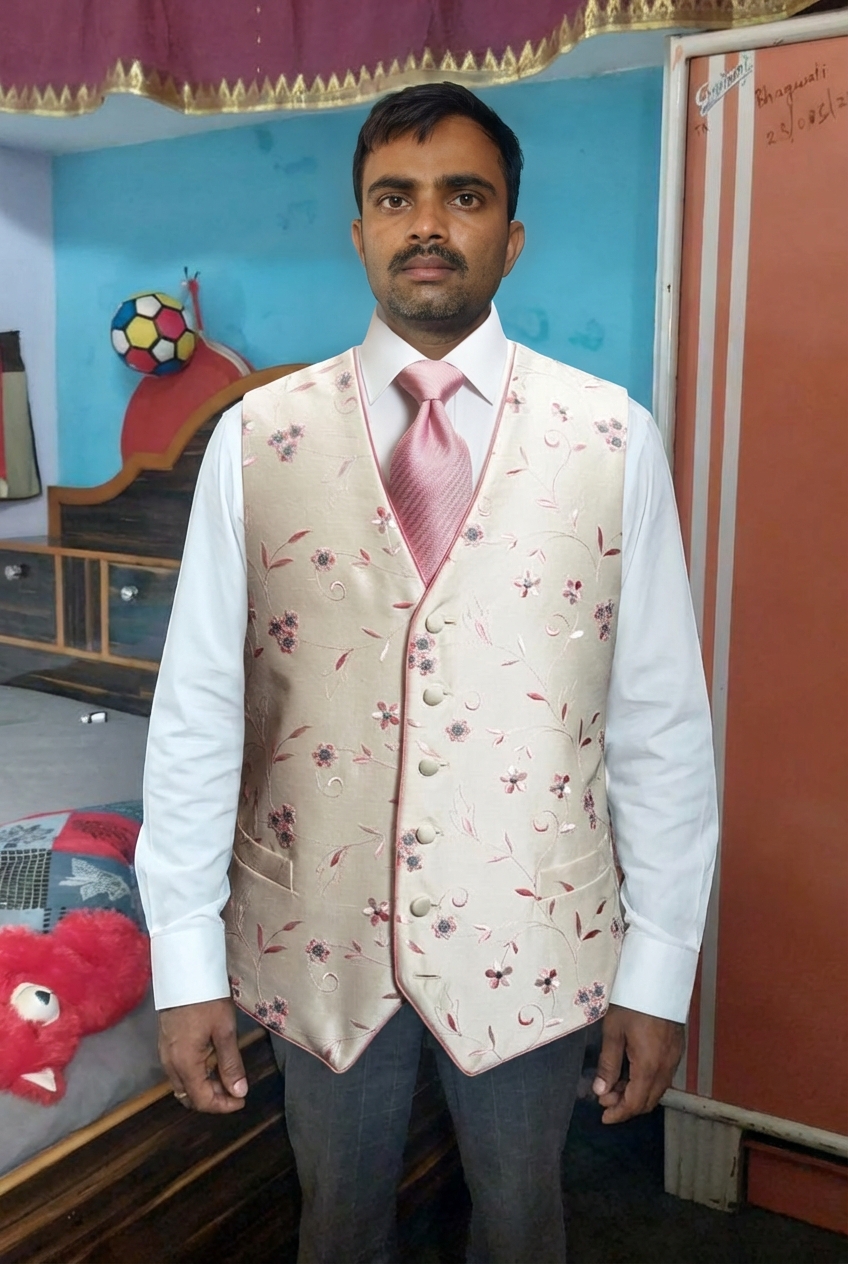
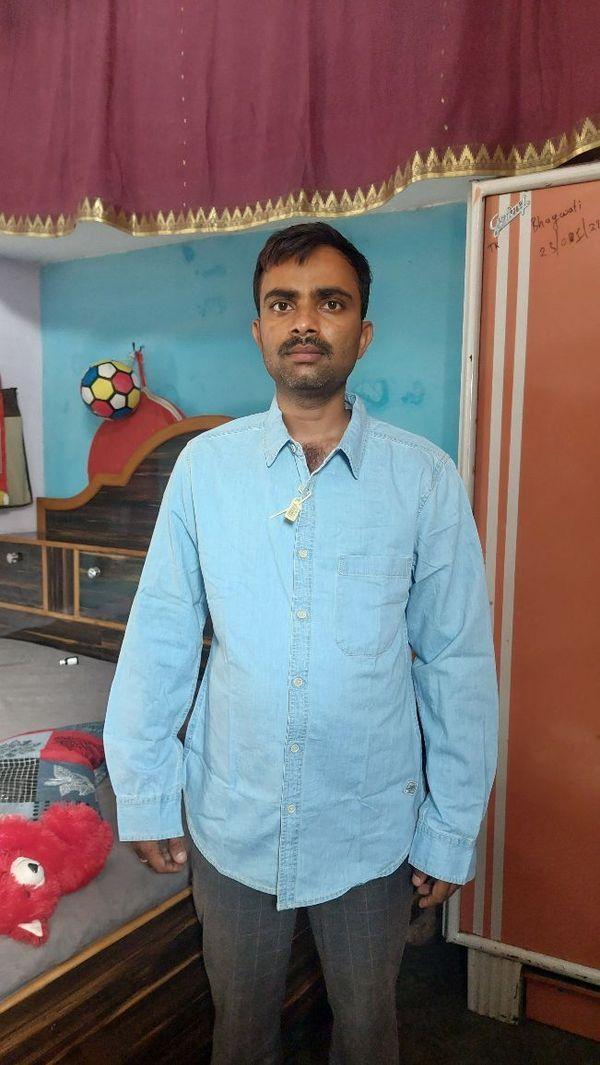
- **Body Mapping:** The current user is wearing a loose, untucked denim shirt. The target garment is a tailored, fitted waistcoat. The simulation must "tighten" the silhouette at the torso to reflect a formal fit, reducing the bulk of the current denim shirt. The shoulders of the white underlying shirt must align with the user's natural shoulder width. The bottom hem of the waistcoat typically sits at the belt line; the simulation must resolve the difference between the user's current long, untucked shirt and the shorter cut of the vest (likely requiring masking of the lower denim fabric covering the trousers).
- **Occlusion Handling:** The user's hands hang by his sides; the cuffs of the new white shirt must end at the wrists, replacing the denim cuffs, while keeping the user's hands layered *over* the fabric. The user's neck area is currently open; the new high collar and tie must obscure the lower neck/upper chest skin visible in the denim shirt's V-opening.
PHASE 3: ENVIRONMENT & LIGHTING
- **Light Match:** The user is in an indoor bedroom with diffuse, cool-toned artificial lighting (likely overhead CFL or LED), creating soft, nondescript shadows. The source garment is studio-lit with high contrast. The brightness of the cream vest must be reduced (exposure compensation) to match the flatter lighting of the room. Shadows should be generated under the lapels and tie knot to ground them.
- **Color Calibration:** The source garment is warm (cream/pink). The user's environment has strong blue tones (walls, bedspread). A slight cool/blue tint must be composited onto the white shirt and cream vest to simulate ambient light reflection from the blue walls, preventing the garment from looking "pasted on."
PHASE 4: IDENTITY PROTECTION
- **Facial Lock:** The user's entire head, including hair, ears, forehead, mustache, and skin tone, must remain pixel-perfectly frozen. The boundary line is strictly at the neck/jawline where the new collar begins.
- **Body Integrity:** Do NOT apply the "V-taper" of the mannequin to the user. The user has a rectangular torso build. The vest must be warped to fit his actual waist width, preserving his natural posture and proportions. Do not slim the stomach area.