Thinking Process
PHASE 1: VISUAL DECONSTRUCTION
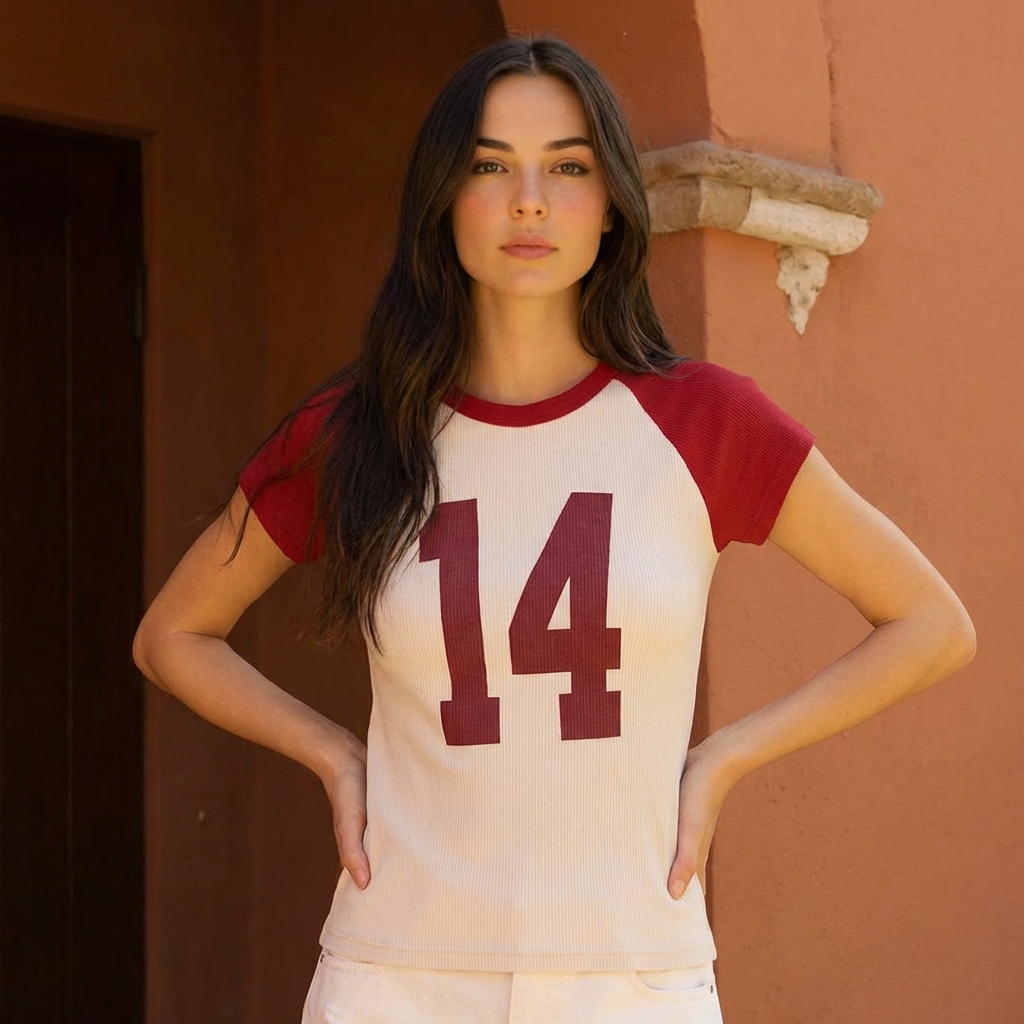
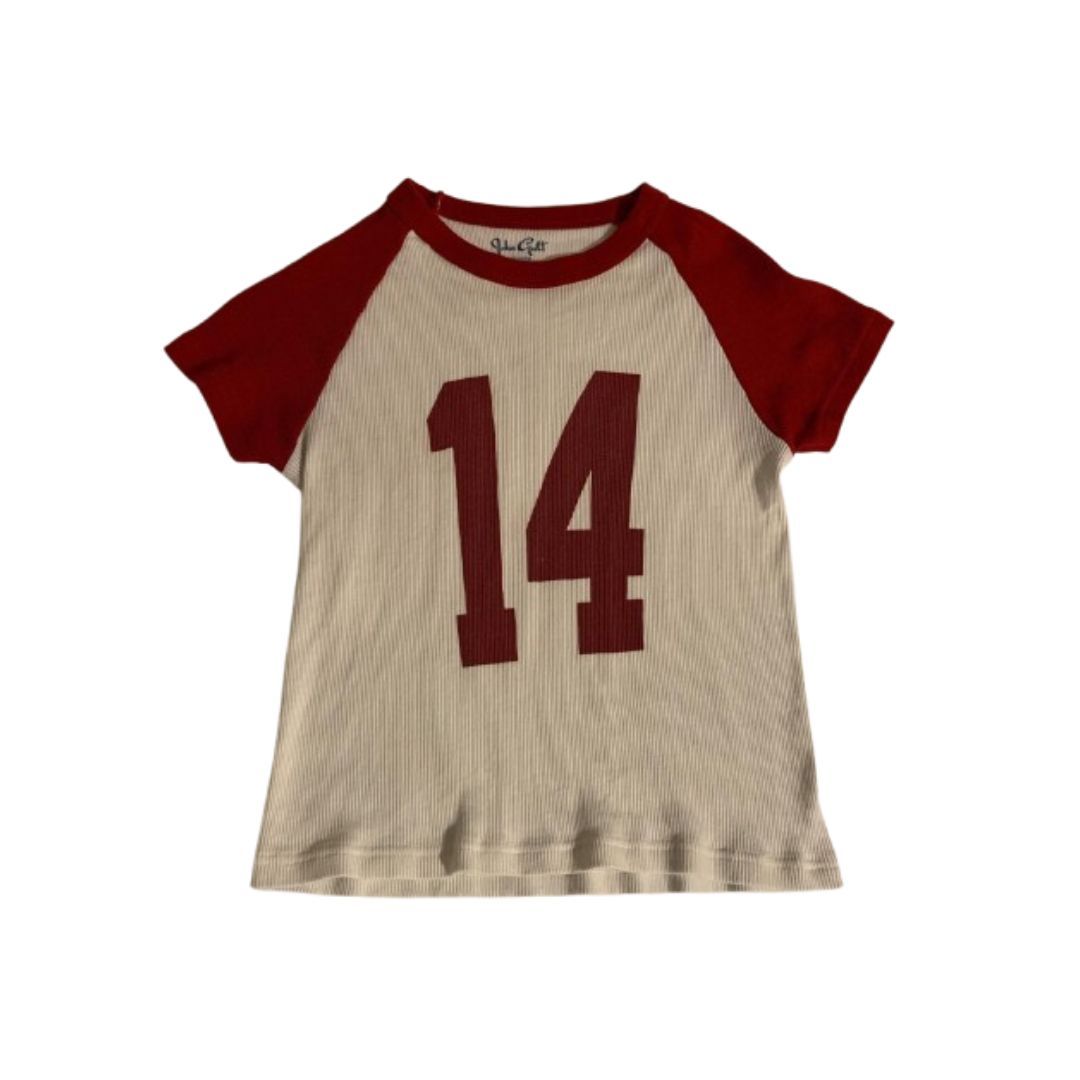
- **Fabric Physics:** The source garment is a ribbed knit cotton blend (evident from the vertical texture lines). It has a matte finish with low specular highlights. The simulation must treat this as a semi-stretchy material with medium weight—it should not drape like fluid silk nor stand rigid like heavy denim. The texture map must preserve the vertical ribbing to maintain realism.
- **Key Features:**
- **Raglan Construction:** The diagonal seam from underarm to collar bone connecting the red sleeves to the cream body must be preserved.
- **Graphic Integrity:** The maroon "14" print must remain centered on the chest, deforming only slightly with the bust curvature, avoiding distortion that makes the numbers illegible.
- **Hemline:** The bottom hem and sleeve cuffs appear to have a soft, slightly wavy finish typical of jersey knits, which should be maintained rather than flattened.
PHASE 2: FIT & DRAPE SIMULATION
- **Body Mapping:**
- **Pose Interaction:** The user's hands are placed on her hips/waist. The target shirt is a short-sleeved cut; the sleeves will likely terminate mid-bicep. The fabric at the armpits must bunch naturally where the arms press against the torso.
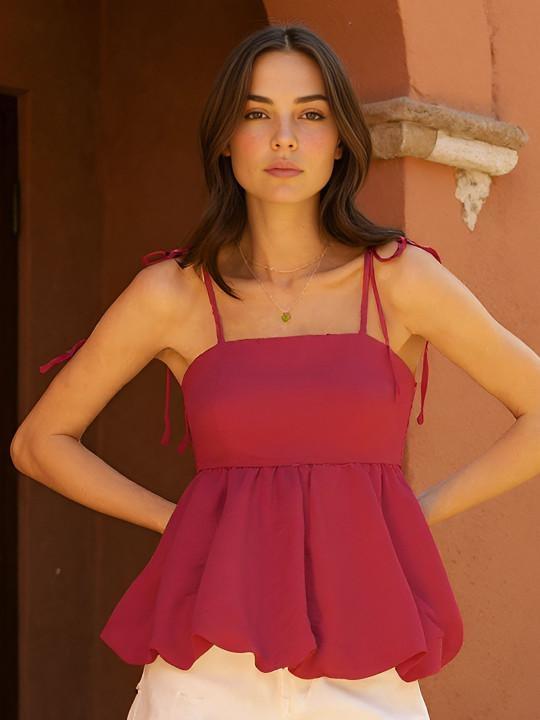
- **Silhouette Change:** The current user garment is a peplum/babydoll silhouette (tight bust, flared bottom). The target garment is a straighter cut. The simulation must flatten the volume of the current "puff" to show the natural fall of the t-shirt against the user's actual torso and waistline.
- **Occlusion Handling:**
- **Hair:** The user has dark hair falling over both shoulders and down the front. This is a critical occlusion layer. The hair mask must be generated first, and the new t-shirt pixels must be rendered *behind* the hair strands.
- **Necklaces:** The source garment has a high crew neck. This will likely obscure the delicate gold necklaces. The simulation should prioritize the fabric covering the jewelry unless the neckline drape sits unusually low.
- **Hands:** The fingers/wrists resting on the waist must be masked out and layered *over* the bottom hem of the new shirt.
PHASE 3: ENVIRONMENT & LIGHTING
- **Light Match:**
- **Directionality:** The scene features strong, warm directional sunlight coming from the user's right (viewer's left), casting distinct shadows on the user's left side (viewer's right).
- **Shadow Casting:** The new shirt needs a gradient map: brighter cream/red on the viewer's left, transitioning to darker shadows on the viewer's right. Self-shadowing must occur under the bust and inside the sleeve openings.
- **Color Calibration:**
- **Ambient Bounce:** The environment is rich in terracotta/orange tones. The cream body of the t-shirt must absorb a warm tint (orange-yellow ambient occlusion) to avoid looking clinically white and pasted on. The deep red sleeves should shift slightly warmer to match the "golden hour" vibe of the room.
PHASE 4: IDENTITY PROTECTION
- **Facial Lock:** Absolute pixel freeze required for the face, neck (above the collar line), and hair. The jawline and ear region must remain untouched.
- **Body Integrity:** Do not alter the user's arm thickness or waist width to fit the garment. The garment mesh must be warped to fit the user's biometric measurements. The skin tone on the arms (where the spaghetti straps are currently) must be preserved and seamlessly blended where the new sleeves end.