Thinking Process
PHASE 1: VISUAL DECONSTRUCTION
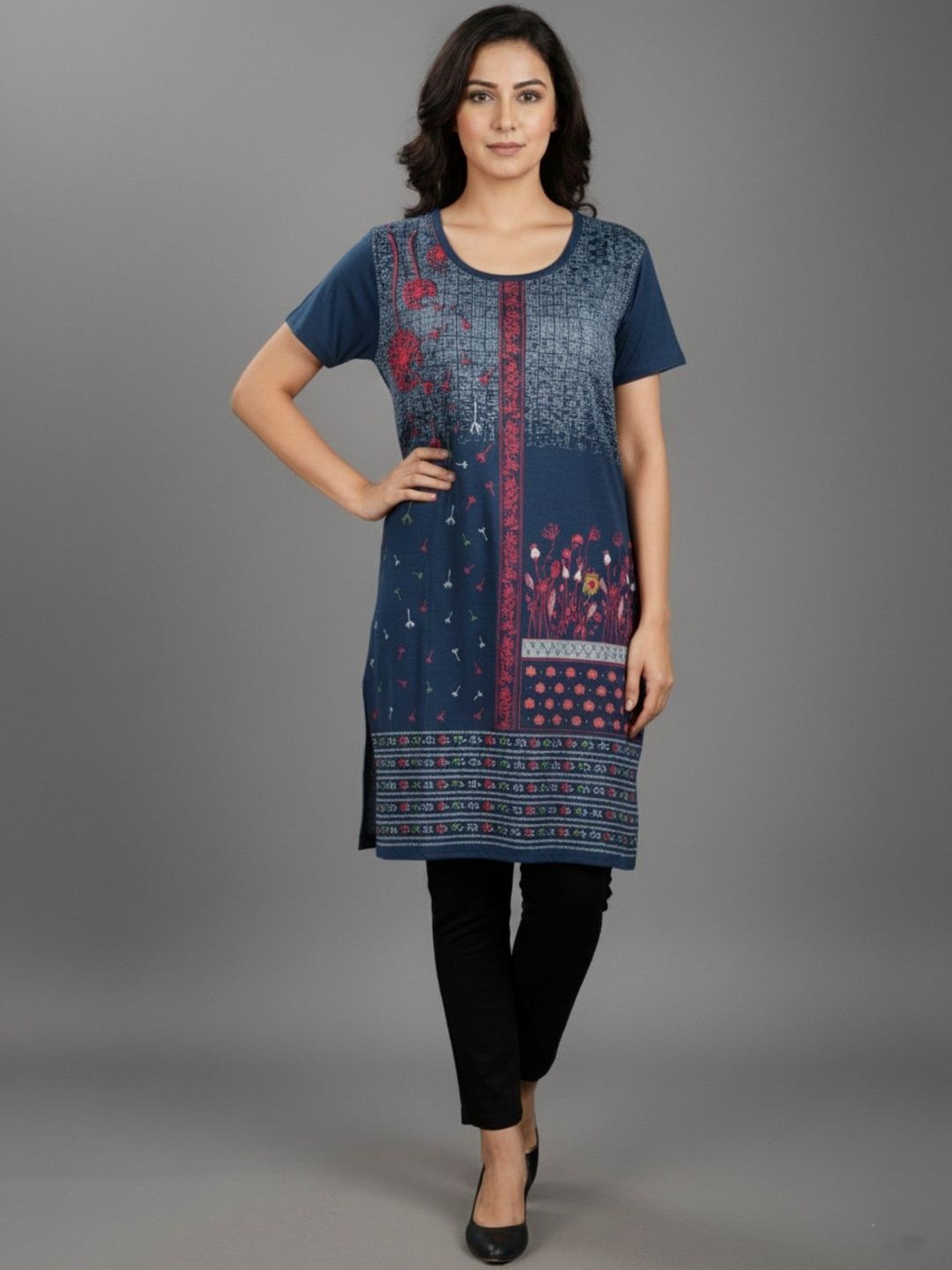
- **Fabric Physics:** The source garment appears to be a printed cotton or viscose blend jersey. It has a matte finish with low reflectivity. The physics engine must simulate a medium-weight drape that follows body contours without clinging excessively (unlike spandex) and falls straight due to gravity (unlike stiff linen).
- **Key Features:** The complex print layout is critical: the vertical red geometric band must align with the sternum; the floral cluster must remain on the wearer's right shoulder (viewer's left); the horizontal geometric bands at the hem must be preserved. The round neckline and short-sleeve cut must replace the current garment's silhouette.
PHASE 2: FIT & DRAPE SIMULATION
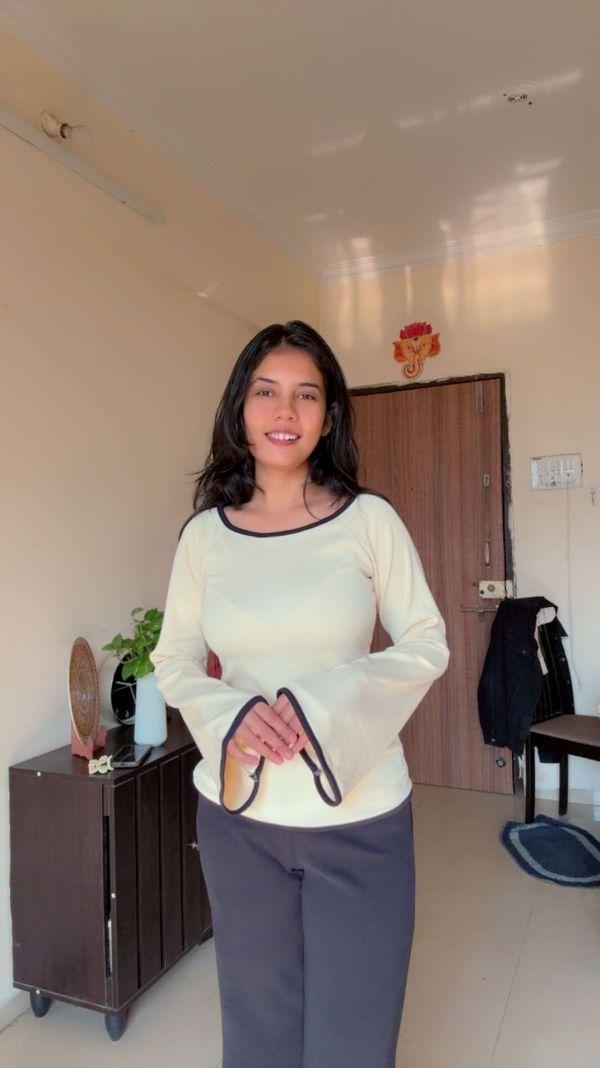
- **Body Mapping:** The source garment is a long tunic (kurti). It must drape over the hips, extending below the user's waistline. The fabric must bridge the gap between the bust and the clasped hands. Since the target user is wearing a long-sleeved bell-bottom top and the source is short-sleeved, the simulation requires generative inpainting to reconstruct the user's bare forearms and elbows with accurate skin texture.
- **Occlusion Handling:**
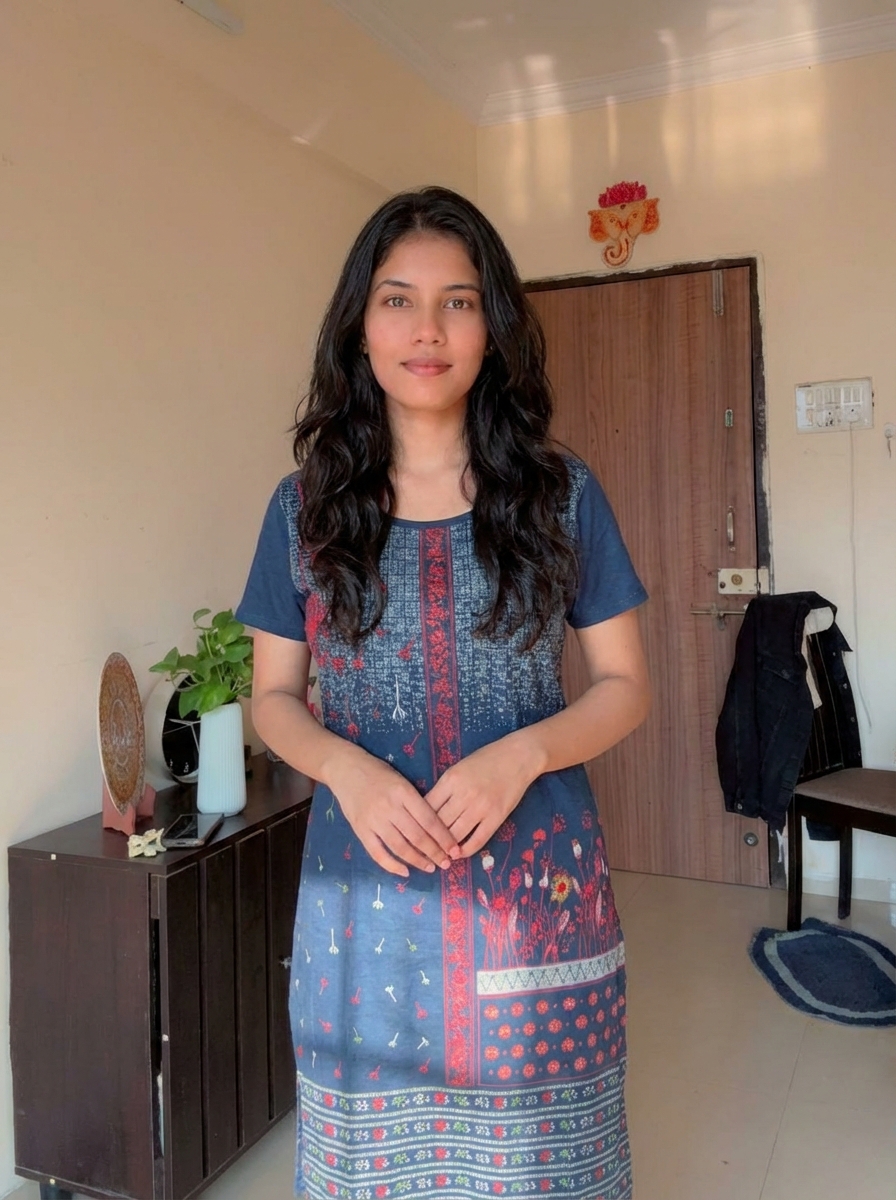
1. **Hair:** The user's long dark wavy hair falls over both shoulders and the upper chest. The new garment must pass *under* these hair strands.
2. **Hands:** The user's hands are clasped at the lower torso. This is a hard occlusion layer; the kurti fabric must appear to fall behind the wrists/hands or bunch slightly above them, ensuring the hands remain the top-most layer.
PHASE 3: ENVIRONMENT & LIGHTING
- **Light Match:** The user is in a room with a strong, warm natural light source coming from the left (viewer's perspective), casting soft shadows to the right. The blue kurti must be rendered with highlights on the left torso/shoulder and cast shadows on the right side and underneath the bust.
- **Color Calibration:** The source image has cool, neutral studio lighting. The blue and red tones of the kurti must be color-graded with a warmer temperature to match the yellow/orange ambient hues of the user's room, preventing the "cut-and-paste" sticker effect.
PHASE 4: IDENTITY PROTECTION
- **Facial Lock:** The user's entire head, including facial structure, expression, and the specific fall of the hair around the face, must remain pixel-perfectly frozen.
- **Body Integrity:** The user's natural body width and posture must be maintained. Do not slim the torso or alter the hip width to match the model in the source image. The generated skin for the arms (replacing the current long sleeves) must match the user's facial skin tone and grain exactly.