Thinking Process
PHASE 1: VISUAL DECONSTRUCTION
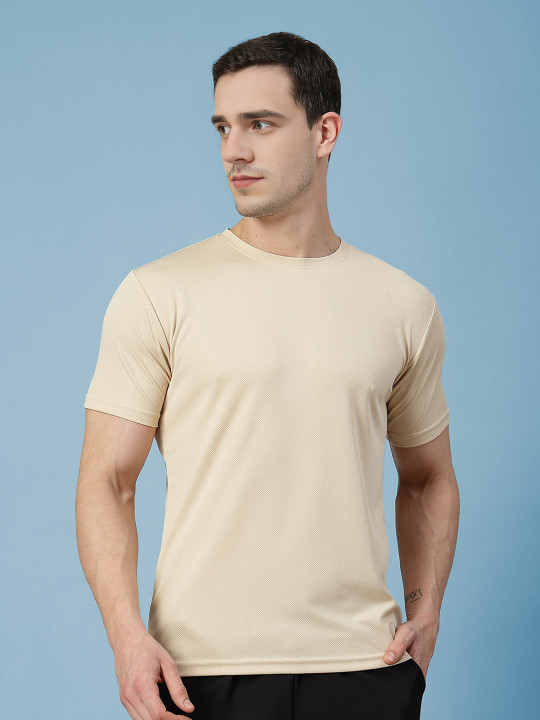
- **Fabric Physics:** The source garment is a beige/sand-colored technical knit or pique cotton blend. It exhibits a distinct micro-texture (waffle or diamond weave) that diffuses light, resulting in a matte finish with very low specularity. The drape is semi-structured; it is lightweight but maintains its shape rather than flowing like silk. Simulation must replicate a tensile strength that allows for gentle folding rather than sharp creasing.
- **Key Features:** The ribbed crew-neck collar, the double-needle stitching on the sleeve cuffs and bottom hem, and the specific micro-texture of the fabric weave are critical fidelity points. The slight tension lines visible on the source model's chest indicate the fabric has some elasticity (stretch), which must be accounted for in the transfer.
PHASE 2: FIT & DRAPE SIMULATION
- **Body Mapping:**
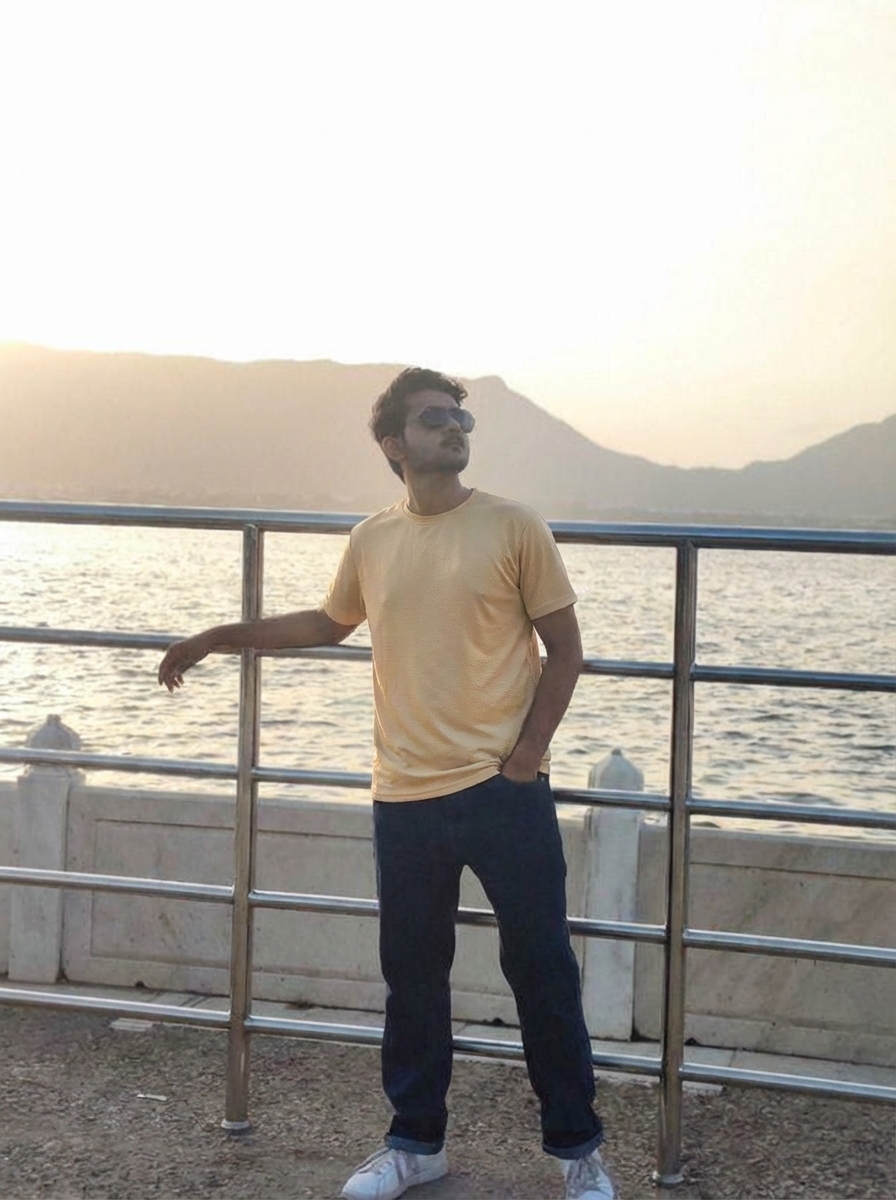
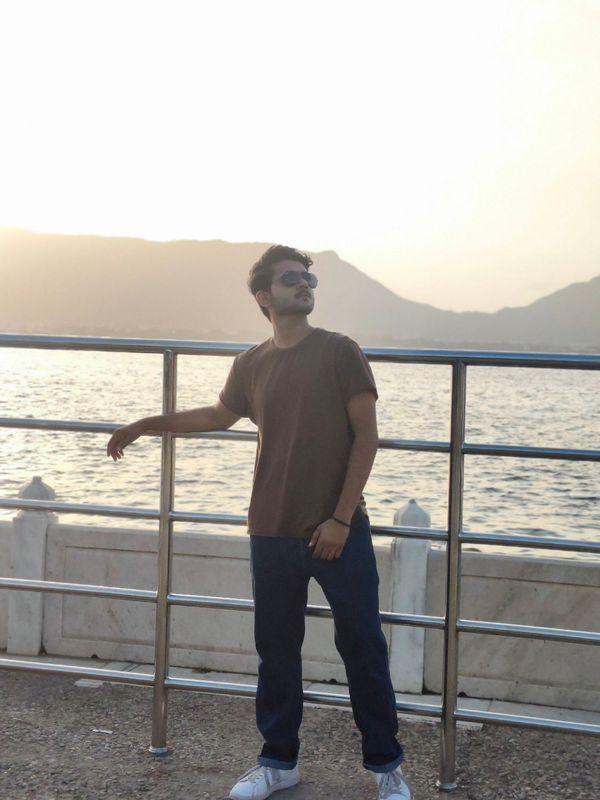
- **Right Shoulder/Arm:** The user’s right arm is abducted and resting on a railing. The virtual fabric must generate tension wrinkles pulling from the armpit diagonally across the upper chest towards the neck. The right sleeve will ride slightly higher up the bicep due to the raised arm.
- **Torso/Waist:** The fabric should fall vertically via gravity on the user's left side but pull taut against the right latissimus dorsi.
- **Left Hand Interaction:** The user's left hand appears to be near the pocket/waistband. The hem of the new garment should settle naturally around the hip line, potentially bunching slightly if it contacts the wrist or jeans waistband.
- **Occlusion Handling:**
- **Railing:** The metal railing in the foreground blocks the lower torso and legs. The new garment must be strictly masked *behind* the railing structure.
- **Left Hand/Wrist:** If the new garment length extends to the hand position, the left hand and the black wristband must be segmented and layered *over* the garment.
- **Neck/Chin:** The jawline is clear, but the neck intersection needs precise masking to ensure the new collar sits on the skin geometry, not floating above it.
PHASE 3: ENVIRONMENT & LIGHTING
- **Light Match:** The target scene features strong backlighting (golden hour/sunset) coming from the background/left, placing the user's torso primarily in shadow/ambient light. The studio-lit brightness of the source shirt must be significantly drastically reduced (exposure lowered). Shadows must be soft and ambient, with rim lighting potentially generated on the user's right shoulder/arm outline to match the atmospheric haze.
- **Color Calibration:** The neutral beige of the source cloth must be color-graded to accept the warm, yellow-orange ambient cast of the sunset environment. The fabric should appear darker and warmer than the source image to match the dynamic range of the user's current brown shirt.
PHASE 4: IDENTITY PROTECTION
- **Facial Lock:** Absolute freeze on the user’s face, hair, ears, jawline, and sunglasses. The neck skin tone must be preserved and blended seamlessly with the new collar.
- **Body Integrity:** The user's somatic structure must be preserved. Do not warp the user's torso to match the muscular definition of the source model. The user's shoulder width and waist circumference must dictate the garment's deformation, not the other way around. Do not apply any slimming filters.