Thinking Process
PHASE 1: VISUAL DECONSTRUCTION
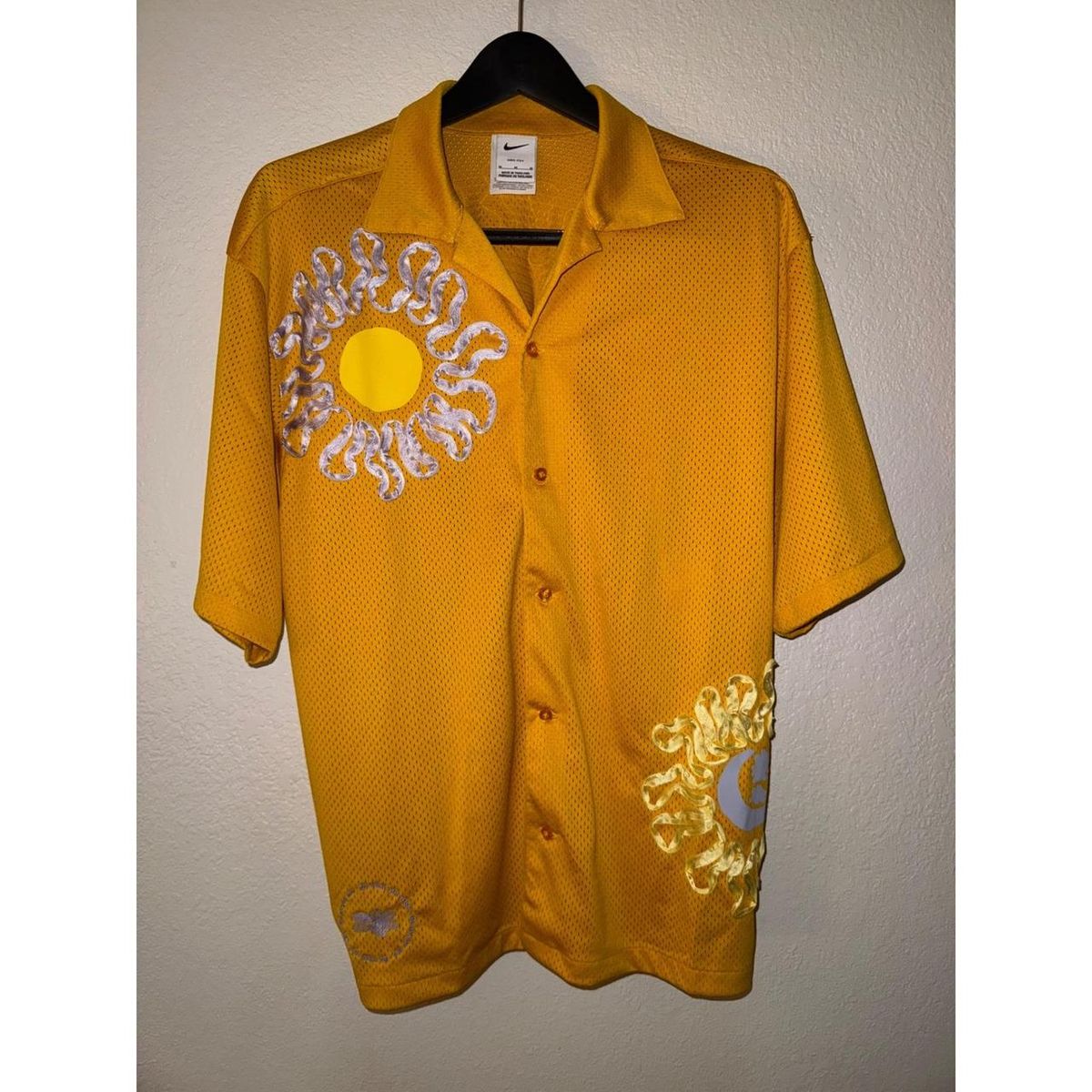
- **Fabric Physics:** The source garment is a synthetic athletic mesh (likely polyester). It possesses a semi-structured drape that is breathable but holds its shape better than soft cotton. The simulation must render the porous texture of the mesh, allowing for micro-shadowing within the fabric holes. The material has a low-sheen specular reflection typical of sportswear, distinctly different from the matte cotton currently worn by the user. The embroidered/appliqué "sun" patches add localized stiffness and thickness that must not bend as fluidly as the rest of the mesh.
- **Key Features:**
- The "camp collar" (open neck) structure must replace the user's current high crew neck.
- The large silver/grey sun appliqué on the right chest and the yellow sun detail on the lower left.
- The central button placket (vertical line).
- The visible Nike tag inside the collar (if visible based on neck opening).
- The specific hem stitching and the sleeve cuffs.
PHASE 2: FIT & DRAPE SIMULATION
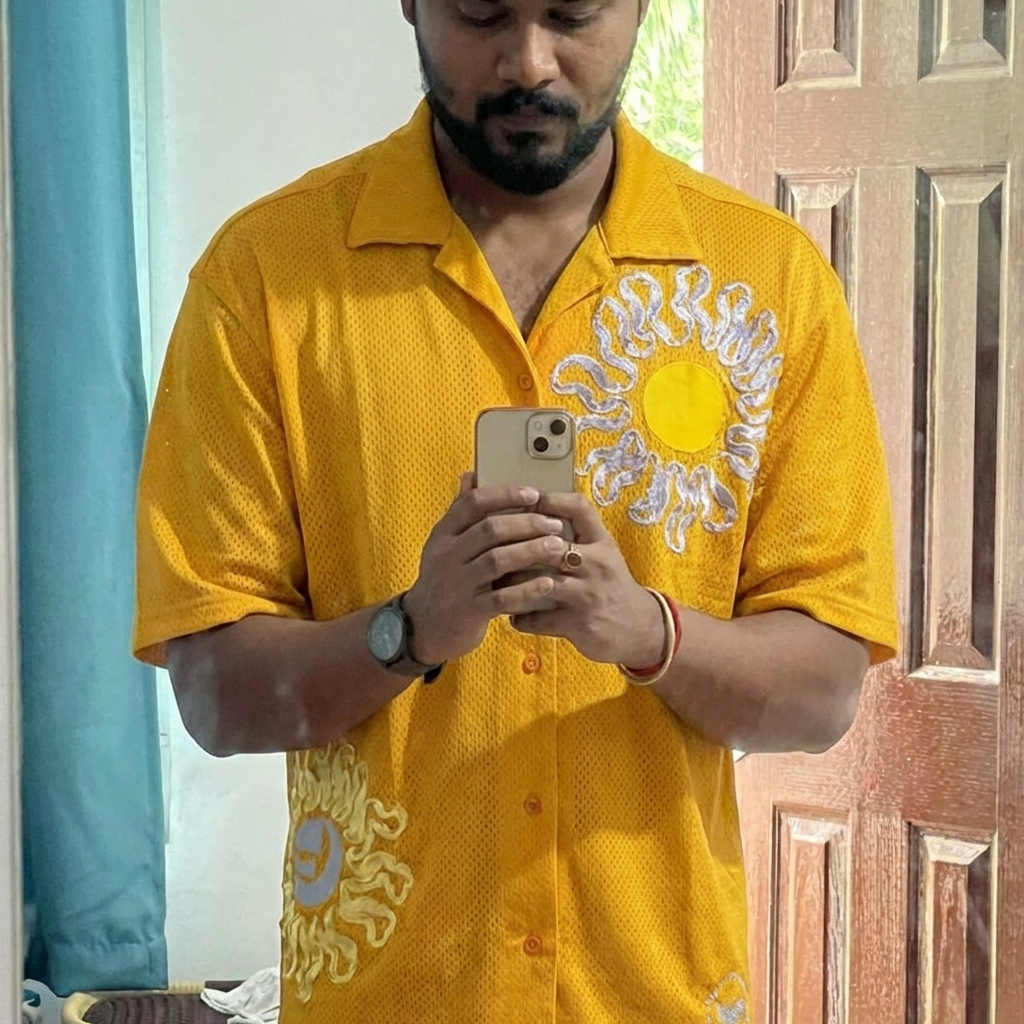
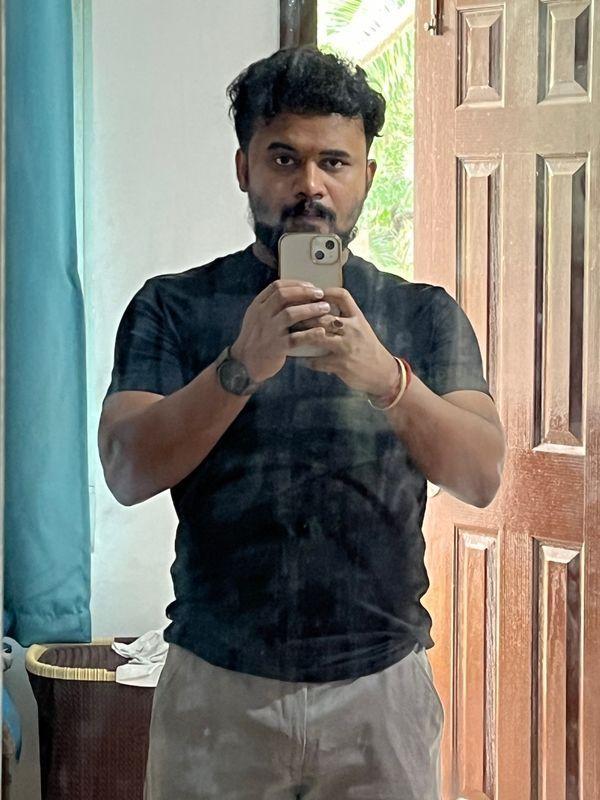
- **Body Mapping:** The user has a muscular build with broad shoulders. The target garment is a button-down shirt, implying a boxier, looser fit compared to the user's current form-fitting t-shirt. The fabric should bridge the gap between the pectorals and the waist rather than clinging to the abdominals. Given the user's raised arms (holding the phone), the shoulders of the garment will lift slightly, and stress folds should radiate from the armpits toward the shoulders. The sleeves are mid-length; they should hang loosely around the biceps, not hugging them tightly.
- **Occlusion Handling:** This is the most critical constraint. The user's **hands, the iPhone, and the wrist accessories (watch on left wrist, red thread on right wrist)** occupy the central chest area. The new garment must be generated *behind* these elements. A precise segmentation mask is required for the fingers and the phone case to ensure the yellow fabric implies continuity behind these objects without "bleeding" onto them.
PHASE 3: ENVIRONMENT & LIGHTING
- **Light Match:** The User Image features cool, diffuse indoor lighting (likely overhead LED) with a slightly washed-out contrast typical of mirror selfies. The Cloth Image is lit by a direct, warmer light source. The yellow of the new shirt must be color-graded (cooled down) to match the ambient room temperature. Shadows must be cast *by* the phone and hands *onto* the new shirt to ground it in reality.
- **Color Calibration:** The saturation of the "Mustard Yellow" must be reduced slightly to account for the mirror reflection, which naturally desaturates images. The black buttons and embroidery must share the same black point/contrast levels as the user's dark hair or the dark pattern on the door to integrate seamlessly.
PHASE 4: IDENTITY PROTECTION
- **Facial Lock:** Absolute freeze required for the user's hair (curly texture), beard, facial structure, and skin tone. The neckline transition from the open collar to the neck skin must be blended naturally without altering the neck width.
- **Body Integrity:** Explicitly forbid slimming or "beautifying" filters. The user's muscular shoulder width and arm volume must be preserved. The hands and fingers must remain exactly as they are—do not attempt to reconstruct hands; simply mask around them.