Thinking Process
PHASE 1: VISUAL DECONSTRUCTION
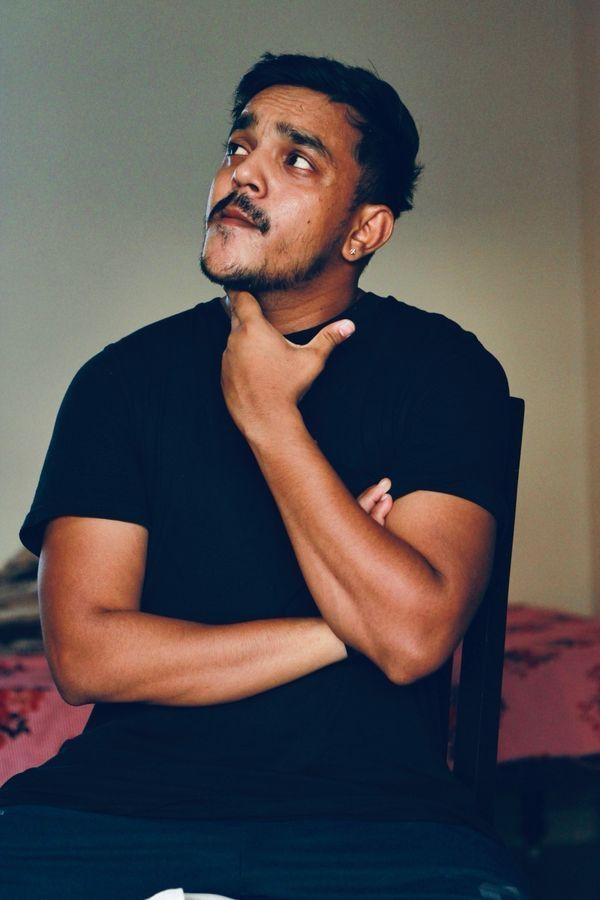
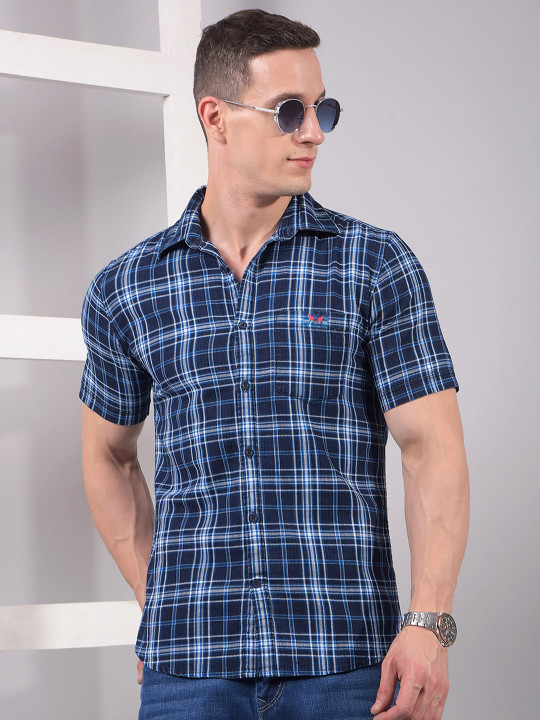
- **Fabric Physics:** The source garment is a woven cotton or cotton-blend plaid shirt. Unlike the user's current knit t-shirt, this material has structural rigidity. It is matte (non-reflective) but will show sharp creases rather than soft drapes. The simulation must account for the stiffness of the collar and the button placket, ensuring they do not deform like a stretchy fabric.
- **Key Features:** The detailed plaid/tartan pattern must maintain alignment, particularly across the button placket. Critical details to preserve include the spread collar, the left-breast pocket with the small red logo, the visible button line, and the hem stitching on the short sleeves.
PHASE 2: FIT & DRAPE SIMULATION
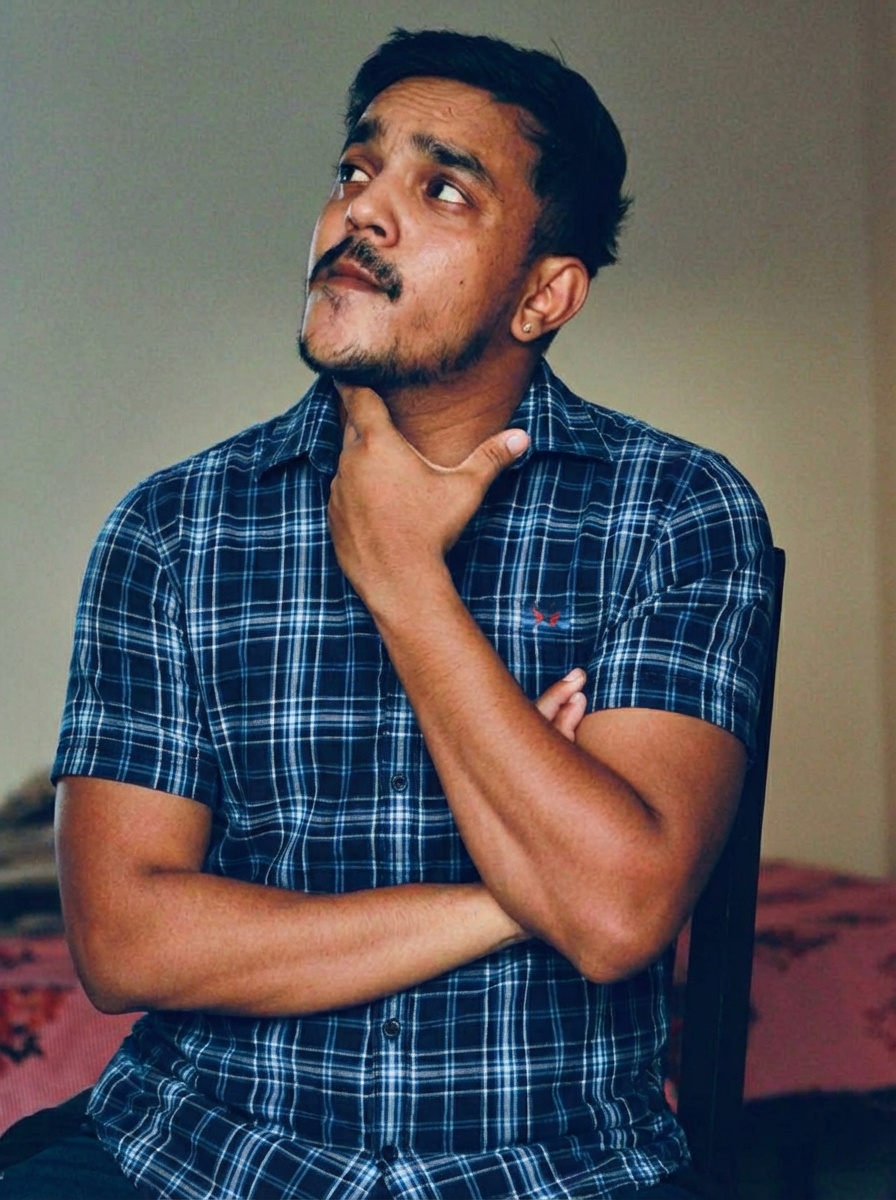
- **Body Mapping:** Due to the user's pose (right arm crossing the body to touch the chin), the fabric physics are complex. The right sleeve must retract/bunch upward slightly toward the shoulder due to the arm elevation. Significant compression wrinkles must generate horizontally across the chest and under the right armpit where the arm presses against the torso. The collar must sit higher and stiffer than the current crew neck, potentially interacting with the user's lower neck area.
- **Occlusion Handling:** **CRITICAL:** The user's right hand (fingers, thumb, and palm) and the right forearm are occluding the torso area. A precise segmentation mask must be applied to the right arm and hand to layer them *over* the generated shirt. The user's chin/beard area also creates a contact boundary with where the new collar will sit.
PHASE 3: ENVIRONMENT & LIGHTING
- **Light Match:** The user is in a warm, low-light indoor environment (likely tungsten lighting) with a light source coming from the front-left. The source shirt is lit by cool, bright studio strobes. The generated shirt must receive a warm (yellow/orange) color grade. Shadows must be cast by the user's crossed arm onto the new shirt, and the shirt must cast a shadow onto the chair/background to the user's right.
- **Color Calibration:** The stark white lines in the plaid pattern must be dimmed and tinted slightly creamy/yellow to match the ambient room tone. The saturation of the blue must be reduced slightly to match the lower dynamic range of the user's photo.
PHASE 4: IDENTITY PROTECTION
- **Facial Lock:** The entire head region—specifically the eyes, eyebrows, nose, mouth, facial hair (mustache and beard), and ears—must be frozen. The specific interaction point where the fingers touch the chin requires pixel-perfect masking to ensure no garment texture bleeds onto the skin.
- **Body Integrity:** The generation must respect the user's natural shoulder width and torso volume. Do not warp the user's physique to match the V-taper of the source model; the shirt must be warped to fit the user, not the other way around.