Thinking Process
PHASE 1: VISUAL DECONSTRUCTION
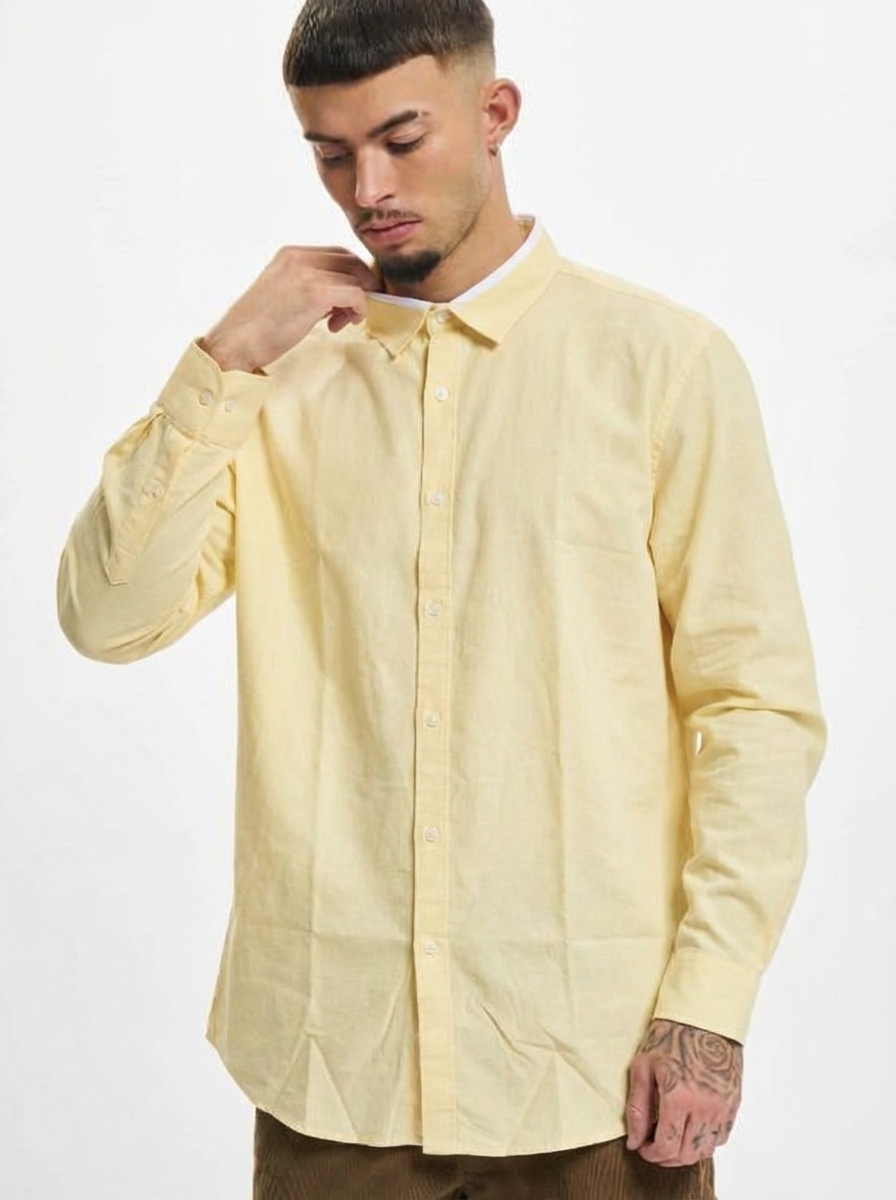
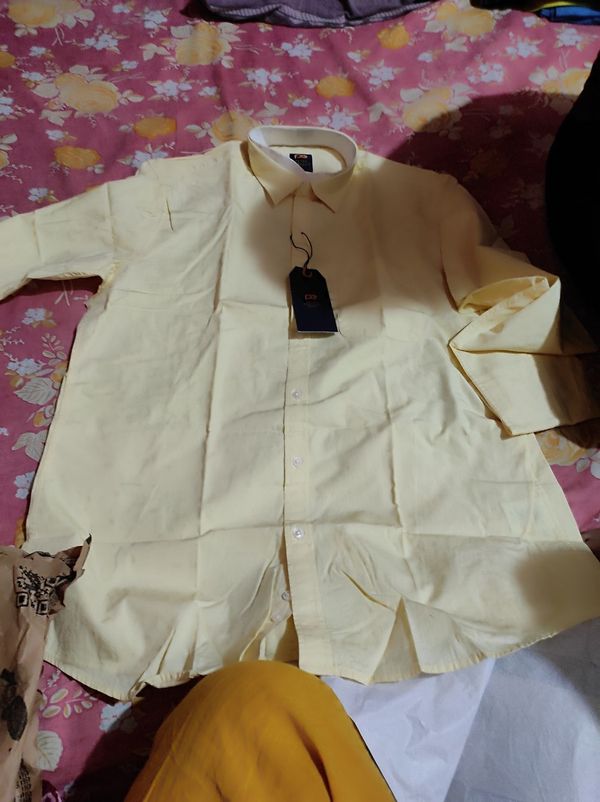
- **Fabric Physics:** The source garment appears to be a lightweight cotton or linen blend. It has a matte finish with low specularity (no shine). The simulation must account for "memory wrinkles" characteristic of linen/cotton mixes—it should not drape like a fluid silk or heavy knit, but rather hold structural creases at the placket and cuffs while folding softly around tension points.
- **Key Features:** The standard collar structure and the white inner collar band must be preserved and rendered correctly around the neck. The center button placket, clear/white buttons, and the seam lines on the shoulders are critical. Note: The black tag hanging from the button should ideally be removed for a realistic "worn" look, but the buttonhole it hangs from must remain intact.
PHASE 2: FIT & DRAPE SIMULATION
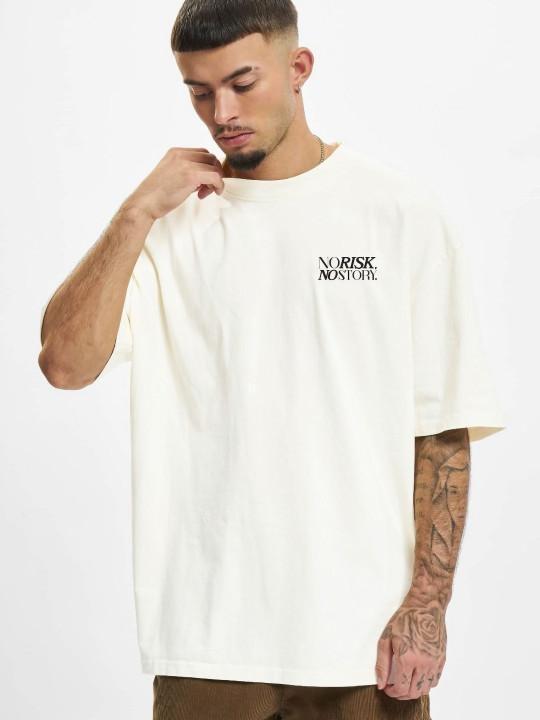
- **Body Mapping:** The user's current pose features a raised right arm with the hand interacting with the neckline. The new garment (button-down) lacks the elasticity of the current jersey t-shirt; therefore, the simulation must show the fabric bunching/folding near the right shoulder and armpit rather than stretching. The collar must sit higher and stiffer than the current t-shirt neckline. The left sleeve must drape vertically with slight breaking at the elbow due to the gentle bend of the arm.
- **Occlusion Handling:** The user's right hand (fingers and palm) is touching the collar area. This is a critical occlusion zone; the new shirt collar and upper placket must be rendered *behind* the fingers. The gold chain necklace will likely be hidden by the higher collar of the button-down unless the top button is simulated as open. The left hand and wrist tattoos must be layered *over* the sleeve cuff if the sleeve length extends that far.
PHASE 3: ENVIRONMENT & LIGHTING
- **Light Match:** The target image utilizes soft, high-key studio lighting with a diffuse source likely from the front-left. The source garment image has harsh, inconsistent indoor lighting. The yellow shirt must be re-lit to eliminate the deep creases/shadows from the "bed" photo and adopt the soft, ambient occlusion of the studio shot. Shadows should fall gently to the user's right side.
- **Color Calibration:** The yellow tone of the shirt needs white-balancing. The warm cast of the bedroom lighting in the source image must be neutralized to match the cool/neutral white balance of the target studio image, ensuring the yellow appears pastel and clean rather than dingy.
PHASE 4: IDENTITY PROTECTION
- **Facial Lock:** The user's entire head, facial structure, haircut (fade), and neck area above the thyroid cartilage must remain pixel-perfectly frozen.
- **Body Integrity:** The user's muscular definition (visible in the forearm and neck) and specific shoulder width must be maintained. Do not warp the torso to fit the shirt; warp the shirt to fit the torso. The tattoo detail on the left hand/wrist must remain 100% original pixel data.