Thinking Process
PHASE 1: VISUAL DECONSTRUCTION
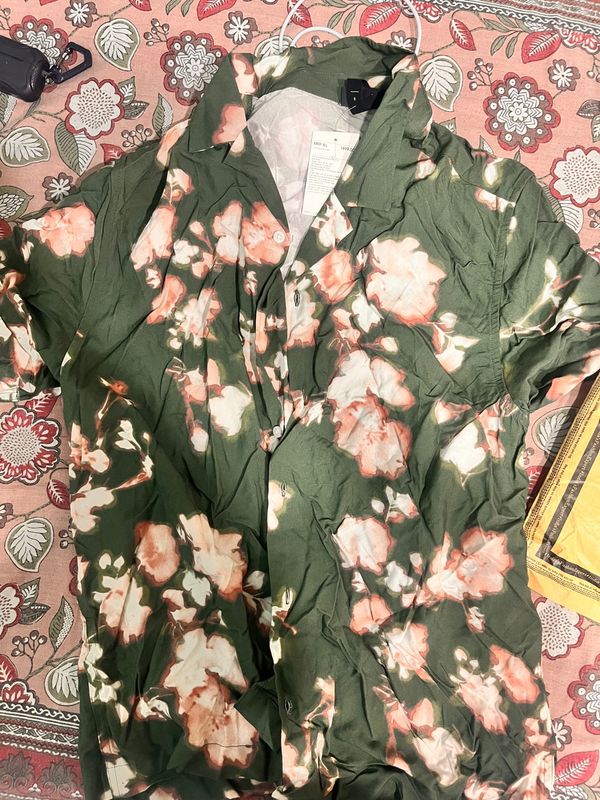
- **Fabric Physics:** The source garment appears to be a lightweight Viscose or Rayon blend with a matte finish. It possesses a "liquid" drape, meaning it should hang vertically with soft, fluid folds rather than rigid creases. Light reflection should be diffuse with broad, soft specular highlights, avoiding the high-shine reflectivity of synthetic polyester or the stiffness of starched cotton.
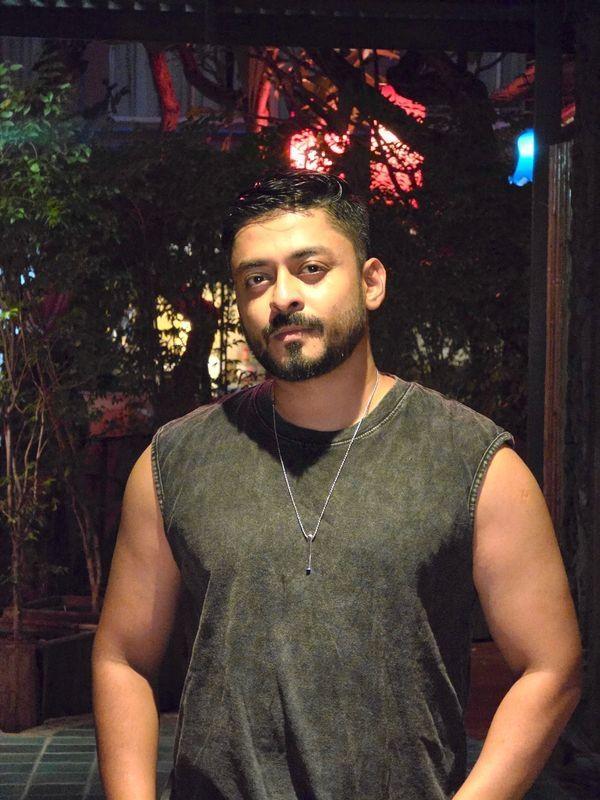
- **Key Features:** The floral pattern (white and peach/pink flowers on an olive green base) is the primary texture map. The "Camp Collar" (open neck) structure is critical and must replace the current crew-neck tank top line. The visible price tags and internal white lining near the collar in the source image must be removed during texture generation. The white buttons down the center placket must be preserved.
PHASE 2: FIT & DRAPE SIMULATION
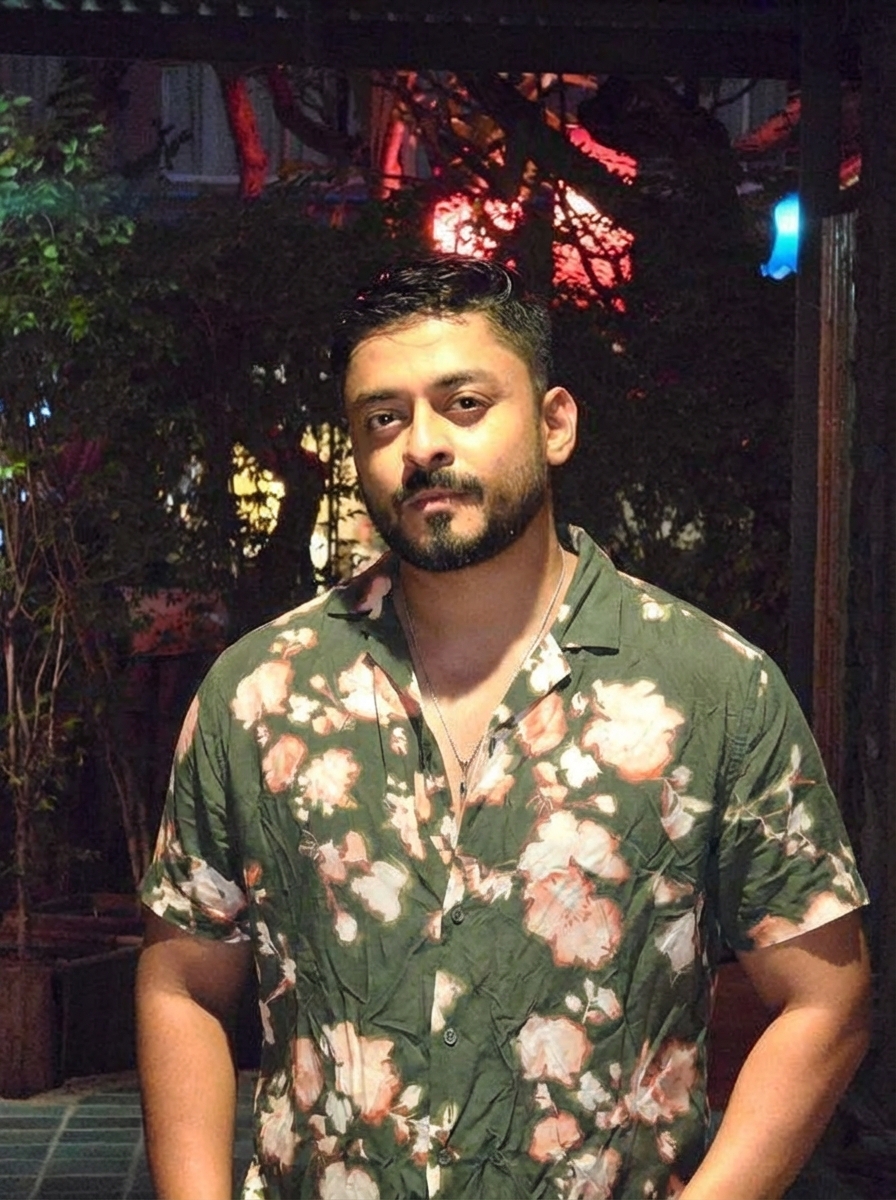
- **Body Mapping:** The user has broad shoulders and developed biceps. The target shirt is a relaxed fit. It should drape loosely over the pectorals and latissimus dorsi, falling straight from the chest to the waist without tapering tightly. The sleeves are short but loose; they should encircle the biceps with significant negative space, not hugging the arm like the current tank top. The shoulder seams must align with the user's acromion (shoulder bone).
- **Occlusion Handling:** The silver necklace with the pendant currently overlapping the torso is a critical occlusion. Given the target garment is a button-down shirt, the necklace should physically sit *underneath* the fabric, effectively being hidden, unless the collar is generated wide open. If wide open, the chain near the neck requires preservation. The user's arms are unoccluded, but the armpit area requires careful masking to ensure the new sleeve fabric creates a believable silhouette against the dark background.
PHASE 3: ENVIRONMENT & LIGHTING
- **Light Match:** The target environment is a high-contrast, low-light nighttime setting with mixed artificial sources. The primary key light hits the user from the front-left (viewer's left), creating strong highlights on the forehead and right arm. The new garment must render with deep shadows on the user's left side (viewer's right) and under the collar. The background contains red ambient light which should subtly rim-light the edges of the green fabric.
- **Color Calibration:** The source cloth image is taken under flat, warm, yellowish indoor lighting. The texture must be color-corrected to match the cooler, grainier aesthetic of the user image. The brightness of the white flowers must be reduced to avoid looking "glowing" or superimposed; they must accept the ambient shadows of the night scene.
PHASE 4: IDENTITY PROTECTION
- **Facial Lock:** The entire head region above the clavicle—specifically the eyes, nose, groomed beard, and hairstyle—must be frozen and masked out completely to prevent AI hallucination or face-swapping artifacts.
- **Body Integrity:** The user's arm volume (biceps/triceps) and shoulder width must be preserved strictly. No slimming or "fashion model" resizing is permitted. The visible skin grain and noise level on the arms must remain consistent with the original photo quality.